
ISO 27001 Certification in Stockholm
CertPro is a Licensed CPA Firm conducting independent ISO 27001 certification audits for organizations in Stockholm. Our audit scope covers full Information Security Management System (ISMS) evaluation against ISO/IEC 27001:2022 requirements—including risk treatment, security controls, and continual improvement obligations. We serve technology, fintech, SaaS, and enterprise sectors operating across the Nordic region.
OUR CLIENTS



What Is ISO 27001 Certification?
ISO 27001 Certification is a globally recognized attestation that an organization’s Information Security Management System (ISMS) conforms to the requirements of ISO/IEC 27001:2022—the international standard published by the International Organization for Standardization (ISO) and the International Electrotechnical Commission (IEC). The standard defines a systematic framework for establishing, implementing, maintaining, and continually improving information security governance within an organization’s overall business risk environment.
Certification is issued by an accredited, independent third-party audit body following a structured evaluation process. That process confirms documented conformance across all applicable clauses and Annex A controls, providing stakeholders with objective, evidence-based assurance.
Defining the Information Security Management System (ISMS)
An Information Security Management System (ISMS) is the structured set of policies, procedures, processes, and controls an organization uses to manage and protect its information assets. Under ISO/IEC 27001:2022, the ISMS must address the confidentiality, integrity, and availability of information—commonly referred to as the CIA triad.
The ISMS is not simply a technical solution. It is a governance framework that encompasses people, processes, and technology, requiring documented leadership commitment, defined roles and responsibilities, and evidence-based management review cycles. ISMS certification therefore confirms that an organization has operationalized this governance framework and that its controls are operating effectively against assessed risks.
The ISO/IEC 27001:2022 revision introduced significant structural updates compared to the 2013 version. The number of Annex A controls was reduced from 114 to 93, reorganized across four main domains: Organizational Controls, People Controls, Physical Controls, and Technological Controls. Eleven new controls were also introduced, addressing areas such as threat intelligence, cloud service security, data masking, and ICT readiness for business continuity.
Organizations pursuing ISMS certification must align their documentation and control implementation to the 2022 standard. The mandatory transition deadline is October 31, 2025, as established by accredited certification bodies internationally.
Scope and Applicability of ISO 27001
ISO 27001 applies to any organization—regardless of size, sector, or geographic location—that processes, stores, or transmits information assets requiring protection. The standard’s clause structure, spanning Clauses 4 through 10, addresses organizational context, leadership, planning, support, operation, performance evaluation, and improvement. Each clause imposes specific documentation and evidence requirements that must be demonstrated during a third-party ISO 27001 audit.
For organizations in Stockholm, the standard’s applicability extends across the full lifecycle of information processing—from cloud-hosted SaaS platforms to on-premises enterprise systems—making ISO 27001 Certification in Stockholm directly relevant to the region’s diverse technology landscape.
ISO 27001 Certification differs from other information security frameworks in one critical way: it results in a formal, time-bound certificate issued by an accredited certification body, valid for three years and subject to annual surveillance audits. This distinguishes ISO 27001 from self-assessed frameworks or advisory-driven compliance programs.
The certification demonstrates to customers, regulators, and business partners that an independent, qualified audit body has assessed and confirmed that the organization’s ISMS meets defined international requirements—providing objective, evidence-based assurance that carries genuine institutional credibility.
ISO 27001 Versus Other Information Security Frameworks
Organizations operating in Stockholm frequently encounter multiple information security frameworks, including SOC 2, NIST CSF, and CIS Controls. ISO 27001 Certification is globally recognized and results in a certificate issued by an accredited body, with certificates valid for three years under ongoing surveillance. SOC 2, by contrast, is U.S.-centric and preferred by SaaS and cloud providers serving North American customers, while ISO 27001 is the preferred standard for European and international enterprise engagements.
For Stockholm-based organizations operating across the European Union or serving multinational clients, ISO 27001 Certification provides the broadest recognized assurance across regulatory and commercial contexts.
| Framework | Certification Type | Geographic Recognition | Certificate Validity |
|---|---|---|---|
| ISO 27001 | Third-party certification | Global | 3 years (with annual surveillance) |
| SOC 2 | Third-party attestation | Primarily U.S. | 12 months |
| NIST CSF | Self-assessment | U.S. Federal / Global reference | No formal certification |
| GDPR | Regulatory compliance | European Union | Ongoing obligation |
| CIS Controls | Self-assessment | Global reference | No formal certification |

ISO 27001 Certification in Stockholm: City Context and Market Relevance
ISO 27001 Certification in Stockholm is increasingly relevant to the city’s position as one of Europe’s most significant technology and innovation centers. Stockholm consistently ranks among the top European cities for startup density, venture capital investment, and digital infrastructure maturity. The city is home to globally recognized technology companies, a large and growing fintech sector, enterprise SaaS providers, and a robust cluster of cloud-native organizations.
As organizations across these sectors process growing volumes of sensitive customer, financial, and operational data, demand for independently verified information security management has intensified. Pursuing ISO 27001 Certification in Stockholm has become a strategic priority for organizations that compete for enterprise customers and operate within regulated markets.
Stockholm’s Technology and Fintech Ecosystem
Stockholm has established itself as one of Europe’s leading fintech capitals, hosting a concentration of payment technology providers, digital banking platforms, and financial infrastructure companies. The ISO 27001 Certification Stockholm fintech organizations pursue reflects a strategic decision to meet the security assurance expectations of enterprise customers, banking regulators, and institutional investors.
In financial services, information security incidents carry direct regulatory and reputational consequences. ISMS certification has become a baseline expectation for organizations seeking to participate in regulated markets, partner with established financial institutions, or expand into international client bases that require independently verified security governance.
ISO 27001 Certification Stockholm financial services organizations pursue is driven not only by commercial necessity but also by regulatory alignment. The European Banking Authority (EBA) and the Financial Supervisory Authority of Sweden (Finansinspektionen) maintain expectations around information security governance and operational resilience that closely align with the ISO 27001 framework.
Organizations holding ISO 27001 Certification can more readily demonstrate to supervisory bodies that their ISMS meets defined risk management and security control standards—reducing audit burden and providing structured evidence for regulatory examinations.
Technology Companies and SaaS Providers in Stockholm
ISO 27001 Certification Stockholm tech companies pursue reflects the growing expectation from enterprise buyers that cloud and SaaS vendors demonstrate independently verified information security governance. In competitive procurement processes—particularly those involving public sector, healthcare, or enterprise clients across the Nordic region and European Union—ISO 27001 Certification is frequently listed as a mandatory vendor qualification.
Stockholm-based SaaS providers operating on multi-tenant cloud architectures must demonstrate that their ISMS addresses specific risks associated with shared infrastructure, data segregation, access control, and cloud-hosted application security. All of these areas are evaluated during a third-party ISO 27001 audit.
The Stockholm technology ecosystem also includes a significant cluster of AI-driven platforms and data analytics companies. As these organizations integrate artificial intelligence into their products and operations, information security governance must address the unique risks associated with machine learning systems, training data integrity, and algorithmic decision-making.
The ISO/IEC 27001:2022 framework’s updated controls—including threat intelligence, monitoring activities, and information security in project management—provide a structured basis for documenting and demonstrating security governance across AI-enabled environments. This positions ISO 27001 compliance as directly relevant to Stockholm’s emerging AI sector.
GDPR Alignment and European Regulatory Context
Organizations in Stockholm are subject to the General Data Protection Regulation (GDPR), which imposes obligations around the security of personal data processing, breach notification, and data protection by design. ISO 27001 compliance provides a structured methodology for mapping GDPR security obligations to documented controls within the ISMS.
While ISO 27001 Certification does not constitute GDPR compliance in itself, the two frameworks are complementary. Organizations that maintain a certified ISMS are better positioned to demonstrate to the Swedish Authority for Privacy Protection (IMY) that appropriate technical and organizational security measures are in place—as required under GDPR Article 32.
ISO 27001 Certification Requirements
ISO 27001 Certification requires organizations to demonstrate conformance with the mandatory clauses of ISO/IEC 27001:2022 (Clauses 4–10) and to document a Statement of Applicability (SoA) that maps each Annex A control to the organization’s assessed risk environment. The certification process evaluates both the design and operational effectiveness of the ISMS.
Organizations must provide evidence that policies, procedures, and controls are not merely documented but actively implemented and monitored. Comprehensive documentation capable of withstanding scrutiny during a formal ISO 27001 audit—conducted by an accredited, independent certification body—is essential to achieving ISMS certification.
The mandatory clauses of ISO/IEC 27001:2022 establish the structural requirements every certified organization must fulfill. Clause 4 requires organizations to define the internal and external context of the ISMS, identify interested parties, and establish the ISMS scope. Clause 5 mandates demonstrable leadership commitment, including a documented information security policy, defined roles and responsibilities, and executive accountability for ISMS performance. Clause 6 requires organizations to conduct and document a risk assessment, define a risk treatment plan, and establish measurable information security objectives with associated monitoring processes.
Each of these clauses must be substantiated with documented evidence available for review during the ISO 27001 audit.
Clause 7 addresses support requirements for the ISMS, covering resource allocation, competence management, awareness programs, communication processes, and document control procedures. Clause 8 covers operational planning and control, requiring organizations to manage information security risks in day-to-day operations and document risk assessment and treatment plan results.
Clause 9 establishes performance evaluation requirements—including internal audit programs, management review meetings, and monitoring of ISMS effectiveness. Clause 10 addresses nonconformity management and continual improvement, requiring organizations to document corrective actions and demonstrate that identified deficiencies lead to systemic improvements rather than isolated fixes.
ISO 27001 documentation requirements are extensive and serve as the primary evidence base during a certification audit. Required documented information includes the ISMS scope statement, information security policy, risk assessment methodology and results, risk treatment plan, Statement of Applicability (SoA), information security objectives, competence records, internal audit program and results, management review records, and nonconformity and corrective action logs.
The SoA is a particularly critical document. It must list all 93 Annex A controls from ISO/IEC 27001:2022, indicate which controls are applicable and which are excluded, and provide documented justification for any exclusions based on risk assessment outcomes.
- ✓ISMS scope statement defining organizational boundaries and applicable information assets
- ✓Information security policy approved and communicated by senior leadership
- ✓Information security risk assessment methodology, criteria, and documented results
- ✓Risk treatment plan with assigned ownership and treatment timelines
- ✓Statement of Applicability (SoA) covering all 93 Annex A controls with inclusion/exclusion justification
- ✓Defined and documented information security objectives with measurement indicators
- ✓Competence records for personnel with ISMS-related roles and responsibilities
- ✓Internal audit program, schedules, audit criteria, and documented audit results
- ✓Management review records demonstrating executive oversight of ISMS performance
- ✓Nonconformity records and corrective action documentation with closure evidence
Beyond documentation, ISO 27001 compliance requires organizations to implement and operate technical and organizational controls that address identified risks. The 93 controls in ISO/IEC 27001:2022 Annex A span four domains: 37 Organizational Controls addressing policies, roles, supplier relationships, and incident management; 8 People Controls covering screening, terms of employment, training, and disciplinary processes; 14 Physical Controls addressing physical security perimeters, equipment maintenance, and clear desk and screen policies; and 34 Technological Controls encompassing access control, cryptography, malware protection, network security, and secure development practices.
During an ISO 27001 assessment, auditors evaluate both the existence and operational effectiveness of controls selected in the Statement of Applicability.
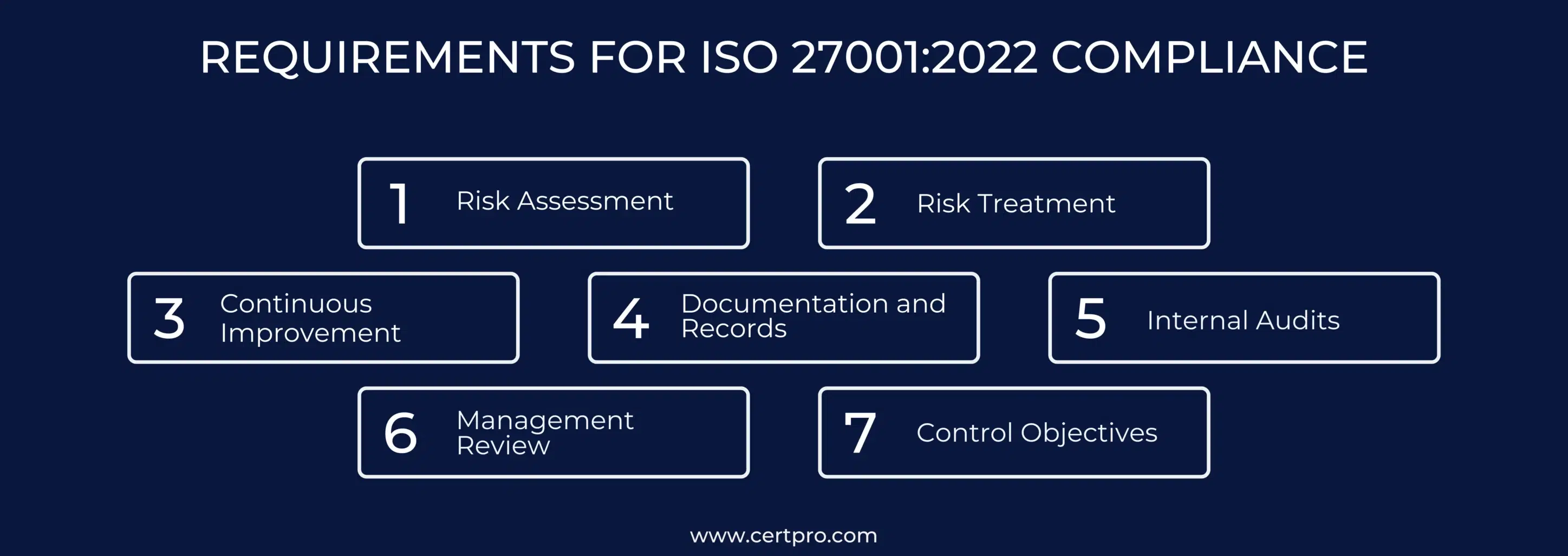
- ✓Mandatory Clause Requirements
- ✓Documentation Requirements
- ✓Technical and Control Requirements
The ISO 27001 Audit Process
The ISO 27001 audit process is a structured, multi-stage evaluation conducted by an independent, accredited certification body. Each stage is designed to verify that the organization’s ISMS meets the requirements of ISO/IEC 27001:2022 through examination of documented evidence, interviews with key personnel, and observation of operational processes.
For organizations pursuing ISO 27001 Certification in Stockholm, the audit process follows internationally standardized procedures regardless of the certifying body engaged—ensuring consistent, objective evaluation against the same standard requirements.
The ISO 27001 audit process begins with scope definition. During this phase, the certification body and the organization establish the boundaries of the ISMS to be certified, including applicable locations, business units, and information assets. The audit program is also determined at this stage—covering the number of audit days required, audit team composition, and the planned schedule.
The audit program is shaped by the complexity and risk profile of the ISMS scope, the number of employees and locations, and the nature of the organization’s information processing activities. For Stockholm organizations, scope definition typically encompasses the primary business location, cloud infrastructure environments, and any outsourced information processing arrangements with third-party service providers.
Stage 1 of the ISO 27001 audit—also known as the documentation review or desk audit—evaluates whether the organization’s ISMS documentation meets the structural requirements of ISO/IEC 27001:2022. The auditor reviews the ISMS scope statement, information security policy, risk assessment methodology and results, Statement of Applicability, and other required documented information.
The Stage 1 audit identifies areas where documentation is absent, incomplete, or does not conform to standard requirements, producing a report that highlights findings to be addressed before Stage 2. Importantly, Stage 1 does not evaluate the operational effectiveness of controls—it confirms that the documented framework provides an adequate basis for the Stage 2 certification audit.
Stage 2 of the ISO 27001 audit is the main certification audit, conducted at the organization’s premises or via structured remote audit procedures for cloud-native organizations. During Stage 2, auditors evaluate the implementation and operational effectiveness of the ISMS against all applicable clauses and Annex A controls selected in the Statement of Applicability.
Audit evidence is gathered through document examination, personnel interviews, technical demonstrations, and observation of operational processes. Auditors assess whether controls are not only documented but actively functioning as intended—for example, verifying that access control reviews occur at defined intervals, that security incident logs are maintained, and that risk assessment results are current and aligned with the risk treatment plan.
During Stage 2, the ISO 27001 audit team identifies any nonconformities—instances where the ISMS does not meet a specific requirement of the standard. Nonconformities are classified as major (indicating a systemic failure that prevents the ISMS from achieving its intended outcomes) or minor (indicating a localized gap that does not undermine overall ISMS effectiveness).
Major nonconformities must be resolved before certification can be granted, while minor nonconformities typically require documented corrective action plans with defined timelines. Observations and opportunities for improvement may also be noted, though these do not affect certification eligibility. The Stage 2 audit concludes with a closing meeting at which the audit team presents findings to organizational management.
Following Stage 2, the certification body conducts a technical review of the audit report and nonconformity records to determine whether the evidence supports a certification decision. This review is conducted by an independent reviewer within the certification body who was not part of the audit team, ensuring objectivity in the evaluation.
Where major nonconformities exist, the organization must submit documented evidence of root cause analysis and corrective action implementation within a defined period—typically 90 days—before the certification decision is finalized. Upon successful resolution of all major nonconformities and satisfactory review, the certification body issues the ISO 27001 certificate, valid for three years from the date of the certification decision.
ISO 27001 Certification is maintained through annual surveillance audits conducted in Years 1 and 2 of the three-year certification cycle, followed by a recertification audit in Year 3. Surveillance audits evaluate the continued effectiveness of the ISMS, verify that corrective actions from previous audits have been implemented, assess changes to the organization’s risk environment or ISMS scope, and confirm ongoing conformance with selected Annex A controls.
Surveillance audits are typically less extensive than the initial Stage 2 certification audit, focusing on areas identified as higher risk or subject to significant organizational change. Failure to maintain surveillance audit schedules may result in suspension or withdrawal of the ISO 27001 certificate.

- ✓Stage 1: Scope Definition and Documentation Review
- ✓Stage 2: On-Site Certification Audit
- ✓Nonconformity Review and Certification Decision
- ✓Surveillance Audits and Recertification
Steps for Obtaining ISO 27001 Certification in Stockholm
The pathway to ISO 27001 Certification in Stockholm follows a defined sequence of organizational activities and third-party audit engagements. Organizations that approach the certification process with structured planning, documented evidence, and clear governance ownership are best positioned to achieve certification efficiently.
The steps below represent the standard sequence for organizations pursuing ISMS certification for the first time, based on the requirements of ISO/IEC 27001:2022 and internationally recognized certification audit practices.
- Define the ISMS scope: Establish the organizational boundaries, locations, information assets, and stakeholder requirements that define the scope of the ISMS to be certified.
- Conduct information security risk assessment: Identify information security risks, assess their likelihood and impact, and document risk assessment results using a defined methodology.
- Develop and document risk treatment plan: Select applicable Annex A controls to address assessed risks, document treatment decisions, and assign ownership for each control.
- Prepare Statement of Applicability (SoA): Document the inclusion or exclusion of all 93 Annex A controls with justified rationale based on risk assessment outcomes.
- Implement ISMS policies and procedures: Develop and operationalize all mandatory documented information required under ISO/IEC 27001:2022 Clauses 4 through 10.
- Conduct internal ISMS audit: Execute an internal audit program to evaluate ISMS conformance and identify nonconformities before the external certification audit.
- Conduct management review: Hold a formal management review meeting to evaluate ISMS performance, address audit findings, and demonstrate leadership commitment.
- Engage an accredited certification body: Engage an independent, accredited certification body—such as CertPro—to conduct the Stage 1 documentation review and Stage 2 on-site certification audit.
- Address audit findings and nonconformities: Respond to Stage 1 and Stage 2 audit findings with documented root cause analysis and corrective action evidence.
- Receive ISO 27001 certificate: Upon successful resolution of nonconformities and certification decision, receive the ISO 27001 certificate valid for three years.
The timeline for achieving ISO 27001 Certification in Stockholm varies based on organizational size, ISMS scope complexity, the maturity of existing information security controls, and the responsiveness of the organization during the audit process. For small to medium-sized organizations with a defined scope and existing security controls, the period from initial engagement to certificate issuance typically ranges from 3 to 6 months.
For larger organizations with complex multi-system environments, multiple locations, or extensive third-party supplier networks, the timeline may extend to 9 to 12 months. The ISO 27001 audit itself—encompassing Stage 1 and Stage 2—typically requires 3 to 10 audit days depending on scope complexity and organizational size.
| Organization Size | Estimated Audit Days | Typical Certification Timeline |
|---|---|---|
| Small (< 50 employees) | 3–5 days | 3–5 months |
| Medium (50–250 employees) | 5–8 days | 4–7 months |
| Large (250–1000 employees) | 8–12 days | 6–10 months |
| Enterprise (> 1000 employees) | 12+ days | 9–15 months |
- ✓Timeline for ISO 27001 Certification in Stockholm
ISO 27001 Certification Cost in Stockholm
ISO 27001 Certification cost in Stockholm is determined by a combination of factors, including the number of employees within the ISMS scope, the complexity of the organization’s information systems and processes, the number of physical locations to be audited, and the degree of third-party or cloud infrastructure involvement. Certification bodies determine audit fees based on the number of audit days required, which is calculated using accreditation body guidelines that factor in organizational complexity and scope.
CertPro provides fixed-price engagement structures for ISO 27001 certification audits, ensuring transparent cost visibility for organizations from initial engagement through certificate issuance and ongoing surveillance.
Cost Components of ISO 27001 Certification
The total cost of ISO 27001 Certification in Stockholm encompasses several distinct components. Certification body fees cover Stage 1 documentation review, Stage 2 on-site audit, annual surveillance audits in Years 1 and 2, and the recertification audit in Year 3. These fees vary based on audit days, auditor qualifications, and the certification body’s accreditation status.
Organizations should also account for internal resource costs associated with documentation development, risk assessment activities, internal audit execution, and management review preparation. For organizations with complex environments or multiple locations, the total cost of initial certification—including both external audit fees and internal resource investment—typically ranges from SEK 80,000 to SEK 400,000 depending on scope and complexity.
Ongoing certification maintenance costs include annual surveillance audit fees—typically 30–40% of the initial certification audit cost—and recertification audit fees in Year 3, which are comparable to the initial Stage 2 audit. Organizations should also budget for continuous ISMS operation costs, including security awareness training, internal audit activities, risk assessment updates, and management review facilitation.
When evaluating the total cost of ISO 27001 Certification in Stockholm, organizations should weigh these ongoing costs against the commercial benefits of certification—including expanded access to enterprise procurement opportunities, reduced customer security due diligence requirements, and potential reductions in cyber insurance premiums.
Benefits of ISO 27001 Certification
The benefits of ISO 27001 Certification extend across commercial, regulatory, operational, and reputational dimensions for organizations operating in Stockholm. ISO 27001 Certification provides independently verified assurance that an organization’s information security governance meets internationally defined requirements—a credential that carries weight with enterprise customers, regulatory bodies, institutional investors, and business partners across the Nordic region and globally.
Organizations holding ISMS certification are demonstrably positioned to manage information security risks systematically, respond to incidents with defined procedures, and maintain continuous improvement cycles that strengthen security governance over time.
ISO 27001 Certification in Stockholm provides a measurable competitive advantage in procurement processes where information security governance is evaluated as part of vendor qualification. Enterprise customers in financial services, healthcare, public sector, and telecommunications increasingly include ISO 27001 Certification as a mandatory requirement in supplier contracts and tender specifications.
Stockholm-based organizations holding ISO 27001 certificates can respond to these requirements with objective, third-party verified evidence rather than relying on self-assessments or questionnaire responses. This reduces customer due diligence friction, accelerates sales cycles, and positions certified organizations more favorably in competitive bid evaluations against non-certified competitors.
- ✓Demonstrates independently verified information security governance to enterprise customers, regulators, and business partners
- ✓Qualifies organizations for procurement opportunities requiring ISO 27001 Certification as a mandatory vendor criterion
- ✓Reduces customer security due diligence requirements and security questionnaire burden during sales processes
- ✓Provides structured alignment with GDPR technical and organizational security measure requirements under Article 32
- ✓Supports alignment with Finansinspektionen (FI) expectations for operational resilience in regulated financial services
- ✓Reduces organizational exposure to information security incidents through systematic risk treatment and control operation
- ✓Strengthens cyber insurance positioning through documented and audited security control frameworks
- ✓Enables expansion into international markets where ISO 27001 Certification is a baseline expectation for technology vendors
- ✓Provides continuous improvement cycles that progressively strengthen ISMS effectiveness across the certification lifecycle
- ✓Builds organizational security culture through mandatory competence, awareness, and communication requirements
ISO 27001 compliance provides organizations with a structured mechanism for mapping legal and regulatory information security obligations to documented controls within the ISMS. This capability is particularly valuable for Stockholm organizations subject to GDPR, the NIS2 Directive, and sector-specific regulations from Finansinspektionen or the Swedish Civil Contingencies Agency (MSB).
By aligning ISMS controls with regulatory requirements, organizations can consolidate compliance evidence, reduce duplication of effort across multiple regulatory frameworks, and maintain a single auditable evidence base for regulators, customers, and certification bodies. ISO 27001 assessment results also provide structured insights into residual risk areas that warrant additional investment or management attention.
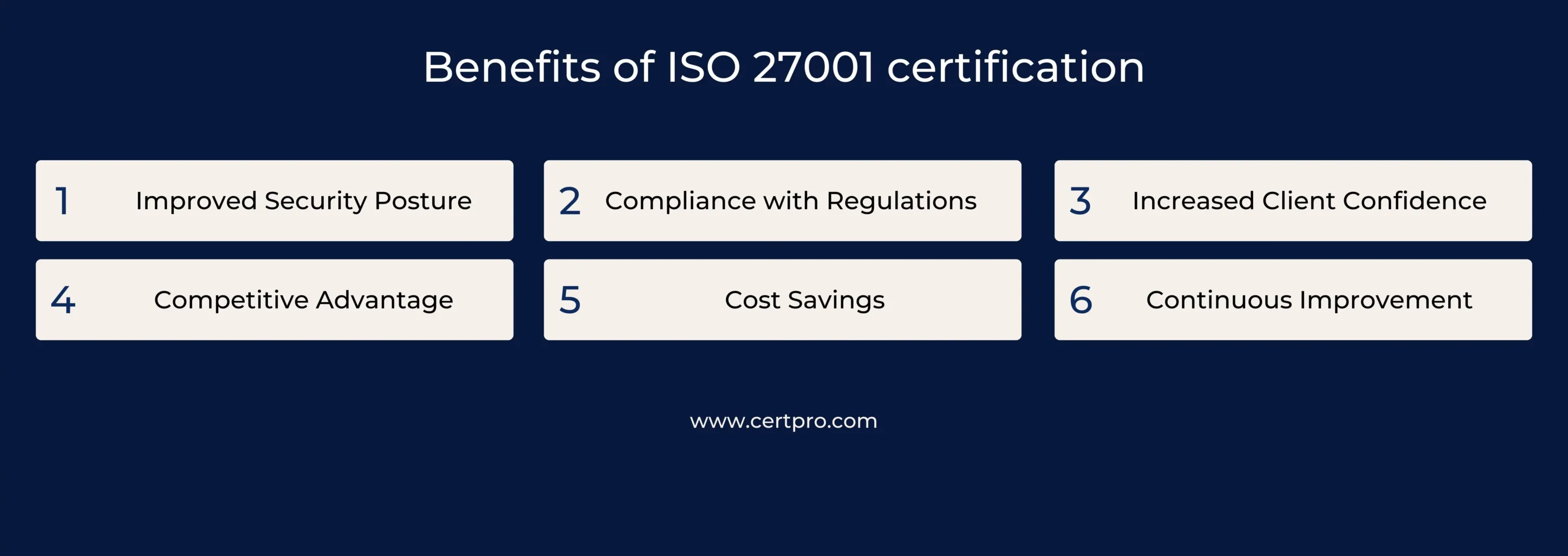
- ✓Commercial and Competitive Benefits
- ✓Regulatory and Risk Management Benefits
ISO 27001 Certification for Stockholm Companies: Industry-Specific Applications
ISO 27001 Certification for Stockholm companies operates across a diverse range of industries, each with distinct information security risk profiles and regulatory contexts. The certification framework’s flexibility—allowing organizations to define their own ISMS scope and select applicable controls based on risk assessment—makes it suitable for organizations of all sizes and sectors.
In Stockholm’s market, where technology, financial services, healthcare, media, and public administration intersect within a highly digitized economy, ISO 27001 Certification in Stockholm serves as a common assurance language across industry boundaries.
Fintech and Financial Services Organizations
For fintech and financial services organizations in Stockholm, ISO 27001 Certification is driven by both commercial and regulatory imperatives. Payment service providers operating under PSD2, digital banking platforms subject to EBA ICT risk guidelines, and financial infrastructure providers serving institutional clients all face stringent information security expectations from regulators, partners, and customers.
ISO 27001 Certification provides these organizations with a documented, audited framework for managing information security risks associated with payment data, customer financial records, and transaction processing systems—all of which represent high-value targets for cybersecurity threats and carry significant regulatory consequences in the event of unauthorized disclosure or system compromise.
SaaS, Cloud, and Technology Companies
Stockholm’s SaaS and cloud technology sector represents one of the highest-demand segments for ISO 27001 Certification in the region. Cloud-native organizations hosting customer data on multi-tenant platforms must demonstrate to enterprise buyers that their ISMS addresses specific information security risks of shared infrastructure environments—including logical data segregation, privileged access management, encryption of data in transit and at rest, and third-party service provider security governance.
The ISO 27001 audit for cloud-hosted environments evaluates these controls against the organization’s risk treatment plan, providing customers with objective assurance that information security governance extends across the full cloud service delivery chain.
Healthcare and Life Sciences Organizations
Healthcare and life sciences organizations in Stockholm process highly sensitive personal health information subject to both GDPR special category data protections and sector-specific regulations under the Swedish Patient Data Act (Patientdatalagen). ISO 27001 Certification provides healthcare organizations with a structured framework for governing access to electronic health records, managing security incidents involving patient data, and ensuring that third-party health data processors meet defined security standards.
For digital health platforms, medical device software providers, and clinical research organizations operating in Stockholm, ISMS certification demonstrates to healthcare institution customers, regulatory bodies, and data protection authorities that information security governance meets international standards.
ISO 27001 Compliance and Information Security Governance
ISO 27001 compliance represents an ongoing organizational commitment to operating an effective Information Security Management System in conformance with ISO/IEC 27001:2022. Compliance is not a one-time achievement—it requires continuous monitoring of ISMS performance, regular risk assessment updates, periodic internal audits, and management review cycles that assess whether the ISMS remains adequate in light of changing organizational context and threat landscapes.
ISO 27001 compliance Stockholm organizations maintain is evaluated annually through surveillance audits and validated comprehensively every three years through recertification, ensuring that certified organizations remain accountable for sustained ISMS effectiveness throughout the certification lifecycle.
Information Security Governance Structures
Effective information security governance under ISO 27001 requires clearly defined organizational structures with documented roles, responsibilities, and accountability mechanisms. At the leadership level, ISO/IEC 27001:2022 Clause 5 mandates that top management demonstrate accountability for ISMS effectiveness. This includes ensuring that information security objectives are established and aligned with organizational strategy, that adequate resources are allocated to ISMS operation, and that ISMS performance is reviewed at planned intervals.
This governance structure must be documented and demonstrable during the ISO 27001 audit—auditors will interview senior leadership to assess the depth and authenticity of executive commitment to information security governance.
Below executive leadership, ISO 27001 compliance requires designated information security roles with defined competencies and authority. The Information Security Manager or Chief Information Security Officer (CISO) is typically responsible for day-to-day ISMS operation, risk assessment coordination, incident response management, and internal audit program oversight.
Supporting roles such as asset owners, risk owners, and control owners must be clearly assigned within the documented ISMS, with evidence of competence and awareness training maintained in personnel records. This structured accountability framework ensures that information security governance is distributed appropriately across the organization rather than concentrated in a single function without adequate oversight or resource support.
Risk Management Practices Under ISO 27001
ISO 27001 assessment of risk management practices evaluates whether the organization’s risk assessment process is systematic, repeatable, and produces consistent results when applied by different individuals. The standard requires organizations to define risk assessment criteria—including risk acceptance criteria and criteria for performing information security risk assessments—before conducting assessments.
Risk assessment results must identify information assets, threat scenarios, existing controls, and residual risk levels against defined criteria. The risk treatment plan must document the selected treatment option for each accepted risk, the controls chosen to address those risks, and the rationale for accepting any residual risks that remain after treatment measures are applied.
Monitoring, Measurement, and Continual Improvement
ISO 27001 compliance requires organizations to establish defined monitoring and measurement processes that evaluate ISMS performance against stated information security objectives. Organizations must determine what needs to be monitored and measured, the methods to be used, when monitoring occurs, and who is responsible for analysis and reporting of results.
Key performance indicators for information security—such as security incident rates, vulnerability remediation timelines, access control review completion rates, and training completion percentages—must be tracked and reported through defined governance structures. Monitoring results inform management review discussions and drive continuous improvement decisions, ensuring that the ISMS evolves in response to operational experience and changing risk conditions.
ISO 27001 Annex A Controls: Key Domains Evaluated During Audit
ISO/IEC 27001:2022 Annex A defines 93 information security controls organized across four domains, all of which are evaluated as part of every ISO 27001 audit. The ISO 27001 assessment of Annex A controls focuses on those controls identified as applicable in the organization’s Statement of Applicability, evaluating both design adequacy and operational effectiveness.
The transition from the 2013 version’s 114 controls across 14 domains to the 2022 version’s 93 controls across 4 domains reflects a consolidation and modernization of the control framework. Eleven new controls were introduced addressing contemporary threat vectors, including cloud security, threat intelligence, and data masking.
Organizational Controls (Domain 5)
The Organizational Controls domain contains 37 controls addressing governance structures, policies, processes, and third-party relationships that form the administrative foundation of the ISMS. Key controls within this domain include information security policies and review processes, information security roles and responsibilities, contact with authorities and special interest groups, threat intelligence, information security in project management, asset inventory and acceptable use, classification and handling of information, supplier relationships and supply chain security, incident management procedures, and business continuity management for information security.
During the ISO 27001 audit, organizational controls are evaluated through document review and interviews with process owners, assessing whether documented policies translate into consistent operational practice.
People Controls (Domain 6) and Physical Controls (Domain 7)
The People Controls domain contains 8 controls governing the human elements of information security. These include screening of personnel before employment, terms and conditions of employment addressing information security responsibilities, security awareness and training programs, confidentiality agreements, remote working security measures, and disciplinary processes for information security violations.
The ISO 27001 audit evaluates People Controls through review of HR policies, training completion records, screening procedures, and employment contract clauses. Auditors assess whether the organization’s human resource management practices systematically address information security requirements throughout the employee lifecycle—from pre-employment screening through termination and role change procedures.
The Physical Controls domain contains 14 controls addressing the security of physical environments where information assets are processed or stored. Controls include physical security perimeters, physical entry controls, securing offices and rooms, monitoring of physical premises, protection against physical and environmental threats, working in secure areas, and clear desk and clear screen policies.
For Stockholm organizations operating in shared co-working spaces, leased data center facilities, or remote-working configurations, physical security controls must address the specific risks of those environments. The ISO 27001 audit evaluates physical controls through site observation where applicable, and through review of physical security documentation including visitor logs, access control records, and environmental monitoring records.
Technological Controls (Domain 8)
The Technological Controls domain is the most extensive, containing 34 controls that govern the technical security measures applied to information systems and digital environments. Key controls include user endpoint devices, privileged access rights, access control for information and systems, authentication information management, secure configuration of information processing systems, deletion of information, data masking, data leakage prevention, monitoring activities, web filtering, cryptography, secure development lifecycle, security testing, vulnerability management, network security, and web application security.
For technology companies and SaaS providers in Stockholm, technological controls receive particular scrutiny during the ISO 27001 audit. Auditors examine configuration management records, vulnerability scan outputs, penetration testing results, and access control logs as evidence of control operation.
| Annex A Domain | Number of Controls | Key Focus Areas |
|---|---|---|
| Domain 5: Organizational Controls | 37 | Policies, roles, supplier management, incident management, threat intelligence |
| Domain 6: People Controls | 8 | Screening, training, awareness, disciplinary processes, remote working |
| Domain 7: Physical Controls | 14 | Physical perimeters, entry controls, environmental protection, clear desk |
| Domain 8: Technological Controls | 34 | Access control, cryptography, vulnerability management, network security, secure development |
Why Choose CertPro for ISO 27001 Certification in Stockholm
CertPro is a Licensed CPA Firm providing independent, third-party ISO 27001 certification audits for organizations in Stockholm and across the Nordic region. As an accredited certification body, CertPro conducts ISO 27001 audit engagements under rigorous professional standards that ensure objectivity, technical competence, and procedural integrity throughout the certification process.
CertPro’s engagement model is distinguished by its fixed-price structure, sector-specific audit expertise spanning technology, fintech, SaaS, and enterprise environments, and its commitment to a declarative, evidence-based audit methodology that delivers certification decisions grounded in documented findings rather than qualitative impressions.
Independent Third-Party Certification Methodology
CertPro’s ISO 27001 audit methodology is structured around the requirements of ISO/IEC 27001:2022 and international certification body accreditation standards. The audit process encompasses formal scope definition, audit program determination, Stage 1 documentation review, Stage 2 on-site or remote certification audit, nonconformity evaluation, independent technical review, and certification decision.
CertPro audit teams include professionals with recognized credentials in information security, risk management, and quality management systems—ensuring that audit findings reflect informed technical judgment rather than procedural compliance checking alone.
CertPro’s institutional positioning as a Licensed CPA Firm further distinguishes its ISO 27001 certification engagements from those of purely technical certification bodies. The integration of financial audit rigor with information security management system expertise enables CertPro to evaluate ISMS governance structures, management review processes, and resource allocation decisions with the same analytical depth applied to financial control assessments.
This dual competency is particularly relevant for Stockholm organizations in regulated industries such as financial services, insurance, and healthcare, where information security governance intersects directly with financial reporting obligations and operational risk management frameworks.
Sector Expertise in Stockholm’s Key Industries
CertPro’s ISO 27001 audit engagements in Stockholm draw on deep sector-specific expertise across the city’s primary technology and business sectors. For ISO 27001 Certification Stockholm fintech organizations, CertPro auditors bring familiarity with PSD2 technical security requirements, EBA ICT risk management guidelines, and the specific information asset risks associated with payment processing, digital banking, and financial data management.
For ISO 27001 Certification Stockholm tech companies, CertPro’s audit methodology addresses cloud architecture security governance, DevSecOps pipeline controls, and multi-tenant data segregation requirements—areas where generic audit approaches may lack the technical depth required to evaluate control effectiveness accurately.
Fixed Pricing and Engagement Transparency
CertPro provides ISO 27001 certification audits under a fixed-price engagement model that gives Stockholm organizations complete cost visibility from initial scoping through certificate issuance and ongoing surveillance. Fixed-price engagements eliminate the billing uncertainty associated with time-and-materials audit models, enabling organizations to budget certification costs accurately and make informed decisions about the scope of their ISMS certification program.
CertPro’s engagement terms clearly define audit deliverables, timelines, audit day allocations, nonconformity review procedures, and conditions for certification issuance—providing a transparent contractual framework that supports informed procurement decisions and clear expectations throughout the entire certification process.
ISO 27001 Compliance and Information Security Governance
Maintaining ISO 27001 compliance after initial certification requires organizations to sustain active ISMS operation across all mandatory clauses and applicable Annex A controls. ISO 27001 compliance Stockholm organizations demonstrate encompasses ongoing internal audit execution, continuous monitoring of security performance metrics, timely management review meetings, proactive risk assessment updates triggered by organizational or environmental changes, and disciplined corrective action management for identified nonconformities.
Organizations that treat ISO 27001 compliance as a living governance program—rather than a one-time certification milestone—derive the greatest value from the framework. They build institutional information security capability that strengthens their risk management posture over successive certification cycles.
NIS2 Directive and Expanded Security Obligations
The Network and Information Security Directive 2 (NIS2), transposed into Swedish law, expands information security obligations across a significantly broader range of sectors and organizations than its predecessor. NIS2 introduces requirements for risk management measures, incident reporting, supply chain security, and governance accountability that align closely with the control domains evaluated in an ISO 27001 audit.
Organizations in Stockholm subject to NIS2—including providers of digital infrastructure, cloud computing services, managed security services, online marketplaces, and critical sector operators—can leverage their ISO 27001 compliance framework as a structured basis for demonstrating NIS2 conformance. This reduces duplicative compliance effort and provides regulators with audited evidence of information security governance maturity.
DORA and Financial Sector Information Security Requirements
The Digital Operational Resilience Act (DORA), applicable to financial entities operating within the European Union from January 2025, establishes comprehensive ICT risk management, incident classification and reporting, digital operational resilience testing, and third-party ICT risk management requirements for financial sector organizations.
Stockholm-based financial services and fintech organizations subject to DORA can benefit from aligning their ISO 27001 compliance program with DORA’s ICT risk management framework. The ISO 27001 Annex A controls addressing ICT continuity, incident management, third-party supplier security, and vulnerability management provide documented, audited evidence directly relevant to DORA supervisory assessments—enabling regulated entities to demonstrate coherent, integrated information security and operational resilience governance.
FAQ
▶
What is ISO 27001 Certification?
▶
What is ISO 27001 Certification and why is it important for Stockholm organizations?
▶
How long does ISO 27001 certification take for a Stockholm-based organization?
▶
What is the difference between Stage 1 and Stage 2 of the ISO 27001 audit?
▶
How does ISO 27001 compliance align with GDPR requirements?
▶
How many ISO 27001 Annex A controls are evaluated during an audit?
▶
What is the ISO 27001 transition deadline for the 2022 version?
▶
What surveillance and recertification audits are required after initial ISO 27001 certification?

NEW BLOG DESIGN
Ethical Hacking for SOC 2, ISO 27001, HIPAA Audit Readiness | CertPro CPA LLC HERO Dark bg, full width, padded Image as rounded card LEFT | Info panel…
ETHICAL HACKING FOR AUDIT ASSURANCE: STRENGTHENING SOC 2, ISO 27001, AND HIPAA COMPLIANCE
Ethical Hacking For Control Effectiveness. Uncover Gaps And Strengthen Audit Evidence For SOC 2, ISO 27001, And HIPAA Compliance Reviews.
HOW COMPLIANCE AUDIT SOFTWARE IMPROVES AUDIT READINESS
Today, most companies deal with a growing number of compliance regulations. From data privacy standards to security frameworks like SOC 2 and ISO 2700…
Get In Touch
have a question? let us get back to you.