
ISO 42001 Certification in Sweden
Executive Summary: ISO 42001 Certification in Sweden is administered by CertPro, a Licensed CPA Firm conducting structured third-party audits against the international AI Management System standard. CertPro evaluates organizational AIMS controls, documentation, and risk frameworks across all audit stages. Certification decisions are issued based strictly on evidence gathered during the ISO 42001 assessment process, ensuring independent and credible attestation of compliance.
OUR CLIENTS
Introduction to ISO 42001 Certification in Sweden
ISO 42001 Certification in Sweden represents the internationally recognized benchmark for organizations deploying or developing artificial intelligence systems. Published by the International Organization for Standardization, ISO 42001 specifies requirements for establishing, implementing, maintaining, and continually improving an Artificial Intelligence Management System (AIMS). The standard applies to any organization — regardless of size, sector, or AI maturity — that seeks to demonstrate governance accountability over its AI operations.
In Sweden, demand for structured AI governance has accelerated alongside the country’s rapid digital transformation. Swedish enterprises across technology, finance, healthcare, and the public sector have integrated AI into core operational workflows, creating measurable exposure to regulatory, ethical, and reputational risk. ISO 42001 Certification provides organizations with a structured mechanism for demonstrating that AI systems are governed, audited, and controlled according to internationally accepted criteria.
Certification is issued following a structured third-party ISO 42001 assessment conducted by a Licensed CPA Firm. CertPro administers the full audit lifecycle — from scope definition through Stage 1 and Stage 2 assessments, nonconformity review, and final certification decision. The audit evaluates whether an organization’s AIMS meets all applicable clauses of the ISO 42001 standard, providing an independent, evidence-based attestation of ISO 42001 compliance rather than a self-declared statement.
Why ISO 42001 Matters for Swedish Organizations
Sweden consistently ranks among the top European nations for digital readiness and AI adoption. According to the European Commission’s Digital Economy and Society Index (DESI), Sweden is positioned in the leading cluster of EU member states for digital infrastructure and data-driven innovation. This high level of AI integration across both public and private sectors creates a corresponding need for governance frameworks that can withstand regulatory scrutiny and stakeholder examination.
Swedish organizations operating under the EU AI Act face mandatory compliance obligations that align directly with the governance controls prescribed in ISO 42001. The standard serves as a practical implementation pathway for meeting high-risk AI system requirements under the EU AI Act — particularly in areas of risk management, transparency, data governance, and post-market monitoring. ISO 42001 Certification in Sweden therefore functions as both a governance credential and a regulatory risk-mitigation instrument.
Sweden’s Position as a European AI Innovation Hub
Sweden is home to globally recognized AI-driven enterprises including Spotify, Ericsson, Klarna, King, and a dense ecosystem of AI startups and scale-ups concentrated in Stockholm, Gothenburg, and Malmö. The country’s advanced digital infrastructure, highly educated workforce, and strong research institutions — including KTH Royal Institute of Technology and Chalmers University — have positioned Sweden as one of Europe’s leading AI development centers. This concentration of AI innovation creates both opportunity and governance responsibility for organizations operating in the Swedish market.
Multinational enterprises with Swedish operations face cross-border AI governance obligations that extend beyond domestic regulatory requirements. ISO 42001 Certification provides a single, internationally recognized governance credential that satisfies audit requirements across multiple jurisdictions simultaneously. For Swedish subsidiaries of global corporations, AIMS certification issued by a Licensed CPA Firm delivers the institutional credibility required by parent-company governance boards and international clients.

Sweden’s Regulatory Landscape for AI Governance
The regulatory environment governing AI operations in Sweden is shaped by multiple overlapping frameworks at the national, European, and international level. Understanding this landscape is essential for organizations evaluating their ISO 42001 compliance obligations. The convergence of GDPR enforcement, EU AI Act implementation, and Sweden’s national AI strategy creates a complex but coherent governance mandate — one that ISO 42001 is specifically designed to address.
GDPR and IMY Oversight
The Swedish Authority for Privacy Protection — Integritetsskyddsmyndigheten (IMY) — is the national supervisory authority responsible for enforcing GDPR compliance in Sweden. AI systems that process personal data are subject to IMY’s oversight authority, which includes the power to conduct investigations, issue corrective orders, and impose administrative fines. ISO 42001’s data governance controls directly address GDPR obligations related to automated decision-making, profiling, and data minimization, making AIMS certification a relevant instrument for organizations managing IMY compliance risk.
ISO 42001 compliance requirements include documented policies for AI data handling, defined roles and responsibilities for AI system oversight, and controls for monitoring automated processing activities. These requirements map directly to GDPR Articles 13, 14, 22, and 35 — governing transparency, automated individual decision-making, and Data Protection Impact Assessments (DPIAs). Organizations that achieve ISO 42001 Certification in Sweden can demonstrate to IMY that structured governance controls exist for AI-related personal data processing activities.
EU AI Act Obligations for Swedish Businesses
The EU AI Act, which entered into force in August 2024, establishes a risk-based regulatory framework for AI systems deployed within the European Union. Swedish organizations are directly subject to its requirements, with obligations phased across a multi-year implementation timeline extending from 2024 through 2027. High-risk AI applications — including those used in employment, education, critical infrastructure, biometric identification, and certain financial services — face the most stringent compliance requirements under the Act.
ISO 42001 assessment activities — including risk classification, technical documentation, human oversight mechanisms, and conformity assessment procedures — align structurally with the EU AI Act’s high-risk system obligations. While ISO 42001 Certification does not constitute legal compliance with the EU AI Act, it provides documented evidence of a functioning AI governance framework that regulatory authorities and conformity assessment bodies can reference during audits. This alignment reduces audit duplication and strengthens an organization’s overall compliance posture.
Sweden’s National AI Strategy and Governance Expectations
Sweden’s national AI strategy, published by the Swedish Government, articulates a framework for responsible AI development emphasizing human-centric values, transparency, and accountability. The strategy identifies AI governance as a national priority and calls for Swedish organizations to adopt structured management approaches for AI deployment. ISO 42001 Certification in Sweden directly supports these strategic objectives by providing an independently audited governance credential that aligns with the principles articulated in Sweden’s national AI policy.
Public sector organizations in Sweden — including government agencies, municipalities, and publicly funded research institutions — face specific accountability expectations under Swedish administrative law and transparency regulations. ISO 42001 compliance documentation provides these organizations with structured evidence of responsible AI governance that can withstand Freedom of Information requests, parliamentary oversight, and public audit scrutiny. AIMS certification demonstrates that AI decision-support systems used in public administration meet internationally accepted governance standards.
What Is ISO 42001? Standard Definition and Scope
ISO 42001 is the first international standard published specifically for Artificial Intelligence Management Systems. Formally titled ISO/IEC 42001:2023 — Information technology — Artificial intelligence — Management system, it was published in December 2023 by the International Organization for Standardization (ISO) and the International Electrotechnical Commission (IEC). The standard specifies requirements for establishing, implementing, maintaining, and continually improving an AI Management System within the context of an organization that provides or uses AI-based products or services.
The standard applies to all organizations — private enterprises, public sector entities, non-profit organizations, and academic institutions — that deploy AI systems in any capacity. ISO 42001 is sector-neutral and size-neutral, meaning its requirements apply whether an organization is a small AI startup, a large multinational corporation, or a government agency. The standard’s scope encompasses the full AI system lifecycle, from initial design and development through deployment, monitoring, and eventual decommissioning.
ISO 42001 and the AI Management System (AIMS) Framework
An AI Management System (AIMS) is the structured framework of policies, processes, roles, responsibilities, and controls that an organization uses to govern its AI activities. ISO 42001 provides the specification against which an AIMS is designed and evaluated. The AIMS framework addresses six core governance dimensions: organizational context, leadership and commitment, planning, support, operation, and performance evaluation. Each dimension contains specific requirements that must be documented, implemented, and demonstrably maintained in order to achieve and retain ISO 42001 Certification.
The AIMS framework prescribed by ISO 42001 is structured around the Plan-Do-Check-Act (PDCA) cycle — the foundational continual improvement methodology used across all ISO management system standards. This structural alignment means that organizations already certified to ISO 27001 (Information Security), ISO 9001 (Quality Management), or ISO 31000 (Risk Management) can integrate AIMS requirements into existing frameworks. They can reuse established policies, governance structures, and review processes rather than building parallel systems from scratch.
Key Clauses of ISO 42001
| ISO 42001 Clause | Title | Key Requirement Summary |
|---|---|---|
| Clause 4 | Context of the Organization | Define internal/external issues, interested parties, and AI system scope |
| Clause 5 | Leadership | Top management commitment, AI policy establishment, and role assignment |
| Clause 6 | Planning | AI risk and opportunity assessment, objective setting, and change management |
| Clause 7 | Support | Competence, awareness, communication, and documented information requirements |
| Clause 8 | Operation | AI system lifecycle controls, supplier management, and incident response |
Clause 9 of ISO 42001 addresses performance evaluation, requiring organizations to conduct internal audits, management reviews, and ongoing monitoring of AIMS effectiveness against defined objectives. Clause 10 governs continual improvement, mandating that organizations address nonconformities, implement corrective actions, and demonstrate systematic enhancement of the AIMS over time. Together, Clauses 9 and 10 ensure that ISO 42001 Certification reflects an ongoing governance commitment rather than a one-time documentation exercise.
Relationship Between ISO 42001 and Other Management Standards
ISO 42001 shares the High Level Structure (HLS) — also known as Annex SL — common to all modern ISO management system standards. This architectural alignment enables organizations to integrate AIMS certification with existing ISO 27001, ISO 9001, ISO 14001, or ISO 31000 frameworks without duplicating governance infrastructure. For Swedish organizations that have already invested in information security or quality management certifications, AIMS certification represents an incremental governance expansion rather than a foundational rebuild.
ISO 42001 also contains specific annexes that provide additional guidance not found in most other management system standards. Annex A contains AI-specific controls organized in a control set analogous to ISO 27001’s Annex A. Annex B provides guidance on implementing those controls. Annex C offers guidance on AI risk management. These annexes make ISO 42001 uniquely self-contained as an AI governance specification, providing both the requirements framework and implementation guidance within a single standard document.
ISO 42001 Certification Requirements for Swedish Organizations
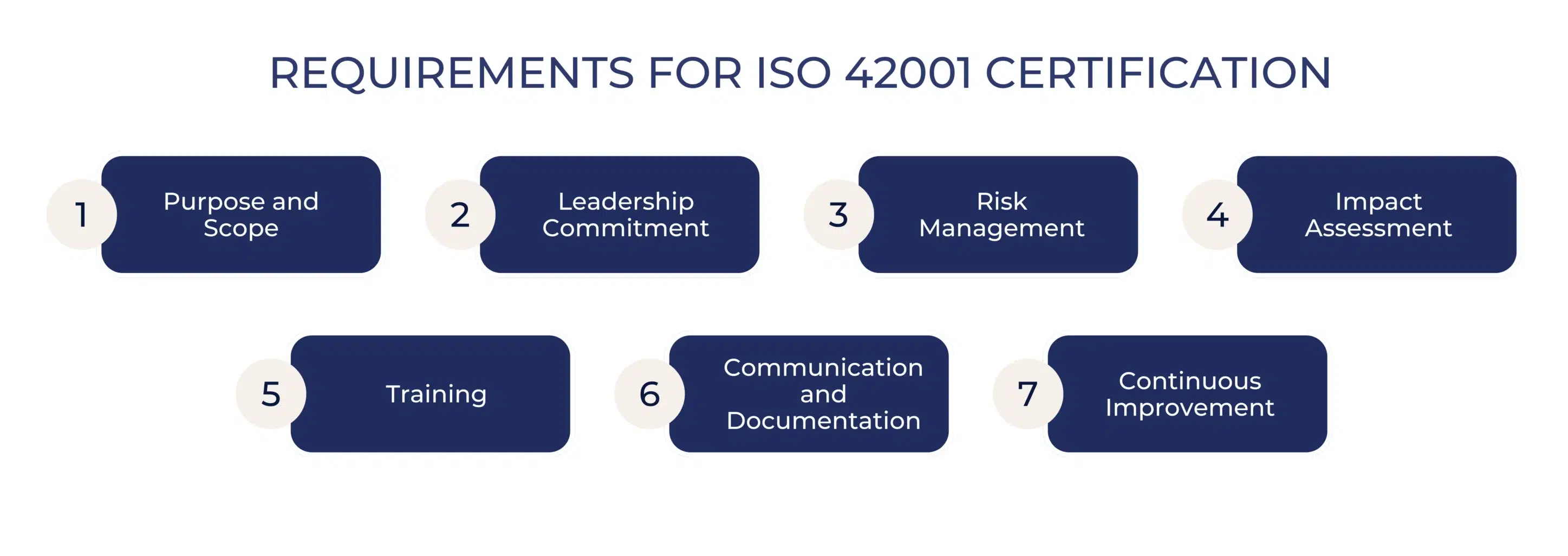
Organizations seeking ISO 42001 Certification in Sweden must demonstrate compliance with all mandatory clauses of the standard as well as the applicable controls specified in Annex A. The certification audit evaluates both the design and operational effectiveness of the AIMS, requiring organizations to present documented evidence rather than declarative assertions of ISO 42001 compliance. The following requirements represent the core elements evaluated during a CertPro ISO 42001 assessment.
ISO 42001 requires a defined set of documented information that must be established, maintained, and retained as evidence of AIMS implementation. Mandatory documented information includes: the AI policy approved by top management; the scope of the AIMS including boundaries and applicability; documented AI risk assessment and treatment processes; AI objectives and the plans to achieve them; evidence of competence for individuals performing AI-related roles; and records of management review outputs. All documentation must be version-controlled, accessible to relevant personnel, and available to auditors during the certification assessment.
Organizations must also maintain documented information covering AI system lifecycle records — including design specifications, testing records, deployment approvals, and post-deployment monitoring data. Supplier and third-party AI component records fall within the documentation scope, as ISO 42001 requires organizations to evaluate and control externally provided AI systems and services. During the ISO 42001 audit in Sweden, CertPro auditors will request and review a representative sample of documented information to verify that records are consistent with the declared AIMS scope and controls.
Technical requirements under ISO 42001 address the governance of AI system design, development, testing, and deployment activities. Organizations must implement controls for AI data quality, model validation, bias assessment, explainability, and system performance monitoring. These controls must be documented in operational procedures that define acceptance criteria, testing methodologies, and escalation protocols for AI system incidents or performance degradation. The ISO 42001 assessment evaluates whether technical controls are consistently applied across all AI systems within the declared AIMS scope.
- ✓Defined AI system scope statement covering all AI products and services within the AIMS boundary
- ✓Documented AI policy approved and communicated by top management leadership
- ✓AI risk assessment methodology covering identification, analysis, and treatment of AI-specific risks
- ✓Role and responsibility assignments for AI governance, including an AI owner or equivalent accountability function
- ✓AI system lifecycle procedures covering design, development, testing, deployment, and monitoring
- ✓Data governance controls addressing quality, provenance, and privacy of AI training and operational data
- ✓Supplier evaluation process for externally sourced AI components, models, and services
- ✓Internal audit program with documented audit schedule, criteria, and findings
- ✓Management review records demonstrating top management engagement with AIMS performance
- ✓Corrective action process with documented evidence of nonconformity resolution and improvement activities
ISO 42001 places explicit requirements on top management that cannot be delegated to technical or compliance functions. Senior leadership must demonstrate personal commitment to the AIMS by approving the AI policy, allocating resources for AIMS implementation and maintenance, integrating AIMS requirements into organizational strategic processes, and participating in management reviews of AIMS performance. During the ISO 42001 assessment, auditors will seek direct evidence of top management engagement — including signed policy documents, meeting records, and resource allocation decisions.
Organizations must also establish clear accountability structures for AI governance. ISO 42001 requires that roles, responsibilities, and authorities for AI-related activities are defined and communicated. This includes accountability for AI risk assessment decisions, AI system approval and sign-off, incident response coordination, and regulatory reporting obligations. For Swedish organizations subject to IMY oversight or EU AI Act requirements, these accountability structures provide the documented chain of responsibility that regulatory authorities expect to find during compliance inspections.
- ✓Documentation Requirements
- ✓Technical and Operational Requirements
- ✓Leadership and Governance Requirements
ISO 42001 Audit Process in Sweden
The ISO 42001 audit process administered by CertPro follows a structured, multi-stage methodology consistent with international accreditation requirements for management system certification audits. The process is designed to provide an independent, evidence-based evaluation of an organization’s AIMS against the requirements of ISO/IEC 42001:2023. Each stage of the ISO 42001 assessment generates documented findings that form the evidentiary basis for the final certification decision.
The Stage 1 audit is a documentation-focused review conducted prior to the on-site or remote operational assessment. During Stage 1, CertPro auditors evaluate the organization’s AIMS documentation against the structural and content requirements of ISO 42001. The Stage 1 audit determines whether the organization has established a sufficiently defined scope, documented the required policies and procedures, and achieved a level of AIMS implementation that justifies proceeding to Stage 2. Stage 1 findings are communicated in a formal written report identifying any areas requiring attention before the Stage 2 audit proceeds.
The Stage 1 audit also establishes the audit program for Stage 2 by identifying the specific controls, processes, and organizational units that will be sampled during the operational assessment. This scoping activity ensures that the Stage 2 audit is appropriately targeted and that audit resources are allocated to the highest-risk areas of the organization’s AIMS. For organizations undergoing ISO 42001 Certification for the first time, the Stage 1 audit provides valuable structured feedback on documentation completeness before the full operational evaluation begins.
The Stage 2 audit is the operational assessment phase in which CertPro auditors evaluate whether the AIMS is functioning effectively in practice — not merely documented on paper. Auditors conduct interviews with personnel responsible for AI governance activities, observe AI system management processes, review operational records and monitoring data, and test the effectiveness of controls through evidence sampling. The Stage 2 audit covers all clauses of ISO 42001 within the declared scope and generates detailed findings classified as conformities, observations, or nonconformities.
Nonconformities identified during the Stage 2 audit are classified as either major or minor. A major nonconformity indicates the absence of a required control or a systematic failure that prevents the AIMS from meeting a mandatory ISO 42001 requirement. A minor nonconformity indicates an isolated gap or inconsistency that does not constitute a systemic failure. Organizations must address major nonconformities before ISO 42001 Certification can be issued. Minor nonconformities may be accepted with a documented corrective action plan and are verified at the subsequent surveillance audit.
Following successful completion of the Stage 2 audit and resolution of any major nonconformities, CertPro’s certification review process evaluates the complete audit record and issues a certification decision. Upon a positive decision, the organization receives a formal ISO 42001 certificate specifying the certified scope, the standard version, and the certificate validity period. ISO 42001 certificates are typically valid for three years, subject to satisfactory completion of annual surveillance audits in Years 1 and 2 and a recertification audit in Year 3.
| Audit Stage | Focus Area | Typical Duration | Output |
|---|---|---|---|
| Stage 1 Audit | Documentation and scope review | 1–2 days | Stage 1 findings report and Stage 2 audit program |
| Stage 2 Audit | Operational effectiveness assessment | 2–5 days | Audit findings report with conformity classification |
| Certification Decision | Evidence review and issuance | 1–2 weeks post-audit | ISO 42001 certificate (3-year validity) |
| Surveillance Audit (Year 1 & 2) | Continued compliance verification | 1–2 days | Surveillance findings report |
| Recertification Audit (Year 3) | Full AIMS reassessment | 2–4 days | Certificate renewal or withdrawal decision |
Surveillance audits conducted in Years 1 and 2 of the certification cycle verify that the AIMS continues to meet ISO 42001 requirements and that corrective actions from previous audits have been effectively implemented. These audits also evaluate whether the organization has maintained its AI policy, continued to manage AI risks, and updated its AIMS in response to changes in AI systems, organizational structure, or applicable regulatory requirements. Organizations that fail surveillance audits may have their certificates suspended or withdrawn pending resolution of identified nonconformities.
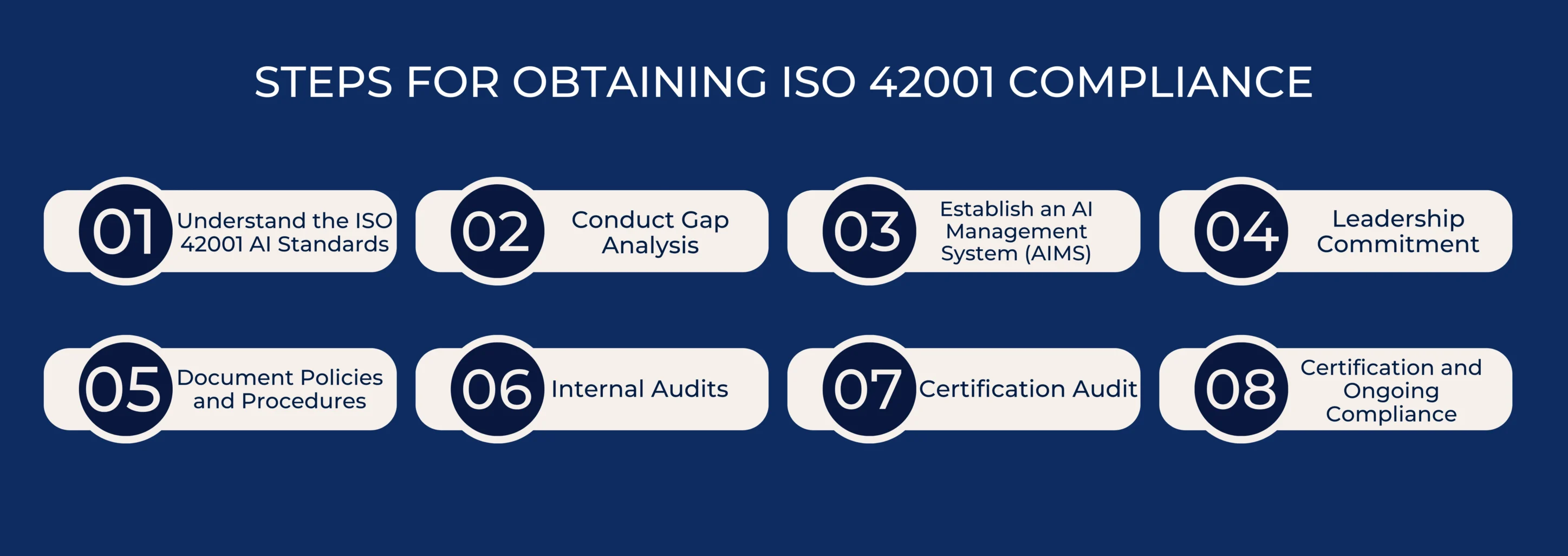
- ✓Stage 1: Documentation Review and Scope Assessment
- ✓Stage 2: Operational Effectiveness Assessment
- ✓Certification Decision, Issuance, and Surveillance
Benefits of ISO 42001 Certification for Swedish Organizations
ISO 42001 Certification in Sweden delivers measurable organizational benefits that extend well beyond regulatory compliance. The certification provides Swedish enterprises with a structured governance credential that addresses growing demands from clients, investors, regulators, and the public for evidence of responsible AI management. The following benefits reflect the direct outcomes of achieving and maintaining AIMS certification through a Licensed CPA Firm audit process.
ISO 42001 compliance documentation provides Swedish organizations with structured evidence of AI governance controls that directly supports alignment with the EU AI Act, GDPR, and national AI governance expectations. The certification reduces regulatory exposure by ensuring that AI risk assessment, documentation, and monitoring processes are systematically maintained and independently verified. For organizations subject to IMY enforcement actions or EU AI Act conformity assessments, AIMS certification provides a defensible compliance record that demonstrates proactive governance rather than reactive remediation.
ISO 42001 Certification in Sweden provides a verifiable competitive differentiator in procurement processes where AI governance credentials are evaluated. Swedish organizations bidding on public sector contracts, EU procurement tenders, or enterprise client agreements increasingly encounter requirements for documented AI governance frameworks. AIMS certification issued by a Licensed CPA Firm satisfies these requirements with a standardized, internationally recognized credential — rather than organization-specific claims that procurement teams must independently evaluate.
In the Swedish fintech and financial services sector — home to companies like Klarna, iZettle, and Nordnet — ISO 42001 Certification in Sweden provides a governance credential relevant to banking regulators, institutional clients, and international payment network compliance requirements. Financial services organizations deploying AI for credit scoring, fraud detection, or algorithmic trading face heightened scrutiny from Finansinspektionen (FI), Sweden’s financial supervisory authority. AIMS certification provides FI and institutional counterparties with documented evidence of controlled AI deployment practices.
AI governance failures — including biased outcomes, unexplainable decisions, privacy violations, and system failures — generate significant reputational damage and create liability exposure for leadership. ISO 42001 Certification demonstrates to customers, partners, employees, and investors that the organization has implemented structured controls designed to prevent governance failures and respond effectively when they occur. This institutional credibility is particularly valuable for Swedish organizations in sectors where public trust is foundational, including healthcare, education, financial services, and public administration.
- ✓Independent third-party verification of AI governance controls by a Licensed CPA Firm
- ✓Documented alignment with EU AI Act compliance requirements and conformity assessment obligations
- ✓Structured evidence base for IMY and Finansinspektionen regulatory inquiries
- ✓Internationally recognized AIMS certification credential accepted across EU jurisdictions
- ✓Competitive differentiation in public procurement and enterprise client tender processes
- ✓Reduced AI-related incident liability through systematic risk identification and treatment
- ✓Integration pathway with existing ISO 27001 and ISO 9001 management system investments
- ✓Enhanced investor confidence through demonstrated AI governance maturity
- ✓Employee accountability framework defining roles and responsibilities for AI system management
- ✓Continual improvement mechanism ensuring AIMS evolves with AI system changes and regulatory updates
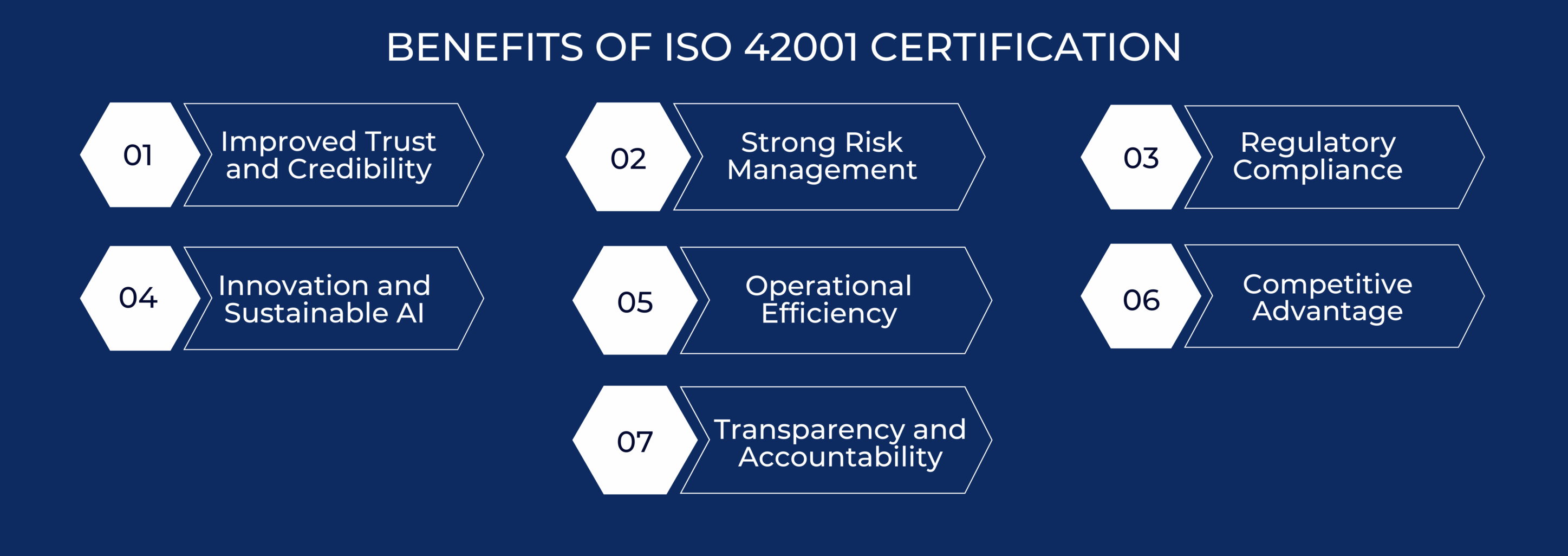
- ✓Regulatory Alignment and Risk Reduction
- ✓Competitive Differentiation and Market Access
- ✓Stakeholder Trust and Institutional Credibility
Industries in Sweden Benefiting from ISO 42001 Certification
ISO 42001 Certification for Sweden companies is relevant across a broad range of industries where AI systems are deployed in operational, decision-support, or customer-facing roles. Sweden’s diverse and innovation-driven economy includes multiple sectors with significant AI integration intensity, each facing distinct governance challenges that ISO 42001 addresses. The following sector analysis identifies the primary industries where AIMS certification delivers the highest compliance and commercial value.
Technology companies in Sweden need to demonstrate responsible AI governance to enterprise clients — particularly those in regulated sectors such as finance, healthcare, and government. Companies developing AI-powered products including machine learning platforms, natural language processing tools, computer vision systems, and AI-driven analytics services benefit from AIMS certification as a product governance credential that can be communicated during sales and contract negotiations. ISO 42001 Certification in Sweden also addresses requirements from financial institution clients conducting vendor due diligence on AI system suppliers in the fintech space.
ISO 42001 Certification helps Swedish financial services organizations govern AI systems used in credit assessment, anti-money laundering (AML) monitoring, customer service automation, and investment algorithm operations. The financial services sector faces dual regulatory pressure from EU financial regulations — including the Digital Operational Resilience Act (DORA) and MiFID II — and the EU AI Act’s high-risk AI system requirements. AIMS certification provides financial institutions with a structured governance framework addressing AI-specific risks while complementing existing financial regulatory compliance programs.
Sweden’s healthcare sector — served by organizations including Karolinska Institutet’s clinical AI research programs, Region Stockholm’s digital health initiatives, and healthtech companies such as Doctrin and Kry — deploys AI for diagnostic support, patient triage, predictive analytics, and administrative automation. AI systems used in healthcare decision support are classified as high-risk under the EU AI Act and are subject to conformity assessment requirements before deployment. ISO 42001 Certification provides healthcare organizations with a governance framework demonstrating controlled AI deployment in line with both regulatory and ethical standards expected by Swedish healthcare authorities.
Sweden’s automotive sector — anchored by Volvo Cars, Scania, and Autoliv — is heavily invested in AI-driven autonomous driving systems, predictive maintenance platforms, and manufacturing quality control applications. These AI deployments involve safety-critical use cases where governance failures can have physical consequences. ISO 42001 Certification provides automotive organizations with a structured framework for AI system lifecycle management that complements existing ISO 26262 functional safety and IATF 16949 quality management standards. Ericsson, headquartered in Stockholm, represents the telecom sector’s need for AIMS certification across network AI optimization, predictive fault management, and customer experience automation.
Swedish government agencies and municipalities increasingly deploy AI for service delivery automation, benefits administration, fraud detection, and public safety applications. The Swedish Agency for Digital Government (DIGG) has developed national guidelines for government AI use, emphasizing transparency, accountability, and human oversight — principles that map directly to ISO 42001 AIMS requirements. Public sector organizations achieving AI management system certification in Sweden demonstrate to citizens, parliamentary oversight bodies, and EU institutions that their AI governance frameworks have been independently verified against international standards.
- ✓Technology and Software Development
- ✓Financial Services and Fintech
- ✓Healthcare and Life Sciences
- ✓Automotive, Telecom, and Manufacturing
- ✓Public Sector and Government
ISO 42001 Certification Cost in Sweden
The cost of ISO 42001 Certification in Sweden is determined by several objective factors related to organizational complexity, AIMS scope, and audit duration. CertPro provides transparent, fixed-price certification audit engagements scoped to the specific characteristics of each organization. Understanding the cost factors that influence certification investment enables organizations to accurately plan and budget for the AIMS certification process.
Factors Influencing Certification Cost
The primary cost driver for ISO 42001 Certification is organizational size, typically measured by the number of personnel involved in AI-related activities within the AIMS scope. Larger organizations with multiple AI systems, distributed governance teams, and complex AI supply chains require longer audit durations and more extensive evidence sampling — which increases audit costs proportionally. The number of distinct AI systems included within the certification scope is a secondary cost driver. Organizations with five AI systems require broader audit coverage than those with a single AI application, regardless of organizational size.
Industry-specific compliance complexity also affects certification cost. Organizations in regulated sectors — such as financial services, healthcare, or critical infrastructure — may require additional audit procedures to evaluate AI governance controls in the context of sector-specific regulatory requirements. For example, a Swedish bank seeking ISO 42001 Certification must demonstrate AIMS controls that address both the standard’s requirements and AI risk considerations specific to financial services applications. CertPro structures audit programs to address these sector-specific dimensions efficiently within the overall certification scope.
Certification Investment Components
- ✓Stage 1 documentation audit fees based on declared AIMS scope complexity
- ✓Stage 2 operational assessment fees based on audit duration and personnel count
- ✓Certification decision and certificate issuance fees
- ✓Annual surveillance audit fees for Years 1 and 2 of the certification cycle
- ✓Recertification audit fees for Year 3 renewal assessment
- ✓Travel and logistics costs for on-site audit activities (where applicable)
- ✓Expedited audit processing fees for organizations with accelerated certification timelines
CertPro provides organizations with a detailed, itemized certification cost proposal following an initial scoping discussion in which organizational parameters, AI system inventory, and certification timeline requirements are established. Fixed-price proposals eliminate cost uncertainty during the ISO 42001 assessment process and enable accurate budgetary planning. Organizations are not subject to variable billing based on audit findings or extended procedures arising from identified nonconformities within the agreed audit scope.
Why Choose CertPro for ISO 42001 Certification in Sweden
CertPro is a Licensed CPA Firm authorized to conduct ISO 42001 certification audits and issue AIMS certification to organizations meeting the requirements of ISO/IEC 42001:2023. CertPro’s positioning as a Licensed CPA Firm distinguishes its certification services from non-CPA certification bodies, providing clients with the additional credibility of an attestation issued under CPA professional standards and accountability frameworks. CertPro administers ISO 42001 Certification in Sweden with audit teams possessing direct expertise in AI governance, management system auditing, and the Swedish and European regulatory environment.
Licensed CPA Firm Credentials and Audit Authority
CertPro’s status as a Licensed CPA Firm means that ISO 42001 Certification issued by CertPro carries the institutional weight of professional certification standards enforced through CPA licensing authorities. This positioning is particularly relevant for Swedish organizations presenting AI governance credentials to financial regulators, institutional investors, or public procurement authorities that distinguish between different categories of certification body. CertPro audit teams are qualified management system auditors with demonstrated competence in AI governance frameworks, regulatory requirements, and the ISO 42001 standard’s technical requirements.
CertPro’s audit methodology for the ISO 42001 assessment in Sweden follows a structured, evidence-based approach that evaluates both the design and operational effectiveness of the AIMS. Audit findings are documented in comprehensive reports providing organizations with a detailed record of conformities, observations, and nonconformities identified during the assessment. This documentation supports both the certification decision and the organization’s own AIMS improvement processes, providing a structured baseline for addressing governance gaps uncovered during the audit.
Sweden-Specific Regulatory Expertise
CertPro’s audit teams operating in Sweden maintain current knowledge of the Swedish regulatory environment, including IMY enforcement priorities, EU AI Act implementation timelines applicable to Swedish organizations, and national AI governance guidelines published by DIGG and other Swedish authorities. This regulatory fluency ensures that ISO 42001 audit procedures in Sweden are calibrated to the specific governance context in which Swedish organizations operate — providing audit findings relevant to actual compliance obligations rather than generic interpretations of international standards.
Fixed Pricing and Transparent Certification Process
CertPro’s fixed-price certification model provides Swedish organizations with complete cost certainty from scope definition through certificate issuance. All audit fees, certification decision costs, and certificate issuance charges are specified in advance in a formal engagement agreement. This pricing transparency eliminates the financial uncertainty that can complicate certification planning — particularly for organizations managing timelines against regulatory deadlines or contractual requirements. CertPro does not charge variable fees based on audit duration extensions, additional evidence requests, or administrative processing activities outside the agreed scope.
ISO 42001 Certification Steps: A Structured Process Overview
The ISO 42001 certification process for Swedish organizations follows a defined sequence of activities from initial scope determination through certificate issuance and ongoing surveillance. Understanding this process enables organizations to plan their certification timeline effectively and allocate internal resources appropriately across each stage. The following numbered steps describe the standard CertPro certification pathway for ISO 42001 audit engagements in Sweden.
- Scope Definition: Identify and document the AI systems, organizational units, and processes to be included within the AIMS certification boundary.
- AIMS Documentation Development: Establish the mandatory documented information required by ISO 42001 Clauses 4 through 10, including AI policy, risk assessment records, and operational procedures.
- Internal Audit Execution: Conduct an internal audit of the AIMS against all applicable ISO 42001 clauses to identify and address gaps before the external certification audit.
- Management Review Completion: Conduct a formal management review of AIMS performance, documenting top management’s evaluation of AI risk treatment, objective achievement, and continual improvement priorities.
- Stage 1 Audit Application: Submit a formal certification application to CertPro and provide AIMS documentation for the Stage 1 documentation review assessment.
- Stage 1 Findings Resolution: Address any documentation gaps or scope clarifications identified in the Stage 1 audit findings report before proceeding to Stage 2.
- Stage 2 Operational Audit: Undergo the CertPro Stage 2 operational effectiveness assessment covering all AIMS clauses and applicable Annex A controls within the declared scope.
- Nonconformity Resolution: Address any major nonconformities identified during the Stage 2 audit and submit corrective action evidence to CertPro for verification.
- Certification Decision Review: CertPro’s certification review function evaluates the complete audit record and issues a formal certification decision.
- Certificate Issuance: Receive your ISO 42001 certificate specifying scope, standard version, and three-year validity period upon a positive certification decision.
- Surveillance Audit Participation: Participate in annual surveillance audits in Years 1 and 2 to maintain certification validity and verify continued AIMS effectiveness.
- Recertification Audit: Undergo a full AIMS reassessment in Year 3 for certification renewal covering all applicable ISO 42001 requirements.
The total elapsed time from initial scope definition to certificate issuance for ISO 42001 Certification in Sweden typically ranges from three to twelve months. This depends on the current maturity of the organization’s AI governance framework, the complexity of the AIMS scope, and the availability of key personnel for audit activities. Organizations with existing ISO 27001 or ISO 9001 certifications often achieve faster certification timelines because pre-existing management system infrastructure can be extended to cover AIMS requirements with targeted additions rather than full-scale development.
Securing ISO 42001 Certification in Sweden with CertPro
ISO 42001 Certification in Sweden is administered by CertPro as a Licensed CPA Firm providing independent, evidence-based management system certification audits. CertPro’s audit services cover the complete ISO 42001 certification lifecycle — from initial scoping discussions through Stage 1 and Stage 2 assessments, certification decision, certificate issuance, and ongoing surveillance. Organizations seeking AIMS certification in Sweden are invited to contact CertPro to initiate the certification scoping process and receive a fixed-price proposal tailored to their specific AI governance context.
CertPro’s certification services are available to Swedish organizations across all industries and organizational sizes. Whether an organization is a Swedish AI startup seeking its first international governance credential, a multinational enterprise standardizing AI governance across EU operations, or a public sector institution meeting national accountability requirements, CertPro’s ISO 42001 audit services provide the independent attestation needed to demonstrate AIMS compliance to regulatory authorities, clients, and other stakeholders. ISO 42001 compliance is not a static achievement — it is an ongoing governance commitment. CertPro’s three-year certification cycle with annual surveillance ensures that certified organizations maintain the standards their certification represents.
FAQ
▶
What is ISO 42001 Certification and why does it matter for Swedish organizations?
▶
How long does the ISO 42001 audit process take in Sweden?
▶
What is an AI Management System (AIMS) under ISO 42001?
▶
Does ISO 42001 Certification satisfy EU AI Act compliance requirements?
▶
Which Swedish industries most commonly pursue ISO 42001 Certification?
▶
What is the difference between Stage 1 and Stage 2 of the ISO 42001 audit?
▶
How does ISO 42001 compliance relate to GDPR and IMY oversight in Sweden?
▶
What is the cost of ISO 42001 Certification in Sweden?

MindSec Launches AI Compliance for Law 25 & ISO 42001
Excerpt from Barchart Article, Published on December 3, 2025 Today, Canadian organizations face increasing pressure to comply with stringent privacy a…

UNDERSTANDING ISO 42001: A GUIDE FOR RESPONSIBLE AI MANAGEMENT SYSTEMS
The invention of artificial intelligence (AI) has changed the operational processes of many industries. However, the rapid growth of technology increa…
ENSURING AI DATA PRIVACY COMPLIANCE WITH ISO 42001
According to Stanford’s AI report, the private AI investment in the U.S. alone reached more than $109 billion last year, which is equal to 12 times th…
Get In Touch
have a question? let us get back to you.