
ISO 27001 Certification in Vancouver
CertPro is a Licensed CPA Firm conducting independent ISO 27001 certification audits in Vancouver. Our audits evaluate information security management systems against ISO/IEC 27001:2022 requirements, assessing documented controls, risk treatment processes, and operational conformity across defined organizational scopes. CertPro serves Vancouver’s financial institutions, technology firms, and data-sensitive enterprises seeking credible, independent ISO 27001 certification in Vancouver.
OUR CLIENTS










Introduction to ISO 27001 Certification in Vancouver
ISO 27001 Certification in Vancouver represents the internationally recognized benchmark for information security management systems (ISMS). The standard, formally designated ISO/IEC 27001:2022, establishes a systematic framework through which organizations define, implement, maintain, and continuously improve controls governing the confidentiality, integrity, and availability of information assets. For Vancouver-based organizations operating in sectors where data sensitivity, regulatory scrutiny, and client trust are paramount, ISO 27001 certification provides a structured and auditable basis for demonstrating information security maturity.
Vancouver’s economy encompasses a dense concentration of technology companies, financial services institutions, healthcare organizations, and professional services firms — all of which handle substantial volumes of sensitive information. The city’s position as a North American technology hub — with significant presence of cloud computing firms, software developers, fintech startups, and multinational enterprises operating Canadian data centers — creates an environment where ISO 27001 compliance is increasingly a baseline expectation rather than a mere competitive differentiator. Clients, regulators, and commercial partners across British Columbia and beyond routinely request evidence of ISO 27001 certification in Vancouver before entering data-sharing or service agreements.
The 2022 revision of ISO 27001 — which superseded the 2013 version — reduced the total number of Annex A controls from 114 to 93, reorganized across four control domains: Organizational Controls, People Controls, Physical Controls, and Technological Controls. The transition deadline established by international certification bodies is October 31, 2025, after which all certifications must reference ISO/IEC 27001:2022. Vancouver organizations currently holding 2013-version certificates must complete transition audits before this deadline to maintain valid certification status. CertPro, operating as a Licensed CPA Firm, conducts independent ISO 27001 audit engagements against the current 2022 standard.
What ISO 27001 Certification Evaluates
ISO 27001 certification audits evaluate whether an organization’s ISMS is designed, implemented, and operating in conformity with the requirements specified in Clauses 4 through 10 of the standard, as well as the Annex A controls selected through the organization’s risk treatment process. Auditors examine documented evidence including the ISMS scope statement, information security policy, risk assessment methodology, risk treatment plan, Statement of Applicability (SoA), internal audit records, management review outputs, and records of corrective actions. The ISO 27001 audit does not assess subjective security outcomes — it evaluates the documented conformity and operational consistency of the management system.
The Statement of Applicability is a particularly critical document in the ISO 27001 certification audit process. It identifies all 93 Annex A controls, declares which are applicable to the organization’s defined scope, and provides justification for any controls excluded. Auditors verify that the SoA accurately reflects the risk treatment decisions documented in the risk treatment plan and that implemented controls operate as described. For Vancouver technology companies managing multi-tenant cloud environments, or financial services firms processing payment data, the SoA typically includes a high proportion of technological and organizational controls related to access management, cryptography, supplier relationships, and incident response.
ISO/IEC 27001:2022 — The Current Standard
ISO/IEC 27001:2022 introduced substantive structural changes beyond the reduction in control count. The 2022 revision reorganized controls into four thematic domains and introduced eleven new controls not present in the 2013 version — including controls addressing threat intelligence, information security for cloud services, ICT readiness for business continuity, data masking, web filtering, and secure coding. For Vancouver organizations that operate cloud-native infrastructures or provide software development services, these new controls directly address operational realities that the 2013 standard covered only indirectly. ISO 27001 compliance with the 2022 version is now the required standard for all new and transitioning certifications.
The 2022 standard also introduced a new attribute structure for Annex A controls, allowing organizations to tag controls against properties such as control type (preventive, detective, corrective), information security properties (confidentiality, integrity, availability), cybersecurity concepts, operational capabilities, and security domains. This attribute taxonomy enables more systematic mapping of controls against external frameworks and regulatory requirements. It is a practical benefit for Vancouver financial services firms required to demonstrate alignment with OSFI guidelines, the Personal Information Protection Act (PIPA) of British Columbia, or federal privacy legislation under PIPEDA and its successor, Bill C-27.
ISO 27001 Certification in Vancouver — Regulatory and Market Context
ISO 27001 certification for Vancouver businesses operates within a layered regulatory environment. British Columbia’s Personal Information Protection Act (PIPA BC) imposes obligations on private-sector organizations regarding the collection, use, and disclosure of personal information. At the federal level, the Personal Information Protection and Electronic Documents Act (PIPEDA) governs cross-border data flows and sets baseline privacy standards for commercially active organizations. Proposed federal modernization through Bill C-27 would introduce the Consumer Privacy Protection Act (CPPA), significantly increasing accountability obligations and penalty exposure. ISO 27001 compliance provides a documented control framework that maps directly to many obligations under these legislative instruments.
For Vancouver technology companies serving US-based enterprise clients, ISO 27001 certification frequently satisfies vendor security requirements embedded in enterprise contracts, procurement frameworks, and third-party risk management programs. US enterprises subject to regulations such as HIPAA (healthcare data), SOX (financial reporting controls), or CMMC (defense procurement) routinely include ISO 27001 certification as an acceptable evidence standard for supplier due diligence. Vancouver’s geographic proximity to US technology markets and the prevalence of cross-border SaaS relationships amplify the commercial relevance of pursuing ISO 27001 certification in Vancouver’s technology sector.

Benefits of ISO 27001 Certification for Vancouver Organizations
ISO 27001 certification delivers measurable organizational benefits that extend well beyond receiving a formal certificate. For Vancouver organizations, these benefits manifest across risk management, regulatory positioning, commercial relationships, and operational discipline. The certification process compels systematic identification of information assets, assessment of risks to those assets, selection and implementation of proportionate controls, and establishment of governance mechanisms to sustain the management system over time. The result is a documented, auditable security posture that clients, regulators, and insurers can evaluate using a standardized reference framework.
The foundational benefit of ISO 27001 compliance is the systematic reduction of information security risk through a structured risk assessment and treatment process. Organizations conducting an ISO 27001-compliant risk assessment identify threats and vulnerabilities affecting information assets within the defined ISMS scope, estimate the likelihood and impact of identified risks, and select controls from Annex A or elsewhere to treat risks to an acceptable level. This process produces a risk register and risk treatment plan maintained as living documents and reviewed at defined intervals. The discipline of maintaining current risk documentation compels organizations to continuously monitor changes in the threat landscape and adapt controls accordingly.
For Vancouver financial services firms managing client investment data, personal financial records, and transaction processing systems, the risk assessment process under ISO 27001 directly addresses the most consequential threat categories in that sector: unauthorized access, data exfiltration, ransomware, and insider threats. For Vancouver healthcare organizations managing electronic health records and medical device interfaces, ISO 27001 controls address data integrity, access restriction, and audit logging — all of which align with privacy obligations under provincial health information legislation. In each context, ISO 27001’s risk-based approach produces controls calibrated to the organization’s specific risk profile rather than a generic checklist.
ISO 27001 certification provides Vancouver organizations with a structured mechanism for mapping regulatory obligations to documented controls, reducing duplication of compliance effort across multiple regulatory frameworks. Organizations subject to both PIPA BC and PIPEDA — which describes the majority of BC-based private-sector organizations processing personal information — can use their ISO 27001 control set and documented procedures as primary evidence of privacy safeguards, supplemented by privacy-specific documentation where required. The control mapping exercise performed during SoA development naturally surfaces regulatory requirements and links them to specific technical and organizational controls.
Vancouver fintech organizations operating under OSFI Guideline B-10 (Third-Party Risk Management) and Guideline E-23 (Enterprise-Wide Model Risk Management) benefit from ISO 27001 compliance as a foundation for demonstrating information security controls to federal regulators. OSFI’s increasing focus on technology and cyber risk resilience — reflected in its 2023 technology and cyber risk management guidelines — aligns substantially with ISO 27001 requirements for asset management, access control, supplier security, and incident management. Maintaining ISO 27001 certification provides a continuous, independently verified evidence base for regulatory examinations and supervisory inquiries.
ISO 27001 certification creates a verifiable trust signal in commercial relationships. For ISO 27001 certified companies in Vancouver competing for enterprise contracts — whether with large Canadian corporations, US multinationals, or public sector bodies — the certificate provides objective evidence that an independent third party has assessed and confirmed the conformity of the organization’s information security management system. This evidence is increasingly requested in RFP processes, vendor onboarding questionnaires, and due diligence exercises conducted by procurement and legal teams who require auditable security credentials rather than self-attestations.
Vancouver technology companies pursuing enterprise SaaS contracts with clients in regulated industries — banking, insurance, healthcare, government — frequently encounter security questionnaire requirements that can be substantially addressed through ISO 27001 certification documentation. The certificate demonstrates that an accredited certification body has reviewed and confirmed the organization’s ISMS, reducing the burden of responding to individual questionnaires and accelerating vendor approval processes. In competitive procurement scenarios, ISO 27001 certification distinguishes certified organizations from non-certified competitors, particularly when security posture is a scored evaluation criterion.
- ✓Systematic reduction of information security risk through documented risk treatment processes
- ✓Independent, auditable evidence of ISMS conformity for client and regulatory purposes
- ✓Structured mapping of regulatory obligations (PIPA BC, PIPEDA, OSFI guidelines) to documented controls
- ✓Accelerated vendor onboarding in enterprise procurement processes requiring security credentials
- ✓Reduced cyber insurance premium exposure through demonstrated control maturity
- ✓Improved incident detection and response through operationally tested procedures
- ✓Full alignment with ISO/IEC 27001:2022 including eleven new controls addressing cloud and modern threat vectors
- ✓Foundation for integration with complementary frameworks including SOC 2, ISO 27701, and NIST CSF
- ✓Demonstrated commitment to information security that supports talent acquisition and retention
- ✓Continuous improvement discipline embedded in the management system through annual surveillance audits
The cyber insurance market has hardened significantly in recent years, with underwriters applying more rigorous technical underwriting criteria and imposing higher premiums on organizations unable to demonstrate documented security controls. ISO 27001 certification provides insurers with structured evidence of control maturity — including documented risk assessments, access management procedures, incident response plans, and business continuity provisions — that directly addresses the underwriting criteria used to assess cyber risk. Vancouver organizations holding valid ISO 27001 certificates may qualify for more favorable premium structures, higher coverage limits, or more comprehensive policy terms compared to non-certified organizations in equivalent risk categories.
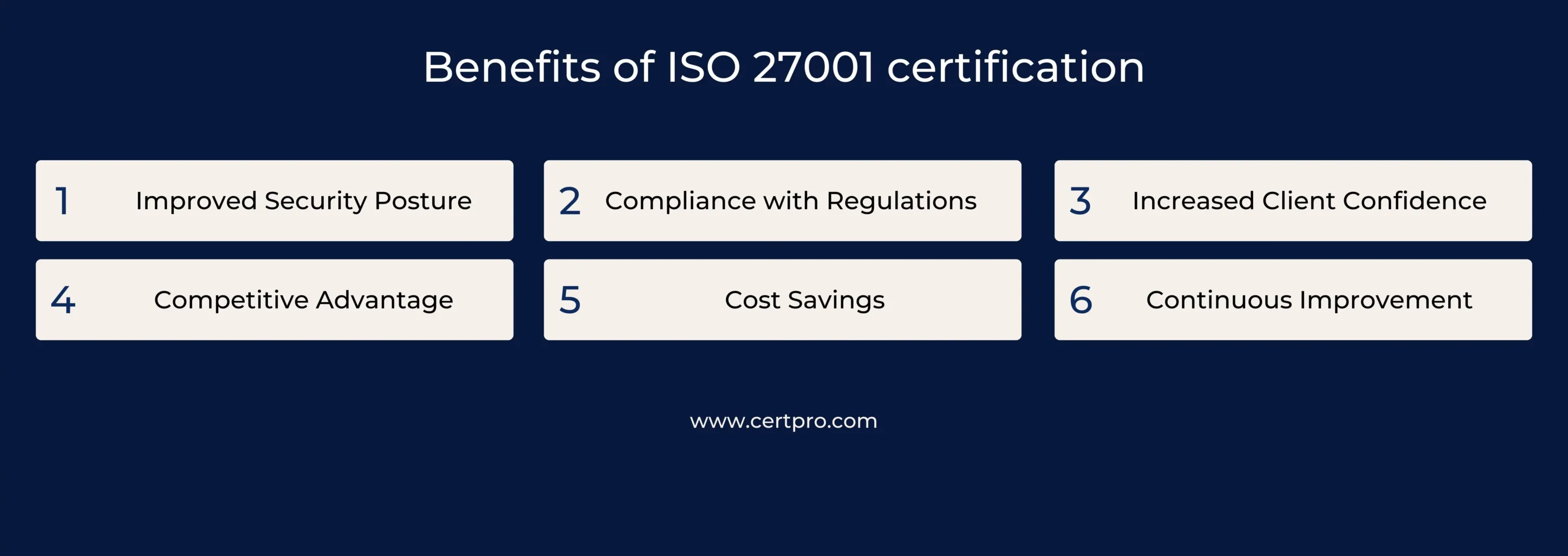
- ✓Risk Reduction and Information Asset Protection
- ✓Regulatory Alignment and Compliance Efficiency
- ✓Commercial Advantage and Client Trust
- ✓Cyber Insurance and Risk Transfer Positioning
ISO 27001 Certification Process in Vancouver
The ISO 27001 certification process follows a structured sequence of audit stages designed to provide independent assurance that an organization’s ISMS meets the requirements of ISO/IEC 27001:2022. CertPro, as a Licensed CPA Firm, conducts ISO 27001 certification audits through a defined methodology that encompasses scope determination, documentation review, operational testing, nonconformity assessment, and certification decision. The process is structured to evaluate evidence objectively and impartially — auditors assess what the organization has documented and what it demonstrably does, not what it intends to do.
The ISO 27001 certification process begins with a formal definition of the ISMS scope, which specifies the organizational boundaries, locations, activities, assets, and technologies to which the management system applies. The scope statement must be sufficiently precise to allow auditors to assess conformity within defined boundaries, and sufficiently comprehensive to include all information assets material to the organization’s information security risks. Poorly defined scopes — those that exclude critical systems or organizational units without justification — are identified as nonconformities during the Stage 1 review.
Stage 1 of the ISO 27001 audit constitutes the documentation review phase. Auditors examine the organization’s ISMS documentation to assess whether the management system has been designed in conformity with ISO 27001 requirements. Key documents reviewed include the ISMS scope statement, information security policy approved by top management, risk assessment methodology and results, risk treatment plan, Statement of Applicability, objectives and metrics, documented procedures for mandatory processes, and records of internal audits and management reviews. Stage 1 identifies areas requiring further evidence during Stage 2 and confirms that the organization is prepared to proceed to operational audit activities.
Stage 2 of the ISO 27001 audit assesses whether the ISMS is operating in conformity with documented requirements and whether implemented controls are functioning effectively. Auditors conduct interviews with process owners and control operators, observe operational activities, examine system configurations and access logs, review incident records and corrective action documentation, and test controls against the procedures and parameters specified in organizational documentation. Control testing during Stage 2 focuses on the Annex A controls declared applicable in the Statement of Applicability, with emphasis on controls addressing the organization’s highest-priority risk areas.
During Stage 2, auditors document findings as conformities, observations, or nonconformities. Nonconformities are classified as major or minor based on their nature and significance. A major nonconformity indicates a failure to meet a mandatory ISO 27001 requirement or a complete breakdown of a critical control — it must be resolved before the certification decision can be made. A minor nonconformity indicates a partial failure or isolated instance of non-compliance that does not represent a systematic breakdown. Organizations are provided a defined period to submit documented evidence of corrective action for identified nonconformities before the certification decision is finalized.
Following completion of Stage 2 and resolution of identified nonconformities, the certification body conducts a certification decision review. This review examines the audit report, evidence of corrective actions, and the overall assessment of ISMS conformity. If the review confirms that all mandatory requirements have been met and nonconformities adequately addressed, the certification decision is positive and the ISO 27001 certificate is issued. The certificate specifies the scope of certification, the standard version against which the organization was assessed, the certificate issue date, and the certificate expiry date — typically three years from the initial certification decision.
ISO 27001 certificates are valid for a three-year certification cycle, during which the certified organization undergoes annual surveillance audits — typically conducted at approximately 12-month intervals following initial certification. Surveillance audits assess continued conformity with ISO 27001 requirements, verify that corrective actions from previous audits have been sustained, and review changes to the ISMS since the preceding audit. At the conclusion of the three-year cycle, the organization undergoes a full recertification audit to renew the certificate for a further three-year period. Failure to maintain surveillance audit schedules may result in suspension or withdrawal of certification.
| Audit Stage | Activities | Typical Duration |
|---|---|---|
| Stage 1 — Documentation Review | ISMS scope verification, mandatory document review, SoA assessment, audit program planning | 1–3 days |
| Stage 2 — Operational Assessment | Control testing, interviews, evidence review, nonconformity identification | 2–5 days |
| Corrective Action Review | Evidence review for identified nonconformities before certification decision | 2–4 weeks |
| Certification Decision | Review of audit report and corrective action evidence, certificate issuance | 1–2 weeks |
| Annual Surveillance Audit | Continued conformity assessment, change review, corrective action follow-up | 1–2 days |
Nonconformity management is a mandatory requirement of ISO 27001 and a critical element evaluated during certification audits. Organizations must maintain documented procedures for identifying nonconformities, conducting root cause analysis, implementing corrective actions, and verifying the effectiveness of those actions. During an ISO 27001 audit, auditors examine the organization’s nonconformity records to assess whether identified issues were properly categorized, investigated, and resolved — and whether systemic issues were addressed at the root cause level rather than through superficial correction. A nonconformity management process that addresses symptoms without investigating underlying causes is itself a finding during the ISO 27001 audit.

- ✓Stage 1: Scope Definition and Documentation Review
- ✓Stage 2: Operational Conformity Assessment and Control Testing
- ✓Certification Decision and Certificate Issuance
- ✓Nonconformity Management and Corrective Action
Requirements for ISO 27001 Certification
ISO 27001 certification requirements are specified in Clauses 4 through 10 of the standard and the 93 Annex A controls. These requirements apply universally regardless of organization size, sector, or geography — they apply equally to ISO 27001 certification for Vancouver technology companies with 20 employees and to multinational corporations with thousands of staff. The requirement framework distinguishes between requirements that are universally mandatory (all Clause 4–10 requirements) and Annex A controls that are applicable based on the organization’s risk assessment results and documented exclusion justifications.
ISO 27001 specifies mandatory documented information that organizations must maintain and retain as evidence of ISMS operation. Mandatory documents include the ISMS scope statement, information security policy, risk assessment methodology, risk assessment results, risk treatment plan, Statement of Applicability, information security objectives, evidence of competence of persons performing ISMS-related work, operational planning and control records, internal audit program and results, management review results, and records of nonconformities and corrective actions. Additional documentation is required for applicable Annex A controls — including procedures for access management, incident management, supplier security, and business continuity.
Document control is itself a requirement under Clause 7.5 of ISO 27001. Documented information must be identified, formatted appropriately, reviewed and approved, controlled for distribution and access, protected against unauthorized modification, and retained and disposed of in accordance with defined retention schedules. During the ISO 27001 audit, auditors assess not only the content of documentation but also whether the document control process functions as specified — including version control records, approval evidence, and access restriction mechanisms. Organizations that maintain extensive ISMS documentation but lack evidence of a functioning document control process present findings during audit.
ISO 27001 Clause 5 requires demonstrable top management commitment to and accountability for the ISMS. Top management must establish an information security policy, assign information security roles and responsibilities, ensure ISMS objectives are set and resources allocated, and participate in management reviews of ISMS performance. Auditors assess top management involvement through interview, review of management review minutes, and examination of evidence demonstrating that security objectives receive organizational resources and that information security performance is monitored at the executive level. Nominal policy sign-off without substantive management engagement represents a compliance gap under ISO 27001.
Management review is a specific requirement under Clause 9.3 that mandates periodic formal review of ISMS performance by top management. Management review inputs must include information security performance metrics, results of risk assessments, audit findings, status of corrective actions, feedback from interested parties including clients and regulators, and opportunities for continual improvement. Management review outputs must document decisions and actions taken, including resource allocation decisions. Auditors review management review records to confirm that reviews occurred at defined intervals, covered all required input topics, and produced documented decisions — not merely discussion records without stated outcomes.
Annex A of ISO/IEC 27001:2022 specifies 93 controls across four domains. Technical controls — falling primarily within the Technological Controls domain — address areas including user endpoint devices, privileged access rights, information access restriction, secure authentication, cryptography, network security management, web filtering, secure coding, configuration management, information deletion, data masking, data leakage prevention, monitoring activities, technical vulnerability management, and information systems auditing. For ISO 27001 certification, Vancouver technology companies must demonstrate that applicable technical controls are implemented with documented configurations and operational evidence — not merely specified in policy documents.
Organizational controls within Annex A address information security policies, roles and responsibilities, segregation of duties, management responsibilities, contact with authorities, project management, threat intelligence, information security in supplier relationships, incident management, business continuity planning, and legal and regulatory compliance. People controls address screening, terms and conditions of employment, information security awareness and training, disciplinary processes, responsibilities after termination or change of employment, confidentiality agreements, and remote working. Physical controls address physical security perimeters, physical entry controls, securing offices and facilities, physical security monitoring, protection against external threats, working in secure areas, clear desk and clear screen policies, and equipment security.
- ✓ISMS scope statement with defined organizational, asset, and geographical boundaries
- ✓Information security policy approved and communicated by top management
- ✓Documented risk assessment methodology with defined risk acceptance criteria
- ✓Current risk register reflecting all identified threats and vulnerabilities
- ✓Risk treatment plan with control selections linked to identified risks
- ✓Statement of Applicability covering all 93 Annex A controls with inclusion/exclusion justifications
- ✓Measurable information security objectives with documented achievement plans
- ✓Evidence of competence for personnel performing ISMS roles
- ✓Internal audit program with completed audit reports and findings
- ✓Management review records with documented decisions and resource allocations
ISO 27001 Clause 9.2 requires organizations to conduct internal audits of the ISMS at planned intervals to assess conformity with the organization’s own requirements and ISO 27001 requirements, and to assess effective implementation and maintenance of the management system. Internal audits must be conducted by auditors who are independent of the activities being audited — meaning personnel cannot audit their own work. Internal audit programs must define audit scope, methods, frequency, and responsibilities, and results must be reported to relevant management. Evidence that internal audits have been conducted, findings documented, and corrective actions initiated for identified nonconformities is required during the external ISO 27001 certification audit.
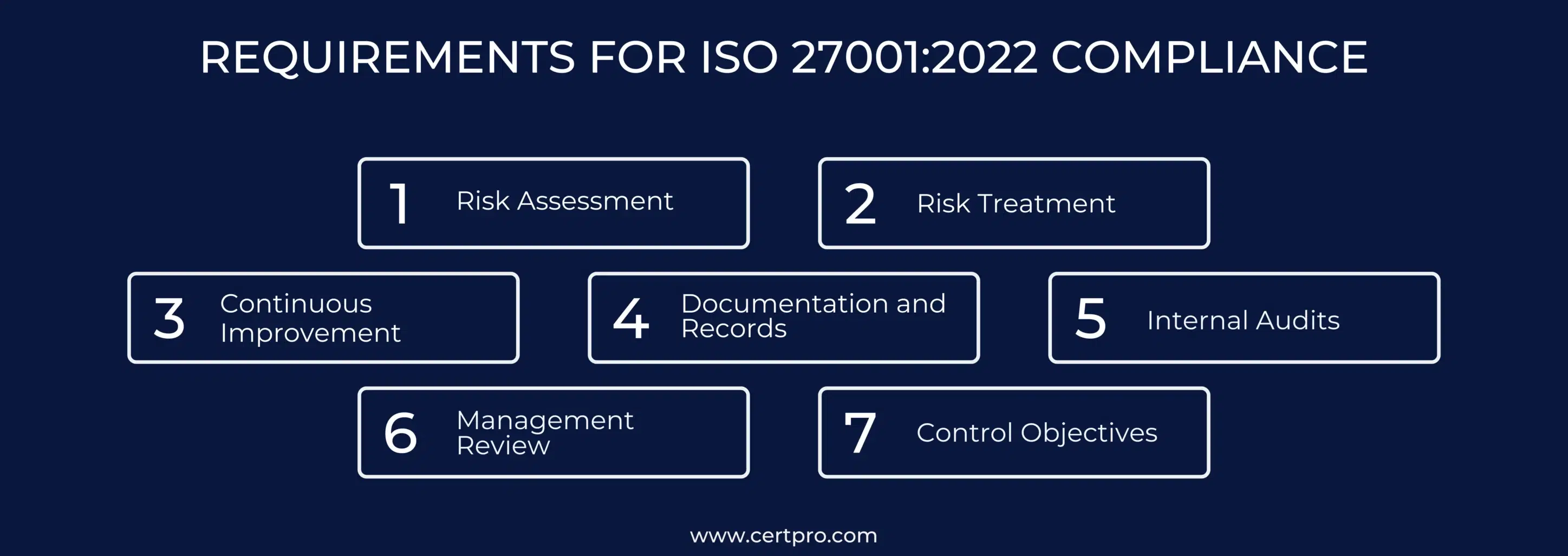
- ✓Documentation Requirements
- ✓Leadership and Governance Requirements
- ✓Technical and Operational Control Requirements
- ✓Internal Audit Requirements
ISO 27001 Certification Cost in Vancouver
ISO 27001 certification cost in Vancouver is determined by multiple factors that interact to produce an organization-specific total investment. The primary cost components are the external audit fees charged by the certification body, internal resource costs associated with ISMS development and maintenance, and technology costs for security tools and systems required to implement applicable controls. Understanding the structure of ISO 27001 cost is essential for Vancouver organizations planning certification budgets and assessing the return on investment against the commercial and risk-reduction benefits that certification generates.
External Audit Fee Structure
External ISO 27001 audit fees are typically calculated based on the size and complexity of the organization, defined by factors including total employee count within the certification scope, number and complexity of technology systems in scope, number of physical locations included in the ISMS scope, sector-specific risk complexity, and the number of Annex A controls declared applicable. ISO 27001 certification cost in Vancouver for small organizations with 25–50 employees and a single-location scope typically ranges from CAD $8,000 to $18,000 for the initial two-stage certification audit. Mid-size organizations with 50–250 employees and more complex technology environments typically incur audit fees in the range of CAD $18,000 to $45,000. Larger organizations or those with multi-location scopes should expect audit fees exceeding CAD $45,000 for initial certification.
Annual surveillance audit fees are typically 30–40% of the initial certification audit fee, as they constitute a partial scope review rather than a full two-stage assessment. Recertification audits at the end of the three-year cycle are typically 70–85% of the initial certification fee. Vancouver organizations should budget for the full three-year certification cycle cost when assessing the financial commitment of ISO 27001 certification. The total ISO 27001 cost across the initial certification and two surveillance audits before recertification represents the recurring investment required to maintain valid certification status.
Internal Resource and Technology Costs
The internal resource cost of ISO 27001 certification typically represents the largest component of total certification investment. Organizations must dedicate personnel time to developing and maintaining ISMS documentation, conducting risk assessments, implementing and operating controls, managing the internal audit program, facilitating management reviews, and coordinating the external audit process. For a first-time certification, the internal effort to develop all required documentation, conduct the initial risk assessment, and establish the management system commonly requires 200–600 person-hours across technical, management, and administrative staff — depending on the maturity of existing security processes and documentation.
Technology costs for ISO 27001 compliance depend on the gap between existing security tool coverage and the controls required by the risk treatment plan and Statement of Applicability. Common technology investments associated with first-time certification include identity and access management systems, multi-factor authentication deployment, security information and event management (SIEM) logging infrastructure, vulnerability scanning tools, endpoint detection and response solutions, data loss prevention capabilities, and backup and recovery testing infrastructure. Vancouver technology companies that have already invested in modern security tooling as part of cloud-native infrastructure practices may face lower incremental technology costs than organizations with legacy on-premises environments requiring significant uplift.
| Organization Size | Initial Certification Audit (CAD) | Annual Surveillance Audit (CAD) | 3-Year Cycle Total (CAD) |
|---|---|---|---|
| Small (25–50 employees, single site) | $8,000 – $18,000 | $3,000 – $7,000 | $14,000 – $32,000 |
| Mid-size (50–250 employees, moderate complexity) | $18,000 – $45,000 | $6,000 – $16,000 | $30,000 – $77,000 |
| Large (250+ employees, multi-location or complex tech) | $45,000+ | $15,000+ | $75,000+ |
Cost-Benefit Analysis of ISO 27001 Certification in Vancouver
A rigorous cost-benefit analysis of ISO 27001 certification cost for Vancouver organizations must quantify both the direct costs and the commercial and risk-reduction benefits. On the benefit side, organizations should consider: the value of contracts secured through certified vendor qualification; the reduction in time spent responding to security questionnaires and due diligence inquiries; the reduction in cyber insurance premiums attributable to demonstrated control maturity; the regulatory penalty exposure avoided through documented compliance; and the reduction in incident response costs resulting from mature detection and response controls. For Vancouver technology companies with active enterprise sales pipelines, the contract-enablement benefit of ISO 27001 certification in Vancouver frequently justifies the full certification cost within the first renewal cycle.
ISO 27001 Certification for Specific Vancouver Industries
ISO 27001 certification in Vancouver is pursued across multiple industry sectors, each with distinct information security risk profiles, regulatory obligations, and commercial drivers. The ISO 27001 standard’s risk-based approach accommodates the varying threat environments and data types associated with different industries. The control set implemented by a financial services firm managing payment data will differ substantially from that implemented by a software company delivering cloud services — even though both are assessed against the same mandatory requirements of ISO/IEC 27001:2022.
ISO 27001 Certification for Vancouver Technology Companies
ISO 27001 certification for Vancouver technology companies addresses the specific risk environment of software development, cloud service delivery, and managed services operations. Technology firms managing multi-tenant SaaS platforms face particular risks related to customer data segregation, API security, privileged access management, and the security of software development pipelines. The 2022 standard’s new controls addressing secure coding, information security for cloud services, and configuration management are directly relevant to these environments. ISO 27001 certification audits for technology companies typically involve detailed assessment of development environment access controls, code repository security, change management processes, and data handling procedures for customer data.
Vancouver’s technology sector includes a significant concentration of cybersecurity companies, AI/ML platform providers, and enterprise software vendors whose clients demand ISO 27001 certification as a condition of commercial engagement. For these organizations, certification is not merely a risk management tool — it is a fundamental commercial requirement enabling participation in enterprise market segments. ISO 27001 certification in Vancouver that technology companies obtain through CertPro’s independent audit process provides a certificate issued by a Licensed CPA Firm, offering the organizational authority and independence assurance that enterprise procurement teams require.
ISO 27001 Certification for Vancouver Financial Services
ISO 27001 certification for Vancouver financial services organizations — including banks, credit unions, insurance firms, investment managers, and fintech companies — operates within a layered regulatory environment. Federally regulated financial institutions supervised by OSFI are subject to technology and cyber risk guidelines that align substantively with ISO 27001 requirements. Provincially regulated credit unions under the Financial Institutions Act of BC face similar supervisory expectations from the BC Financial Services Authority (BCFSA). ISO 27001 compliance achieved through certification provides a documented evidence base for regulatory examinations, addressing key supervisory focus areas: access control, data protection, vendor risk management, incident management, and business continuity.
Vancouver’s fintech sector — encompassing payment processors, digital lending platforms, open banking solution providers, and cryptocurrency exchanges — faces evolving regulatory requirements related to data security and operational resilience. The Financial Transactions and Reports Analysis Centre of Canada (FINTRAC) imposes compliance program requirements that include elements addressable through ISO 27001 controls. Payment Card Industry Data Security Standard (PCI DSS) compliance obligations for payment processors can be structured to share evidence with ISO 27001 audit processes, reducing duplication. ISO 27001 certification that Vancouver financial services firms obtain creates a foundation for integrated compliance management across multiple overlapping regulatory frameworks.
ISO 27001 Certification for Vancouver Healthcare Organizations
ISO 27001 certification for Vancouver healthcare organizations addresses the specialized risk environment surrounding electronic health records, medical device connectivity, health information exchange, and clinical research data. British Columbia’s e-health ecosystem — including the provincial electronic health record infrastructure, health authority networks, and private health technology companies — processes highly sensitive personal health information protected under the E-Health (Personal Health Information Access and Protection of Privacy) Act and the provincial Freedom of Information and Protection of Privacy Act (FIPPA). ISO 27001 certification provides healthcare organizations with a systematic framework for demonstrating information security controls to health authorities, privacy regulators, and clinical research partners.
Healthcare technology companies in Vancouver developing clinical decision support systems, telemedicine platforms, or medical device software face security requirements from multiple directions: provincial privacy legislation, health authority procurement requirements, US HIPAA requirements for cross-border data flows, and Health Canada regulatory expectations for software as a medical device (SaMD). ISO 27001 certification provides a common evidence framework referenceable across these varied requirements, reducing the compliance burden on organizations navigating multiple regulatory regimes simultaneously. The ISO 27001 audit’s evaluation of access control, audit logging, encryption, and incident response directly addresses security expectations embedded in health information legislation and health authority contracts.
ISO 27001 Certification vs. Other Security Frameworks Relevant to Vancouver
Vancouver organizations operating in complex regulatory and commercial environments frequently encounter multiple security frameworks with overlapping objectives. Understanding how ISO 27001 certification relates to other frameworks — SOC 2, NIST CSF, PCI DSS, and CIS Controls — enables organizations to design integrated compliance programs that maximize evidence reuse and minimize duplication of audit effort. The relationships between these frameworks are well-documented and can be systematically exploited in the design of the ISMS and its associated documentation.
ISO 27001 vs. SOC 2 — Distinct Audit Frameworks
ISO 27001 and SOC 2 are both information security assurance frameworks but differ fundamentally in structure, scope, and output. ISO 27001 is a management system certification standard that results in a certificate attesting conformity with ISO/IEC 27001:2022 requirements. SOC 2 is an attestation standard developed by the American Institute of Certified Public Accountants (AICPA) that results in an audit report assessing controls relevant to the Trust Services Criteria (TSC) — security, availability, processing integrity, confidentiality, and privacy. ISO 27001 certification applies globally and is recognized by international procurement and regulatory audiences. SOC 2 reports are primarily used in US and North American commercial contexts where enterprise clients require TSC-based evidence.
Vancouver technology companies serving both US enterprise clients — who commonly require SOC 2 Type II reports — and international or public sector clients — who commonly require ISO 27001 certification — may need to maintain both frameworks simultaneously. The control domains of ISO 27001 and SOC 2 overlap substantially, particularly in access control, change management, incident response, and availability. This allows organizations to design integrated control environments that generate evidence usable in both audit processes. CertPro, as a Licensed CPA Firm with expertise in both frameworks, conducts independent ISO 27001 audit services and can advise on evidence design that supports dual-framework audit efficiency without duplicating control documentation.
ISO 27001 vs. NIST Cybersecurity Framework
The NIST Cybersecurity Framework (CSF) — developed by the US National Institute of Standards and Technology — is a voluntary framework that organizes cybersecurity activities into five functions: Identify, Protect, Detect, Respond, and Recover. Unlike ISO 27001, NIST CSF does not result in a formal certification and does not carry independent third-party audit requirements. NIST CSF is widely used as an internal assessment and maturity measurement tool, particularly by US federal contractors and organizations pursuing alignment with US government cybersecurity expectations. ISO 27001 certification differs from NIST CSF adoption by providing independent, third-party verified conformity evidence rather than self-assessed maturity scores.
Vancouver organizations that have implemented NIST CSF as an internal security maturity framework may find the transition to ISO 27001 certification relatively structured, as the substantive control areas addressed by the two frameworks overlap significantly. NIST CSF’s Protect function maps closely to ISO 27001 Annex A controls in the technological and organizational domains. The key distinction is that ISO 27001 certification requires not only control implementation but also the operation of a management system with defined governance structures, documented processes, internal audit, and management review — elements that go beyond the control-catalogue focus of NIST CSF.
ISO 27001 and PCI DSS — Complementary Standards for Payment Data Environments
Payment Card Industry Data Security Standard (PCI DSS) requirements apply specifically to organizations that store, process, or transmit payment card data. ISO 27001 applies broadly to all information assets within the defined ISMS scope. For Vancouver financial services firms and payment processors subject to both frameworks, the relationship is complementary rather than substitutable. PCI DSS provides prescriptive technical requirements for the cardholder data environment, while ISO 27001 provides the management system governance framework within which PCI DSS controls operate. Evidence generated for PCI DSS compliance — including network segmentation documentation, access control configurations, and encryption specifications — can be incorporated into ISO 27001 control evidence, reducing the total documentation burden.
| Framework | Output | Audit Type | Primary Audience | Vancouver Relevance |
|---|---|---|---|---|
| ISO 27001 | Certificate of Conformity | Third-party certification audit | International, government, enterprise | Technology, financial services, healthcare, government |
| SOC 2 | Attestation Report (Type I/II) | CPA attestation examination | US enterprise clients, investors | SaaS companies with US customers |
| NIST CSF | Maturity assessment (internal) | Self-assessment or advisory | US federal contractors | Organizations with US government supply chains |
| PCI DSS | Compliance certificate/report | QSA assessment | Payment card brands, acquirers | Payment processors, fintech, e-commerce |
ISO 27001 Audit Services in Vancouver — CertPro’s Methodology
CertPro conducts ISO 27001 audit services in Vancouver as a Licensed CPA Firm performing independent conformity assessments against ISO/IEC 27001:2022. The audit methodology follows structured and impartial practices designed to evaluate whether documented policies, processes, and controls operate consistently and in conformity with the requirements of the standard across the defined audit period and organizational scope. CertPro’s audit teams operate with full independence from the organizations being assessed — auditors have no prior advisory, implementation, or consulting relationship with the subject organization.
Evidence-Based Audit Approach
CertPro’s ISO 27001 audit methodology in Vancouver is grounded in evidence-based assessment. Auditors do not accept verbal representations as evidence of control operation — all findings are supported by documented evidence including configuration records, system logs, access control matrices, training completion records, incident reports, supplier contract clauses, and management review minutes. The evidence review process examines both the design of controls (whether the control as described would achieve its security objective if operating as intended) and the operating effectiveness of controls (whether the control has been operating consistently throughout the audit period).
Evidence sampling during Stage 2 operational assessments follows structured sampling methodologies appropriate to the control type and population size. For automated technical controls — such as access logging, multi-factor authentication enforcement, or automated vulnerability scanning — auditors examine system configuration evidence, log extracts, and exception reports. For manual controls — such as access request approvals, periodic access reviews, or management review meetings — auditors examine records produced by the control activity over a defined sample period. The sampling approach is designed to provide reasonable assurance of control consistency without requiring examination of every individual control execution instance.
CertPro’s Vancouver Audit Coverage
CertPro’s ISO 27001 audit services in Vancouver cover organizations across British Columbia, with particular depth of experience in Vancouver’s financial services district, the technology cluster in Vancouver’s Gastown and Mount Pleasant neighborhoods, and the health technology sector concentrated near Vancouver’s major research hospitals and universities. CertPro’s auditors bring sector-specific knowledge of the regulatory and commercial context in which Vancouver organizations operate, enabling audit teams to contextualize findings within each organization’s specific risk environment and interpret control evidence in light of industry-standard practices.
For organizations with multi-location ISMS scopes — including those with facilities in both Metro Vancouver and other Canadian or international locations — CertPro conducts coordinated audit programs that assess conformity across all in-scope locations within a single certification cycle. Remote audit procedures, supplemented by on-site visits to primary operational locations, allow efficient coverage of geographically distributed organizations while maintaining the evidence quality required for certification decisions. Organizations should confirm with their certification body whether specific control types require on-site observation or can be assessed through documented evidence and remote interviews.
ISO 27001 Compliance — Maintaining Certification After Initial Audit
ISO 27001 compliance is not achieved through a single certification event — it is maintained continuously through the ongoing operation of the management system and the periodic surveillance audit cycle. Organizations that treat ISO 27001 certification as a one-time project rather than an operational discipline frequently experience significant nonconformities during surveillance audits. Controls that were operational at the time of initial certification may have degraded, been circumvented, or become obsolete due to technology or organizational changes not reflected in updated ISMS documentation.
Continual Improvement Requirements Under Clause 10
ISO 27001 Clause 10 requires organizations to continually improve the suitability, adequacy, and effectiveness of the ISMS. This requirement is assessed during every audit — initial certification, surveillance, and recertification — by examining whether the organization has identified opportunities for improvement, implemented changes in response to audit findings and management review outputs, and updated the ISMS to reflect lessons learned from incidents and near-misses. An ISMS that shows no evidence of continual improvement over the audit period — where documentation, controls, and risk assessments are unchanged from the prior audit — fails to demonstrate conformity with Clause 10 and presents a finding.
Practical continual improvement activities that Vancouver organizations incorporate into ongoing ISO 27001 compliance operations include: updating risk assessments to reflect new threat intelligence; revising access control procedures following personnel changes or system upgrades; updating supplier security assessments following contract renewals or third-party security incidents; enhancing incident response procedures following tabletop exercises or real incident responses; and updating the Statement of Applicability following changes to the ISMS scope or the introduction of new processing activities. Each of these activities generates documented evidence of continual improvement that auditors review during surveillance audits.
Change Management and ISMS Currency
Organizations undergoing significant operational changes — including cloud migration, mergers and acquisitions, entry into new service lines, or major personnel restructuring — must assess and document the impact of those changes on the ISMS. ISO 27001 Clause 6.3 (Planning of Changes) requires that changes to the ISMS are carried out in a planned manner, with consideration of the purpose and consequences of changes, the integrity of the management system, and the availability of resources. When significant changes are not reflected in updated ISMS documentation and risk assessments, surveillance auditors identify discrepancies between documented system descriptions and operational reality as nonconformities.
For Vancouver technology companies operating in fast-moving development environments, maintaining ISMS currency through frequent product releases, infrastructure changes, and organizational growth requires integrating ISO 27001 change management requirements into existing IT change control and project management processes. The most effective approach embeds ISMS impact assessments into the organization’s existing change management workflow — security review gates within the software development lifecycle, infrastructure change review processes that include ISMS documentation update requirements, and onboarding procedures that trigger access provisioning and training record updates. This avoids treating ISMS updates as a separate administrative process disconnected from operational reality.
Securing ISO 27001 Certification in Vancouver with CertPro
CertPro is a Licensed CPA Firm that performs independent ISO 27001 certification audits for organizations seeking ISO 27001 certification in Vancouver. Through structured audit programs that follow ISO 19011 auditing principles and ISO/IEC 17021 certification body requirements, CertPro evaluates ISMS conformity through impartial evidence review, control testing, and systematic assessment of management system operation. The certification process culminates in an independent certification decision based exclusively on audit findings — without advisory input, implementation involvement, or outcome predetermination.
Organizations pursuing ISO 27001 certification in Vancouver through CertPro engage with an audit team that brings documented expertise in information security management systems, familiarity with the regulatory environment facing Vancouver-based organizations, and sector experience across technology, financial services, healthcare, and professional services. The audit program is designed to deliver clear, well-documented findings that provide organizations with specific, actionable information about their ISMS conformity status. ISO 27001 certified companies in Vancouver that have undergone CertPro’s audit process receive a certificate reflecting an independent, evidence-based assessment of their information security management system.
Initiating the ISO 27001 Audit Engagement
Organizations initiating an ISO 27001 audit engagement with CertPro begin with a scope determination discussion in which auditors review the proposed ISMS scope, assess the organizational and technical complexity of the audit, and confirm the applicable audit program including Stage 1 and Stage 2 timelines and on-site requirements. Following scope agreement, CertPro issues a formal audit program specifying the audit objectives, scope, criteria, team composition, schedule, and the documentation required to initiate Stage 1 review. The audit program is the governing document for the ISO 27001 certification engagement and establishes the mutual obligations of CertPro and the organization throughout the process.
CertPro’s audit programs for ISO 27001 certification in Vancouver are structured to minimize disruption to organizational operations while providing thorough coverage of all mandatory audit requirements. Stage 1 documentation reviews can be conducted remotely using secure document exchange processes, reducing the operational impact of audit preparation. Stage 2 operational assessments combine structured interview sessions with evidence sampling activities coordinated with process owners to minimize interference with production operations. Final certification decisions are communicated through a formal written audit report that documents all findings, the evidence basis for each finding, and the certification determination.
What to Expect from the CertPro Audit Report
The CertPro ISO 27001 audit report provides a structured, evidence-referenced account of the audit process and findings. The report documents the audit scope and objectives, the audit criteria (ISO/IEC 27001:2022), the audit methodology applied, the evidence reviewed and sampling approach used, all conformities and nonconformities identified with their evidence basis, the classification of nonconformities as major or minor, and the certification recommendation. For nonconformities identified during the ISO 27001 audit, the report specifies the requirement or control with which nonconformity was found and the evidence — or absence of evidence — that supports the finding, providing the organization with specific, actionable information for corrective action development.
FAQ
▶
What is ISO 27001 certification timelines for Vancouver organizations depend on …
▶
What is ISO 27001 certification and why is it relevant for Vancouver organizations?
▶
How long does the ISO 27001 certification process take in Vancouver?
▶
What is the ISO 27001 certification cost for a Vancouver business?
▶
What is the difference between a Stage 1 and Stage 2 ISO 27001 audit?
▶
How often must a Vancouver organization undergo ISO 27001 surveillance audits?
▶
Is ISO 27001 certification mandatory for Vancouver businesses?
▶
What is the Statement of Applicability in an ISO 27001 audit?
Multi-Framework Compliance Guide: Best Practices and Strategies
Most compliance teams aren’t managing one framework. They’re managing three, four, sometimes five — simultaneously. A SaaS company selling to enterpri…
HOW COMPLIANCE AUDIT SOFTWARE IMPROVES AUDIT READINESS
Today, most companies deal with a growing number of compliance regulations. From data privacy standards to security frameworks like SOC 2 and ISO 2700…

THE ROLE OF GRC IN ISO 27001, SOC 2, AND OTHER FRAMEWORKS
The term GRC stands for Governance Risk and Compliance. It’s a system of integrated and centralized approaches used by organizations. This system comb…
Get In Touch
have a question? let us get back to you.