
ISO 27001 Certification in Waterloo
CertPro is a Licensed CPA Firm delivering ISO 27001 certification audit and conformity assessment services to organizations operating in Waterloo. CertPro evaluates Information Security Management Systems (ISMS) against the requirements of ISO/IEC 27001:2022, issues certification decisions based on documented audit evidence, and conducts surveillance audits to maintain certification validity. All engagements are scoped, structured, and executed under independent audit-body authority — giving Waterloo organizations a credible, defensible ISO 27001 certification they can rely on.
OUR CLIENTS










What Is ISO 27001 Certification
ISO 27001 Certification is the formal recognition issued by an accredited certification body confirming that an organization’s Information Security Management System (ISMS) conforms to the requirements of ISO/IEC 27001:2022. The standard was developed jointly by the International Organization for Standardization (ISO) and the International Electrotechnical Commission (IEC). The current version — ISO/IEC 27001:2022 — supersedes the 2013 edition and reflects updated information security threat landscapes, including cloud environments, data privacy obligations, and supply chain risks.
ISO 27001 Certification in Waterloo is increasingly sought by financial institutions, technology operators, and professional services firms across the Waterloo business district. As regulatory expectations and client due diligence requirements intensify, obtaining ISO 27001 Certification in Waterloo has become a strategic priority for organizations that handle sensitive information at scale.
The ISO/IEC 27001:2022 Standard Structure
ISO/IEC 27001:2022 is organized into two principal components: the normative clauses and Annex A. The normative clauses — Clauses 4 through 10 — define mandatory requirements that every certified organization must fulfil, regardless of size, sector, or geography.
Each clause addresses a distinct area of ISMS governance: Clause 4 covers organizational context and stakeholder requirements. Clause 5 addresses leadership commitment and information security policy. Clause 6 requires risk-based planning and treatment. Clause 7 specifies support requirements including documented information and competence. Clause 8 mandates operational planning and risk treatment implementation. Clause 9 governs performance evaluation through monitoring, internal audit, and management review. Clause 10 requires continual improvement and nonconformity management.
Annex A of ISO/IEC 27001:2022 contains 93 information security controls organized across four thematic domains: Organizational Controls (37 controls), People Controls (8 controls), Physical Controls (14 controls), and Technological Controls (34 controls). This is a reduction from the 114 controls across 14 domains in the 2013 edition.
Each organization must produce a Statement of Applicability (SoA) that documents which Annex A controls are applicable, which are implemented, and the justification for any exclusions. The SoA is a primary audit artifact reviewed during every ISO 27001 audit engagement and is fundamental to the certification process.
Core Definitions: ISMS, Certification, Compliance, and Attestation
An Information Security Management System (ISMS) is a documented, systematically managed framework of policies, procedures, technical controls, and governance structures. Organizations use it to identify, assess, treat, and monitor information security risks on an ongoing basis.
ISO 27001 certification is the third-party attestation — issued after a formal conformity assessment — confirming that the ISMS meets the standard’s requirements. ISO 27001 compliance refers to an organization’s ongoing adherence to the standard’s clauses and Annex A controls without necessarily holding a third-party certificate. Certification is distinguished from compliance in that certification requires an independent audit, a documented certification decision, and periodic surveillance audits. Organizations pursuing ISO 27001 Certification in Waterloo must engage an accredited certification body to obtain a valid, recognized certificate.
A nonconformity is a documented failure to meet one or more ISO 27001 requirements. Nonconformities identified during an ISO 27001 audit are classified as major or minor. A major nonconformity indicates a systemic absence or complete breakdown of a required control or process, and typically prevents certification from being issued or continued until corrective action is verified. A minor nonconformity indicates an isolated or partial failure that does not undermine the overall integrity of the ISMS.
Certification decisions are made by the certification body following audit evidence review, nonconformity assessment, and corrective action verification. The certification body must be accredited by a recognized national accreditation body — in the UK context, the United Kingdom Accreditation Service (UKAS) is the relevant authority.
| ISO 27001:2022 Clause | Subject Matter | Mandatory |
|---|---|---|
| Clause 4 | Context of the Organization | Yes |
| Clause 5 | Leadership and Commitment | Yes |
| Clause 6 | Planning and Risk Treatment | Yes |
| Clause 7 | Support (Resources, Competence, Documentation) | Yes |
| Clause 8 | Operational Planning and Implementation | Yes |
| Clause 9 | Performance Evaluation and Internal Audit | Yes |
| Clause 10 | Improvement and Nonconformity Management | Yes |
Transition from ISO 27001:2013 to ISO 27001:2022
The transition deadline from ISO/IEC 27001:2013 to ISO/IEC 27001:2022 was established by certification bodies as October 31, 2025. Organizations holding certificates issued under the 2013 version must complete transition audits and receive updated certificates before this deadline. After October 31, 2025, ISO 27001:2013 certificates are no longer recognized as valid by accredited certification bodies.
Organizations pursuing ISO 27001 Certification in Waterloo must ensure all new certifications and transition engagements are conducted against the 2022 standard. Waterloo-based businesses that began certification under the 2013 edition should verify the transition status of their certificates with their accredited certification body without delay to avoid a lapse in certification status.

Why ISO 27001 Certification Matters for Waterloo Businesses
Waterloo is one of the United Kingdom’s most significant financial and technology corridors. The London Waterloo area hosts FTSE-listed companies, FCA-regulated financial institutions, fintech operators, professional services firms, and a dense concentration of technology scale-ups and cloud infrastructure providers. This business environment creates elevated exposure to information security risk, regulatory scrutiny, and contractual requirements that mandate demonstrable security standards.
ISO 27001 Certification in Waterloo provides organizations with the independently verified framework needed to operate confidently in this high-stakes environment. The certification signals to customers, regulators, and counterparties that information security is managed systematically and audited by an independent body — a distinction that increasingly determines supplier qualification and regulatory standing.
Regulatory Drivers: ICO, UK GDPR, and Data Protection Act 2018
Organizations operating in Waterloo fall under the regulatory jurisdiction of the Information Commissioner’s Office (ICO), the UK’s independent authority for data protection and privacy enforcement. The ICO enforces the UK General Data Protection Regulation (UK GDPR) and the Data Protection Act 2018, both of which require organizations to implement appropriate technical and organizational measures to protect personal data.
ISO 27001 compliance provides a structured, documented basis for demonstrating that such measures are in place, risk-assessed, and continually reviewed. ICO enforcement actions against London-based organizations — including substantial fines for inadequate security controls — have made ISO 27001 Certification an increasingly important risk management instrument for Waterloo businesses that handle personal data at scale.
The Financial Conduct Authority (FCA) regulates financial services firms in the Waterloo area and expects regulated entities to maintain operational resilience, including robust information security governance. While the FCA does not explicitly mandate ISO 27001 Certification, the standard’s control framework aligns directly with FCA operational resilience requirements, Cyber and Technology Resilience guidance, and SYSC sourcebook obligations.
For FCA-regulated firms seeking to demonstrate systemic information security governance, ISO 27001 Certification in Waterloo provides an auditable, internationally recognized framework. It supports regulatory submission documentation and satisfies the evidential expectations of supervisory review processes.
Contractual and Supply Chain Requirements in Waterloo
Large enterprise organizations and public sector bodies operating in and around Waterloo increasingly require ISO 27001 Certification as a mandatory condition of supplier contracts, procurement frameworks, and data processing agreements. Waterloo-based fintech companies seeking partnerships with Tier 1 banks, payment processors, or global financial institutions routinely encounter ISO 27001 as a non-negotiable procurement criterion.
Similarly, technology companies providing Software-as-a-Service (SaaS) platforms, cloud-hosted applications, or data analytics services to enterprise clients must hold a valid ISO 27001 certificate to enter or maintain enterprise sales pipelines. ISO 27001 Certification for Waterloo organizations therefore functions not only as a security management tool but as a direct commercial enabler — removing procurement barriers and accelerating sales cycles.
Waterloo’s Technology and Financial Services Landscape
The Waterloo area — encompassing the South Bank technology cluster, proximity to the City of London, and the Lambeth and Southwark business districts — is home to data centers, cloud infrastructure providers, and financial technology operators that process high volumes of sensitive data. These organizations face specific information security risks including insider threats, third-party vendor risk, cloud misconfiguration, and cyber intrusion.
ISO 27001 Certification in Waterloo gives tech companies and fintech firms a formal risk treatment process, documented control framework, and evidence of independent audit evaluation. The ISO 27001 information security certification Waterloo organizations obtain provides a durable, internationally recognized credential that withstands customer due diligence, regulatory inquiry, and market scrutiny.
ISO 27001 Requirements
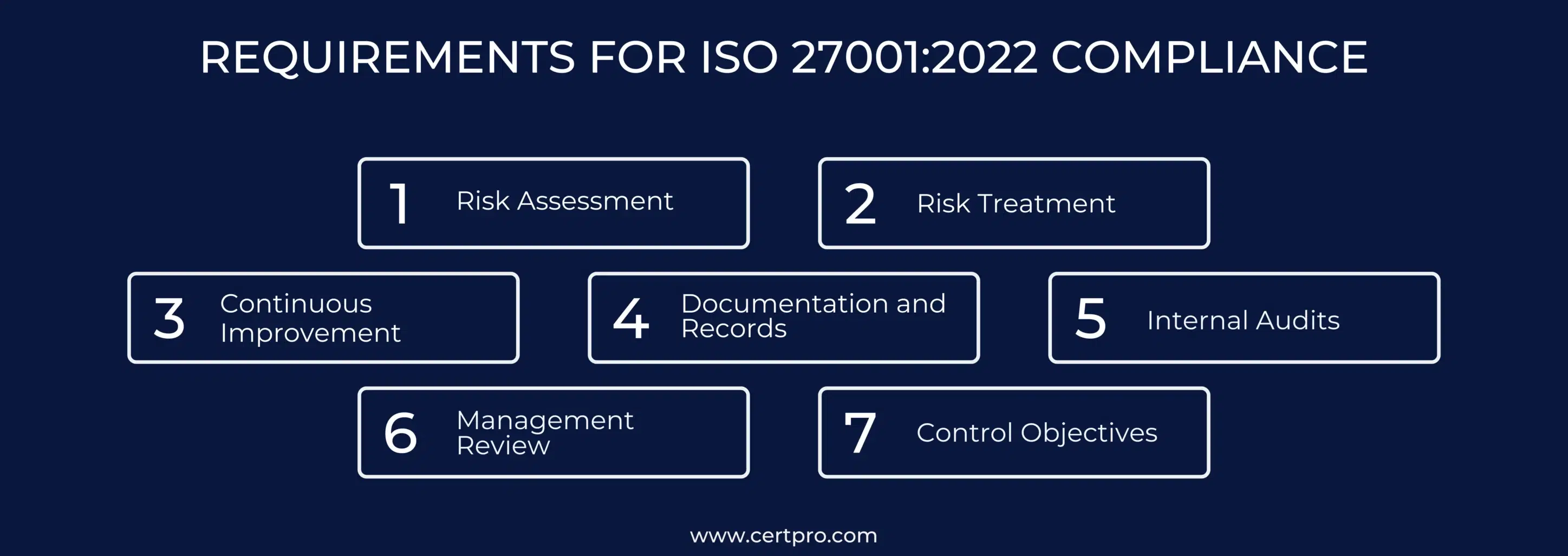
ISO 27001 requirements are defined across the normative clauses (Clauses 4–10) and through the controls enumerated in Annex A. Every organization seeking ISO 27001 Certification must satisfy all clause-level requirements without exception. The requirements govern not only what controls are implemented, but how the ISMS is documented, governed, reviewed, and improved.
Failure to meet any mandatory clause requirement constitutes a nonconformity that must be resolved before certification can be issued. Organizations pursuing ISO 27001 Certification in Waterloo must ensure that their ISMS documentation, governance structures, and operational controls comprehensively address each clause before submitting to a formal ISO 27001 audit.
ISO 27001 requires organizations to maintain a specific set of mandatory documented information as audit artifacts. The primary documentation requirements include:
- An Information Security Policy approved by top management
- A risk assessment methodology and documented risk assessment results
- A risk treatment plan specifying selected controls and treatment decisions
- A Statement of Applicability (SoA) referencing all 93 Annex A controls
- Documented evidence of management review outputs
- Records of internal audit results
- Evidence of competence for personnel performing security-relevant roles
Documented information must be controlled, version-managed, and accessible to auditors during the ISO 27001 audit. Organizations in Waterloo must maintain this documentation in a retrievable, organized form — whether physical or digital.
Beyond mandatory documented information, ISO 27001 strongly implies the presence of supporting operational documents. These include incident response procedures, business continuity and disaster recovery plans, supplier security agreements, access control policies, cryptographic control procedures, and change management records.
While the standard allows flexibility in format through the phrase ‘documented information as evidence,’ auditors evaluating ISO 27001 compliance will expect sufficient documented evidence to demonstrate that controls are operating effectively and consistently. Organizations that maintain minimal documentation frequently encounter major nonconformities during Stage 2 audits, resulting in certification delays and additional remediation costs.
Clause 6.1.2 of ISO/IEC 27001:2022 requires organizations to define and apply an information security risk assessment process that produces consistent, valid, and comparable results. The risk assessment must identify information security risks associated with the loss of confidentiality, integrity, and availability of information within the ISMS scope. Risk owners must be identified for each assessed risk.
The process must evaluate the likelihood and consequence of each risk, prioritize risks for treatment, and produce documented results retained as evidence. Risk assessments must be performed at planned intervals — typically annually — and whenever significant changes occur to the organization’s environment, systems, or threat landscape. This requirement applies equally to all organizations pursuing ISO 27001 Certification in Waterloo, regardless of size or sector.
Clause 6.1.3 requires organizations to define and apply a risk treatment process that selects appropriate options for addressing identified risks: modification (implementing controls), retention (accepting risk within defined tolerance), avoidance (eliminating the risk source), or sharing (transferring risk to a third party such as an insurer).
For each selected control — whether drawn from Annex A or other sources — the organization must document the justification for selection in the Statement of Applicability. Risk treatment plans must specify treatment owners, timelines, and residual risk acceptance decisions approved by risk owners. These documents form the backbone of every ISO 27001 audit review and are among the first artifacts requested during Stage 1 audit activities.
ISO 27001 requires organizations to implement the controls identified in their risk treatment plan and Statement of Applicability. Technical controls encompass areas including identity and access management, network security, cryptography, vulnerability management, logging and monitoring, malware protection, and secure configuration management. These are documented across Annex A’s Technological Controls domain, which includes 34 individual controls in the 2022 edition.
New controls introduced in ISO/IEC 27001:2022 that are especially relevant to Waterloo technology and financial services organizations include: Threat Intelligence (A.5.7), Information Security for Use of Cloud Services (A.5.23), ICT Readiness for Business Continuity (A.5.30), Web Filtering (A.8.23), and Data Masking (A.8.11). Organizations should review these additions carefully when preparing for an ISO 27001 audit.
- ✓Defined ISMS scope document referencing organizational boundaries and interfaces
- ✓Information Security Policy signed and approved by top management
- ✓Documented risk assessment methodology producing repeatable, comparable results
- ✓Risk assessment results and risk treatment plan with identified risk owners
- ✓Statement of Applicability covering all 93 Annex A controls with justifications
- ✓Evidence of internal audit program and completed audit results
- ✓Management review records demonstrating top management engagement
- ✓Documented nonconformity and corrective action records
- ✓Competence records for personnel in information security roles
- ✓Operational security procedures for all implemented Annex A controls
- ✓Documentation Requirements
- ✓Risk Assessment and Treatment Requirements
- ✓Technical and Operational Control Requirements
ISO 27001 Certification Process
The ISO 27001 certification process follows a structured sequence of formally defined stages, each producing documented audit evidence that informs the certification decision. The process is governed by ISO/IEC 17021-1, the standard for competence requirements of bodies providing audit and certification of management systems.
Every organization pursuing ISO 27001 Certification in Waterloo undergoes the same core process: scope definition, Stage 1 audit, Stage 2 audit, certification decision, and ongoing surveillance. The total process typically spans four to twelve months, depending on organizational size, ISMS maturity, and the complexity of the defined scope.
The Stage 1 audit is a documentation-focused assessment conducted by the certification body’s auditor at the organization’s premises or remotely. During Stage 1, the auditor reviews the organization’s ISMS documentation to determine whether the documented system is sufficiently developed to proceed to operational audit. Key documents reviewed include the ISMS scope, information security policy, risk assessment methodology, Statement of Applicability, risk treatment plan, and management review records.
The Stage 1 audit produces a written report identifying areas of conformance, areas requiring clarification, and any concerns that must be addressed before Stage 2 proceeds. Stage 1 is typically conducted two to four weeks before the scheduled Stage 2 date, giving the organization time to address any identified gaps.
Following the Stage 1 audit report, the organization reviews identified concerns and completes any necessary documentation updates or procedural clarifications. The Stage 1 audit does not result in a certification decision — it is a preparatory evaluation confirming that the ISMS documentation meets the threshold required for operational control testing.
Organizations that receive significant Stage 1 findings must address them before the Stage 2 audit date. CertPro’s audit program determines the appropriate interval between Stage 1 and Stage 2 based on scope complexity, organizational size, and the nature of Stage 1 findings. For most Waterloo-based organizations, this interval ranges from two to six weeks.
The Stage 2 audit is the principal conformity assessment in which auditors evaluate whether the organization’s ISMS controls are implemented, operational, and effective in practice. During Stage 2, auditors conduct control testing through interviews with personnel, observation of operational processes, review of system configurations, examination of log records and incident registers, testing of access control implementations, and verification of physical security controls.
Evidence is collected across all applicable Annex A control domains. Auditors document conformances, observations, and nonconformities using structured audit records. The Stage 2 audit is conducted on-site and typically spans one to five days, depending on the organization’s size and ISMS scope.
Following Stage 2 fieldwork, the audit team compiles a Stage 2 audit report documenting all findings, nonconformities, and the auditor’s recommendation. If major nonconformities are identified, the organization must submit a documented corrective action plan within a defined timeframe — typically 30 days — and auditors verify the effectiveness of corrective actions before the certification recommendation is finalized.
If only minor nonconformities are identified, the organization may submit corrective action evidence without requiring a return visit. The audit report and all supporting evidence are then submitted to the certification body’s technical review function for independent review before the certification decision is issued.
The certification decision is made by a technically qualified reviewer independent of the audit team. The reviewer evaluates the complete audit file — including Stage 1 and Stage 2 reports, nonconformity records, and corrective action evidence — and determines whether certification is granted, withheld, or conditionally issued.
Upon a positive certification decision, the organization receives an ISO 27001 certificate valid for three years from the certification date. The certificate specifies the certified organization, the ISMS scope, the standard version (ISO/IEC 27001:2022), and the certification body’s accreditation details — providing clear, verifiable proof of ISO 27001 Certification in Waterloo.
Surveillance audits are conducted annually during the three-year certificate validity period to verify that the ISMS continues to conform to ISO 27001 requirements and that the organization is maintaining and improving its information security management system. Surveillance audits are less extensive than initial certification audits but must cover mandatory elements including internal audit results, management review outputs, treatment of previous nonconformities, Annex A control operational effectiveness, and continual improvement activities.
Recertification audits are conducted before the three-year certificate expires and follow a process comparable to the initial certification audit. Organizations that fail to complete surveillance or recertification audits on schedule risk certificate suspension or withdrawal — requiring a full re-certification process to restore standing.
- Define ISMS scope, boundaries, and interfaces with external parties
- Conduct information security risk assessment using documented methodology
- Develop risk treatment plan and select applicable Annex A controls
- Produce Statement of Applicability documenting control selection and justifications
- Implement selected controls and create operational security procedures
- Execute internal ISMS audit program and document results
- Conduct management review with top management participation
- Submit to Stage 1 documentation audit by certification body
- Address Stage 1 findings and confirm readiness for Stage 2
- Undergo Stage 2 operational conformity assessment with on-site control testing
- Respond to any nonconformities with documented corrective action plans
- Receive certification decision and obtain ISO 27001 certificate

- ✓Stage 1: Documentation Review and ISMS Readiness Assessment
- ✓Stage 2: Operational Conformity Assessment
- ✓Certification Decision, Surveillance Audits, and Recertification
ISO 27001 Audit — Stages and What to Expect
The ISO 27001 audit is a formal, evidence-based evaluation conducted by qualified auditors from the certification body. The audit process is structured to independently verify that the ISMS conforms to ISO/IEC 27001:2022 requirements and that the organization’s information security controls are implemented and effective.
Understanding the ISO 27001 audit structure, scope, and evidence requirements is essential for Waterloo organizations preparing for certification. The ISO 27001 audit that Waterloo organizations undergo follows international audit standards and is conducted by auditors with documented competency in information security management systems and industry-relevant risk environments.
Audit Program Determination and Scope Setting
Prior to the audit, the certification body determines the audit program — the overall plan governing the sequence, duration, and focus of audit activities across the certification cycle. The audit program is based on the organization’s size, the complexity of the ISMS scope, the number of employees and locations within scope, the nature of the information assets being managed, and the risk profile of the industry sector.
For Waterloo-based financial services organizations and technology companies, audit programs typically reflect elevated data sensitivity, multi-site or cloud-hosted environments, and complex supply chain relationships. The audit program determines audit days for Stage 1, Stage 2, annual surveillance audits, and the recertification audit.
Scope definition is a critical pre-audit activity that determines which organizational processes, locations, information assets, and technology systems fall within the certified ISMS. The scope statement must be documented and must accurately reflect the boundaries of the ISMS as presented to auditors. Organizations that define overly narrow scopes to simplify the audit process risk credibility concerns from customers and regulators who expect comprehensive coverage.
Organizations that include systems or processes not yet under ISMS control risk major nonconformities during the audit. ISO 27001 audit engagements in Waterloo frequently involve scopes spanning cloud infrastructure, on-premises data centers, remote working environments, and third-party service provider relationships — all of which require careful scope boundary documentation.
Control Testing and Evidence Collection
During Stage 2, auditors use multiple evidence collection techniques to verify control implementation and effectiveness. Interviews are conducted with personnel across security, IT, operations, legal, and management functions to assess knowledge, awareness, and process adherence. System demonstrations allow auditors to observe access control configurations, logging systems, patch management processes, and physical security measures in operation.
Document reviews cover policies, procedures, incident logs, change management records, supplier agreements, and training records. Sampling techniques are applied to large datasets — for example, auditors may sample a subset of user access reviews or patch deployment records to draw evidence-based conclusions about overall control effectiveness.
Annex A control domains that receive particular audit attention in technology and financial services environments include A.5 (Organizational Controls — covering policies, threat intelligence, incident management, and supplier relationships) and A.8 (Technological Controls — covering access management, cryptography, vulnerability management, and secure development).
For ISO 27001 certification Waterloo financial services organizations, auditors pay close attention to controls governing data classification, cryptographic key management, network segmentation, and third-party risk management. Waterloo fintech organizations should ensure that cloud security configurations, API security controls, and data residency documentation are audit-ready prior to Stage 2 of the ISO 27001 audit.
Nonconformity Classification and Resolution
Nonconformities identified during an ISO 27001 audit are classified as major or minor based on the significance of the deviation from standard requirements. A major nonconformity exists where a clause requirement is entirely absent, where a control documented in the SoA has not been implemented, where documented processes are not being followed in practice, or where a systemic pattern of minor nonconformities indicates a fundamental breakdown in ISMS management.
Major nonconformities must be resolved and verified by auditors before a certification decision can be made. Resolution typically requires submission of documented corrective action evidence within 30 to 90 days of the audit, followed by auditor verification through document review or a follow-up on-site visit. Addressing nonconformities promptly is essential to maintaining the ISO 27001 certification timeline.
ISO 27001 Compliance for Waterloo Organizations
ISO 27001 compliance refers to the sustained, ongoing adherence of an organization’s ISMS to the requirements of ISO/IEC 27001:2022 across all clauses and applicable Annex A controls. ISO 27001 compliance that Waterloo organizations maintain demonstrates to regulators, customers, and trading partners that information security risks are identified, treated, monitored, and continually improved through a formal management system.
Compliance is not a one-time achievement. It requires continuous operational discipline, periodic internal auditing, management review, and responsive nonconformity management throughout the ISMS certification cycle. Organizations that treat ISO 27001 compliance as an ongoing practice — rather than a point-in-time exercise — are significantly better positioned during external surveillance audits.
Mapping ISO 27001 Compliance to UK GDPR Obligations
UK GDPR Article 32 requires organizations that process personal data to implement appropriate technical and organizational measures to ensure a level of security appropriate to the risk. ISO 27001 compliance provides a structured, documented framework that directly addresses this obligation. The ISMS risk assessment process maps to the UK GDPR requirement to assess the likelihood and severity of risks to data subject rights.
Annex A controls governing access management, encryption, incident response, and supplier security address specific technical measures expected under UK GDPR. Organizations in Waterloo that hold ISO 27001 Certification can reference their certified ISMS as documented evidence of Article 32 compliance during ICO investigations or Data Protection Impact Assessments (DPIAs).
The Data Protection Act 2018 supplements UK GDPR in the UK legal framework and introduces additional provisions relevant to Waterloo organizations in regulated sectors including law enforcement, intelligence services, and financial services. ISO 27001 compliance provides a recognized security standard against which organizations can demonstrate appropriate security governance under both the DPA 2018 and UK GDPR.
ICO guidance on security has referenced ISO 27001 as an example of an appropriate international security standard for organizations processing personal data at scale. Waterloo-based organizations subject to ICO audit or enforcement activity benefit from holding an active ISO 27001 certificate as objective evidence of security management system maturity.
Continuous Compliance: Internal Audit and Management Review
Clause 9.2 of ISO/IEC 27001:2022 requires organizations to conduct internal audits at planned intervals. These audits provide information on whether the ISMS conforms to the organization’s own requirements and to the standard’s requirements, and whether it is effectively implemented and maintained. Internal audits must be planned, conducted by competent and objective auditors, and results must be reported to relevant management.
Internal audit records must be retained as documented evidence and are reviewed by the certification body during every external surveillance audit. Organizations that allow internal audit programs to lapse, or that conduct superficial audits without genuine control testing, frequently encounter major nonconformities during external ISO 27001 audits. A robust internal audit program is one of the most reliable indicators of sustained ISO 27001 compliance.
Clause 9.3 requires top management to review the organization’s ISMS at planned intervals to ensure its continuing suitability, adequacy, and effectiveness. Management review inputs must include: internal audit results; feedback from interested parties; risk assessment results and risk treatment plan status; fulfilment of information security objectives; results of monitoring and measurement; nonconformity and corrective action status; and opportunities for continual improvement.
Management review outputs must include decisions and actions related to continual improvement opportunities, ISMS changes, and resource needs. These records are mandatory audit artifacts and must be available during every ISO 27001 audit engagement. Waterloo organizations should schedule management reviews at least annually, with more frequent reviews recommended for those operating in high-risk or rapidly changing environments.
Supplier and Third-Party Risk Compliance Requirements
ISO 27001:2022 significantly strengthened requirements for supplier and third-party risk management relative to the 2013 edition. Annex A Controls A.5.19 (Information Security in Supplier Relationships), A.5.20 (Addressing Information Security Within Supplier Agreements), A.5.21 (Managing Information Security in the ICT Supply Chain), and A.5.23 (Information Security for Use of Cloud Services) collectively establish requirements for managing information security risk introduced by external service providers.
Waterloo organizations — many of which rely on SaaS platforms, cloud hosting providers, outsourced IT services, and third-party data processors — must document supplier security requirements, assess supplier security posture, and maintain evidence of supplier compliance monitoring. Auditors evaluating ISO 27001 compliance will specifically request supplier security agreements, vendor risk assessments, and cloud service security configurations during Stage 2 fieldwork.
ISO 27001 Cost in Waterloo
The ISO 27001 cost for organizations in Waterloo is determined by multiple structured factors: organizational size, ISMS scope complexity, number of locations within scope, industry risk profile, and the duration of the audit program determined by the certification body. ISO 27001 cost that Waterloo organizations should anticipate spans both direct certification audit fees and internal organizational costs required to build and operate a conforming ISMS.
CertPro structures ISO 27001 certification audit pricing on a fixed, transparent basis — organizations receive defined audit day pricing with no ambiguous variable components. Understanding the full ISO 27001 cost structure enables Waterloo organizations to budget accurately and plan the certification timeline with confidence.
Certification Audit Fee Structure
Certification audit fees are the primary direct ISO 27001 cost component and reflect the number of audit days required to evaluate the ISMS. ISO/IEC 27006 — the standard governing requirements for bodies providing audit and certification of information security management systems — prescribes minimum audit duration based on the number of employees within scope, with adjustments for ISMS complexity, multi-site structures, and industry risk level.
For a small Waterloo organization with fewer than 50 employees and a single-site scope, the initial certification audit (Stage 1 plus Stage 2) typically requires four to eight audit days. For a mid-sized organization with 50 to 500 employees, audit duration typically ranges from eight to fifteen days. Enterprise-scale organizations or those with complex multi-cloud or multi-site environments require correspondingly longer audit programs and higher ISO 27001 cost.
Annual surveillance audit fees represent a recurring ISO 27001 cost that organizations must budget for across the three-year certification cycle. Surveillance audits are shorter than initial certification audits — typically 50 to 75 percent of the Stage 2 audit duration — but are mandatory for maintaining certificate validity.
Recertification audits conducted at the end of the three-year cycle are comparable in duration to the initial certification audit. Organizations that allow surveillance audits to lapse risk certificate suspension, which may require a full re-certification audit to restore — significantly increasing total ISO 27001 cost. CertPro provides fixed-fee audit pricing across the full three-year certification cycle so that Waterloo organizations can plan ISO 27001 budgets without uncertainty.
Internal ISO 27001 Cost Components
Beyond certification audit fees, organizations incur internal costs associated with building and operating a conforming ISMS. These include staff time allocated to ISMS documentation development, risk assessment activities, internal audit program execution, management review facilitation, and control implementation. Technology costs cover security tools such as identity and access management platforms, SIEM systems, vulnerability scanning tools, encryption solutions, and data loss prevention technologies.
Organizations with existing security tool investments may find that ISO 27001 certification formalizes and documents controls already in place, reducing incremental technology costs. Organizations starting from a low security maturity baseline face higher initial internal ISO 27001 cost before certification can be pursued effectively. A realistic assessment of both internal and external cost components enables more accurate budget planning for the full certification program.
| ISO 27001 Cost Component | Typical Scope | Notes |
|---|---|---|
| Stage 1 Audit Fee | Documentation review — typically 1–2 audit days | Fixed fee, determined by scope and employee count |
| Stage 2 Audit Fee | On-site control testing — typically 3–10 audit days | Fixed fee, based on ISO/IEC 27006 duration tables |
| Annual Surveillance Audit | 50–75% of Stage 2 duration, annually | Mandatory for certificate maintenance |
| Recertification Audit (Year 3) | Similar to initial certification audit | Required before certificate expiry |
| Internal ISMS Operating Costs | Staff time, security tools, training | Variable — depends on organizational baseline |
Return on Investment: ISO 27001 Cost vs. Certification Value
The ISO 27001 cost must be evaluated against the quantifiable value the certification delivers to Waterloo organizations. ISO 27001 Certification in Waterloo unlocks access to enterprise procurement frameworks, government contract opportunities, and financial services supplier lists that require certified security credentials. For Waterloo fintech companies, ISO 27001 certification can be the determining factor in securing Tier 1 banking partnerships or payment processing agreements worth substantially more than the total certification investment.
For professional services firms handling client data, ISO 27001 certification reduces the risk of regulatory fines — ICO fines under UK GDPR can reach £17.5 million or 4% of global annual turnover, whichever is higher. Against that potential exposure, the ISO 27001 cost becomes a highly efficient risk management investment rather than an overhead expense.
Benefits of ISO 27001 Certification
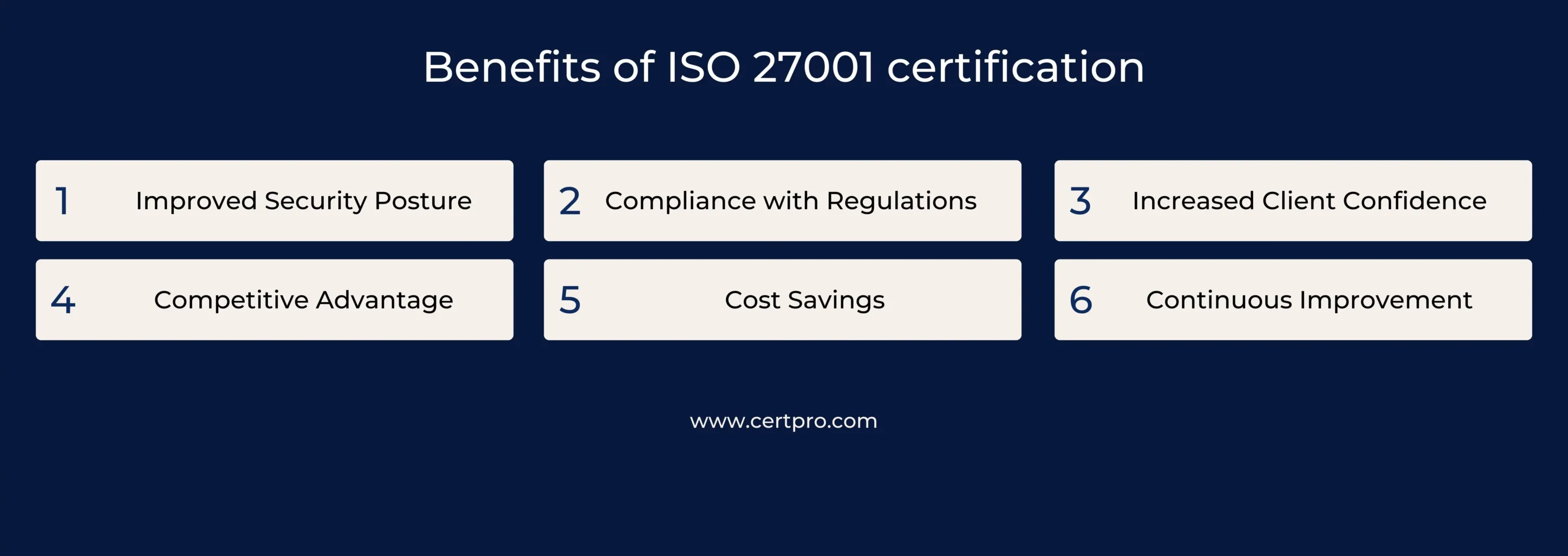
ISO 27001 Certification delivers structured, measurable benefits to organizations across all sectors operating in Waterloo. The certification provides independently verified evidence of information security management system conformance, which translates directly into commercial, regulatory, operational, and reputational advantages.
The benefits of ISO 27001 Certification extend well beyond the certificate itself. The discipline of building and maintaining a conforming ISMS creates organizational security capabilities that reduce incident likelihood, accelerate incident response, and strengthen governance across all operational areas — making ISO 27001 Certification in Waterloo a long-term strategic asset rather than a one-time compliance milestone.
ISO 27001 Certification functions as a market access credential in commercial environments where information security assurance is a prerequisite for supplier qualification. Enterprise organizations, public sector bodies, and regulated financial institutions in and around Waterloo routinely require ISO 27001 Certification as a mandatory condition of supplier onboarding, RFP qualification, and ongoing contract compliance.
Organizations that hold ISO 27001 Certification can respond to security questionnaires, due diligence requests, and procurement requirements with reference to their certified ISMS — reducing the time and cost of repeated security assessments by individual customers. ISO 27001 certification that Waterloo financial services organizations hold enables participation in financial sector supply chains that would otherwise be inaccessible.
ISO 27001 Certification provides Waterloo organizations with documented evidence of systematic security governance that directly supports regulatory compliance obligations under UK GDPR, the Data Protection Act 2018, FCA operational resilience requirements, and sector-specific regulations. In the event of a data breach or security incident, organizations holding ISO 27001 Certification can demonstrate to the ICO that appropriate technical and organizational measures were in place — a factor regulators consider when determining enforcement action and penalty amounts.
ISO 27001 compliance also supports organizations in demonstrating adherence to contractual security obligations, reducing exposure to breach of contract claims arising from security failures. The combination of regulatory protection and contractual risk reduction makes ISO 27001 Certification a high-value legal risk management instrument for Waterloo organizations.
The ISMS framework required for ISO 27001 Certification creates operational security capabilities that reduce the likelihood and impact of security incidents. Formal risk assessment processes identify vulnerabilities and threats before they are exploited. Documented incident response procedures reduce response time and limit damage when incidents occur. Access control frameworks reduce the risk of unauthorized access to sensitive systems and data.
Change management procedures reduce the risk of security vulnerabilities introduced through uncontrolled system changes. Business continuity and disaster recovery planning — required under Annex A controls A.5.29 and A.5.30 — ensures that organizations can maintain operations or recover rapidly following disruptive events. This is particularly important for Waterloo financial services organizations with continuous availability obligations and time-sensitive recovery requirements.
- ✓Third-party certified evidence of ISMS conformance for customer and regulatory due diligence
- ✓Access to enterprise procurement frameworks and regulated sector supplier lists requiring ISO 27001
- ✓Documented basis for UK GDPR Article 32 technical and organizational measure compliance
- ✓Reduced ICO enforcement exposure through demonstrated security management system maturity
- ✓Structured risk identification and treatment framework reducing incident probability
- ✓Faster and more effective incident response through documented procedures and trained personnel
- ✓Competitive differentiation in Waterloo’s technology and financial services markets
- ✓Improved staff security awareness and accountability through ISMS training requirements
- ✓Supply chain security assurance through formal supplier risk management processes
- ✓Internationally recognized certification valid across global markets and jurisdictions
- ✓Commercial and Market Access Benefits
- ✓Regulatory and Legal Risk Reduction
- ✓Operational Security and Risk Management Benefits
Industries We Serve in Waterloo
ISO 27001 Certification in Waterloo is applicable to organizations across all industry sectors that manage sensitive information assets, operate under data protection obligations, or process information on behalf of clients. CertPro conducts ISO 27001 certification audits for a diverse range of Waterloo-based organizations, with particular expertise in the financial services, technology, professional services, and public sector domains that characterize the Waterloo business landscape.
Each industry presents distinct information security risk profiles, regulatory requirements, and control implementation challenges. The ISO 27001 framework is designed to accommodate this diversity — providing a flexible yet rigorous structure that Waterloo organizations across all sectors can apply to their specific operating environments.
Financial Services and Fintech Organizations
ISO 27001 certification is a priority for Waterloo fintech organizations seeking to satisfy investor due diligence requirements, FCA regulatory expectations, and banking partnership prerequisites. Financial services organizations in Waterloo — including payment processors, digital banking platforms, insurance technology providers, wealth management firms, and capital markets technology companies — handle highly sensitive financial data and personal information at scale.
These organizations face elevated information security risks including financial fraud, account takeover attacks, API exploitation, and insider threat. ISO 27001 Certification provides the documented risk management framework and independently audited control evidence that Waterloo financial services organizations require to operate with regulatory confidence and market credibility. ISO 27001 certification that Waterloo financial services firms obtain is increasingly recognized by FCA supervisors as evidence of proactive security governance.
Technology Companies and Cloud Service Providers
Technology organizations operating in the Waterloo technology corridor — including SaaS providers, managed service providers, cloud infrastructure operators, cybersecurity firms, and data analytics companies — are frequent targets of ISO 27001 Certification requirements imposed by enterprise customers. ISO 27001 information security certification that Waterloo technology companies hold enables them to participate in enterprise sales processes, government framework contracts, and regulated sector supply chains where security certification is a formal qualification criterion.
For cloud service providers operating Waterloo data centers, ISO 27001 Certification provides assurance to hosted clients regarding the security governance of shared infrastructure. It also complements other technical certifications such as ISO 27017 (cloud security) and ISO 27018 (cloud privacy), creating a comprehensive security credentials portfolio.
Professional Services and Legal Firms
Professional services organizations — including law firms, accounting practices, management consultancies, and recruitment firms — operating in the Waterloo area handle highly sensitive client information including legal strategies, financial records, personnel data, and commercially confidential documents. These organizations are prime targets for business email compromise, ransomware attacks, and data theft operations.
ISO 27001 Certification demonstrates to clients that their confidential information is managed within a formally governed, independently audited security framework. Law firms subject to Solicitors Regulation Authority (SRA) cybersecurity requirements benefit from ISO 27001 Certification as documented evidence of security governance maturity. Accounting firms can reference their certified ISMS in client security questionnaires and tender submissions, directly supporting business development and client retention.
| Industry Sector | Primary ISO 27001 Drivers | Key Annex A Focus Areas |
|---|---|---|
| Fintech & Financial Services | FCA requirements, banking partnerships, investor due diligence | A.5.7 Threat Intelligence, A.8.11 Data Masking, A.5.19 Supplier Relations |
| Technology & SaaS | Enterprise procurement, government contracts, customer due diligence | A.5.23 Cloud Services, A.8.25 Secure Development, A.8.8 Vulnerability Mgmt |
| Professional Services | Client data protection, SRA requirements, tender qualification | A.5.10 Acceptable Use, A.8.3 Information Access, A.5.15 Access Control |
| Healthcare & Life Sciences | Data sensitivity, regulatory compliance, patient data protection | A.8.11 Data Masking, A.5.34 Privacy, A.8.2 Privileged Access |
| Public Sector & Government | G-Cloud framework, data handling requirements, security standards | A.5.30 ICT Continuity, A.5.29 Information Continuity, A.8.16 Monitoring |
Why CertPro for ISO 27001 Certification in Waterloo
CertPro is a Licensed CPA Firm delivering ISO 27001 certification audit and conformity assessment services to organizations across Waterloo and the wider UK market. CertPro’s institutional positioning as a Licensed CPA Firm distinguishes its certification services from advisory or consulting providers — CertPro conducts independent, evidence-based audit evaluations against defined standard requirements and issues certification decisions based solely on documented audit findings.
ISO 27001 Certification in Waterloo issued by CertPro reflects conformity assessment conducted under internationally recognized audit standards. This provides Waterloo organizations with certifications that withstand regulatory scrutiny, customer due diligence, and market evaluation — making CertPro the preferred partner for organizations where certification credibility is non-negotiable.
Independent Audit Authority and CPA Firm Positioning
As a Licensed CPA Firm, CertPro operates under the professional standards, independence requirements, and audit methodology frameworks applicable to licensed accounting and assurance bodies. This institutional foundation differentiates CertPro’s ISO 27001 audit services from certification bodies that do not maintain CPA firm status. CertPro’s auditors bring documented competency in ISO/IEC 27001:2022 requirements, information security control frameworks, and industry-specific risk environments relevant to Waterloo organizations.
All certification decisions are made through an independent technical review process, ensuring that the certification issued to Waterloo organizations reflects genuine ISMS conformance — rather than a process influenced by commercial incentives. This independence is the foundation of ISO 27001 Certification credibility.
CertPro’s audit methodology is built on ISO/IEC 17021-1 (requirements for bodies providing audit and certification of management systems) and ISO/IEC 27006 (requirements for bodies providing audit and certification of information security management systems). Every ISO 27001 audit conducted by CertPro follows a structured audit program, documented audit plans, and evidence-based audit reporting that produces findings traceable to specific clause requirements and Annex A controls.
This structured approach ensures that ISO 27001 certification Waterloo organizations receive through CertPro is defensible, auditable, and recognized by customers, regulators, and international trading partners in all jurisdictions where the standard is recognized.
ISO 27001 Consultants Waterloo Ontario — Audit-Framed Expertise
ISO 27001 consultants that Waterloo Ontario and UK organizations engage must be distinguished from certification audit bodies — consultants provide advisory services while certification bodies conduct independent audits. CertPro occupies the certification audit body role exclusively. CertPro does not provide ISMS implementation advice, security consulting, or advisory services. CertPro evaluates ISMS conformance against ISO 27001 requirements through structured audit processes and issues certification decisions based on audit evidence.
This independence is fundamental to the integrity of ISO 27001 Certification. An organization’s ISMS must be built and operated by the organization itself, or with the support of independent advisors. The certification body’s role is solely to evaluate conformance objectively — ensuring that the ISO 27001 audit produces an impartial, evidence-based outcome.
Fixed Pricing, Transparent Timelines, and Audit Efficiency
CertPro structures ISO 27001 certification audit engagements on a fixed-fee basis, providing Waterloo organizations with complete visibility into audit costs before engagement commencement. Fixed-fee pricing is determined based on the organization’s employee count within scope, ISMS scope complexity, number of locations, and industry risk classification — all factors prescribed by ISO/IEC 27006. There are no hidden fees for audit report preparation, technical review, certificate issuance, or routine communications during the audit process.
CertPro provides a defined audit timeline at engagement outset, specifying Stage 1 and Stage 2 dates, reporting timelines, and the target certification decision date. This structured approach enables Waterloo organizations to plan their ISO 27001 certification process within defined budget and schedule parameters — removing uncertainty from one of the most significant compliance investments they will make.
FAQ
▶
FAQ: ISO 27001 Certification in Waterloo
▶
What is the validity period of ISO 27001 certification?
▶
Can ISO 27001 certification be revoked?
Multi-Framework Compliance Guide: Best Practices and Strategies
Most compliance teams aren’t managing one framework. They’re managing three, four, sometimes five — simultaneously. A SaaS company selling to enterpri…
HOW COMPLIANCE AUDIT SOFTWARE IMPROVES AUDIT READINESS
Today, most companies deal with a growing number of compliance regulations. From data privacy standards to security frameworks like SOC 2 and ISO 2700…

THE ROLE OF GRC IN ISO 27001, SOC 2, AND OTHER FRAMEWORKS
The term GRC stands for Governance Risk and Compliance. It’s a system of integrated and centralized approaches used by organizations. This system comb…
Get In Touch
have a question? let us get back to you.