
SOC 2 Certification in Waterloo
CertPro is a Licensed CPA Firm conducting SOC 2 certification audits for organizations operating in Waterloo, Ontario. Engagements are structured under the AICPA Trust Services Criteria, covering security, availability, processing integrity, confidentiality, and privacy. Audit scope encompasses Type I and Type II assessments across Waterloo’s technology, financial services, and data-driven enterprise sectors. As a trusted provider of SOC2 Certification and SOC 2 audit services, CertPro helps Waterloo organizations achieve recognized attestation that meets enterprise and regulatory standards.
OUR CLIENTS










SOC 2 Certification in Waterloo: An Introduction
SOC 2 Certification in Waterloo represents a formal attestation that a service organization’s information security controls meet the standards defined by the American Institute of Certified Public Accountants (AICPA) under the Trust Services Criteria (TSC). For organizations operating in Waterloo, Ontario — a city recognized globally as a technology and innovation corridor — SOC 2 attestation has become a baseline requirement for conducting business with enterprise customers, financial institutions, and multinational partners. Achieving SOC2 Certification positions Waterloo-based companies to compete effectively in North American and global markets where security assurance is a procurement prerequisite.
Waterloo is home to one of Canada’s most concentrated clusters of technology companies, including graduates of the Velocity and Communitech ecosystems, fintech firms, cybersecurity organizations, and SaaS providers. These companies routinely handle sensitive customer data, process financial transactions, and operate cloud infrastructure serving clients across North America, Europe, and beyond. In this environment, SOC 2 compliance is not simply a regulatory checkbox — it is a commercial necessity that enables market access and establishes institutional credibility with enterprise buyers.
What Is SOC 2 Certification?
SOC 2 (System and Organization Controls 2) is an auditing standard developed by the AICPA that evaluates how a service organization manages data to protect the interests of its clients. Unlike prescriptive compliance frameworks that mandate specific controls, SOC 2 is principles-based: organizations define their own controls, and an independent CPA firm audits whether those controls are suitably designed and operating effectively against the applicable Trust Services Criteria.
The five Trust Services Criteria are Security (mandatory), Availability, Processing Integrity, Confidentiality, and Privacy — each addressing a distinct dimension of information protection. SOC2 Certification under this framework provides a flexible yet rigorous standard that organizations can tailor to their specific service models and client obligations.
SOC 2 differs from other certifications such as ISO 27001 primarily in its audit structure and geographic recognition. ISO 27001 is globally recognized and prescribes a specific set of controls, while SOC 2 is widely required by North American enterprise customers and evaluates controls against service commitments and contractual requirements.
For Waterloo companies serving US-based clients or operating within North American supply chains, SOC 2 attestation is typically the first and most commercially relevant certification to obtain. The SOC 2 audit process provides independent, documented evidence that an organization’s security posture meets enterprise expectations — making it an essential step for growth-stage technology companies.
SOC 2 Type I vs. SOC 2 Type II
SOC 2 certification is issued in two distinct forms: Type I and Type II. A SOC 2 Type I audit in Waterloo evaluates whether an organization’s controls are suitably designed at a specific point in time. It answers the key question: does the organization have the right controls in place as of the audit date? A SOC 2 Type I report is typically pursued by organizations that are new to the certification process and need to demonstrate baseline readiness to prospects or customers quickly.
A SOC 2 Type II certification engagement in Waterloo is more rigorous. It evaluates both the design and the operating effectiveness of controls over a defined observation period — typically six to twelve months. The Type II report provides evidence that controls were not merely present but were consistently applied throughout the audit window.
For enterprise procurement processes, vendor security questionnaires, and regulated industry contracting, the SOC 2 Type II certification report is the standard expected by clients. Organizations that have completed an initial SOC 2 audit and obtained a Type I report should plan to transition to annual Type II assessments to meet ongoing enterprise requirements.
| Attribute | SOC 2 Type I | SOC 2 Type II |
|---|---|---|
| Assessment Focus | Design of controls at a point in time | Design and operating effectiveness over a period |
| Observation Period | Single date | 6–12 months minimum |
| Evidence Required | Control documentation and design evidence | Ongoing evidence across audit window |
| Typical Use Case | Initial certification for new organizations | Enterprise vendor qualification, ongoing attestation |
| Report Depth | Point-in-time snapshot | Longitudinal operational evidence |
Trust Services Criteria Applicable to Waterloo Organizations
The AICPA Trust Services Criteria provide the evaluative framework for every SOC 2 audit. The Security criterion — also known as the Common Criteria — is mandatory for all SOC 2 engagements and covers logical access controls, encryption, monitoring, incident response, and change management. The remaining four criteria — Availability, Processing Integrity, Confidentiality, and Privacy — are selected based on the nature of the organization’s services and its contractual obligations to clients.
For Waterloo-based fintech and financial services companies, the Confidentiality and Privacy criteria are frequently included given the sensitivity of financial data and the applicability of Canadian privacy law, including PIPEDA and the proposed amendments under Bill C-27. For cloud infrastructure providers and SaaS companies, Availability and Processing Integrity are often added to address uptime commitments and data accuracy obligations.
CertPro’s SOC 2 audit programs for Waterloo companies are scoped to reflect the specific criteria relevant to each organization’s service model and customer agreements — ensuring that SOC 2 Certification in Waterloo delivers maximum practical value to the organization and its clients.

Why SOC 2 Certification Matters for Waterloo Businesses
Waterloo’s economy is anchored by a technology sector that consistently punches above its size. The region hosts hundreds of software companies, cybersecurity firms, AI startups, and financial technology organizations. Many of these businesses target enterprise clients in the United States, Europe, and the Asia-Pacific region — markets where SOC 2 attestation is increasingly a vendor qualification requirement rather than a differentiator.
SOC 2 compliance in Waterloo is therefore not optional for companies seeking to win and retain enterprise contracts. Obtaining SOC 2 Certification in Waterloo signals to global buyers that an organization’s security controls have been independently verified by a Licensed CPA Firm — a standard that self-reported compliance cannot replicate.
Waterloo Tech Ecosystem and SOC 2 Demand
The Waterloo Region tech ecosystem — anchored by the University of Waterloo, Wilfrid Laurier University, and the Communitech innovation hub — generates a steady pipeline of technology companies that scale rapidly and enter regulated markets. Organizations emerging from this ecosystem frequently encounter SOC 2 requirements when pursuing their first enterprise contract or when responding to a security questionnaire from a prospective US-based client.
SOC 2 certification for Waterloo tech companies is a recurring procurement requirement across sectors including healthcare IT, financial services software, and cloud infrastructure. Completing a SOC 2 audit early in the company’s growth trajectory helps establish the security foundation needed to qualify for larger enterprise deals and international market expansion.
Waterloo’s proximity to Toronto’s financial district and its established fintech corridor further amplifies SOC 2 demand. Financial institutions operating in Canada are subject to OSFI (Office of the Superintendent of Financial Institutions) guidance on third-party risk management, which frequently requires technology vendors to provide SOC 2 reports as evidence of their information security posture.
SOC 2 compliance for Waterloo fintech organizations is therefore directly tied to the ability to onboard and retain banking, insurance, and investment management clients. A current SOC 2 attestation report from a Licensed CPA Firm is one of the most efficient ways for Waterloo fintech companies to satisfy these institutional due diligence requirements.
SOC 2 in Waterloo Financial Services
SOC 2 certification for Waterloo financial services organizations encompasses a broad range of entities — from payment processors and wealth management platforms to insurance technology providers and credit unions. These organizations handle personally identifiable financial information (PIFI) and are subject to both federal and provincial privacy regulations.
A SOC 2 Type II report provides their clients and regulators with documented, independently audited evidence that data handling controls meet recognized standards — a requirement that internal policy documents and self-assessment tools cannot satisfy. The SOC 2 audit process produces an objective, third-party record of control effectiveness that financial sector clients and regulators specifically require.
For Waterloo financial services companies with cross-border operations, SOC 2 attestation also satisfies vendor due diligence requirements imposed by US financial regulators, including FFIEC guidance on third-party relationships. The SOC 2 report issued by a Licensed CPA Firm serves as a recognized third-party assurance document that can be shared directly with clients, auditors, and regulators as part of a comprehensive vendor risk management program.
Data Centers and Cloud Providers in Waterloo
Waterloo hosts several data center facilities and cloud service providers that manage infrastructure for regional and national clients. For these organizations, SOC 2 attestation is a foundational requirement for customer contracts. Data center clients — particularly those in healthcare, financial services, and government — require SOC 2 reports to satisfy their own compliance obligations and to demonstrate due diligence in third-party vendor management.
SOC 2 audit services in Waterloo, Ontario for data center and cloud providers typically focus on the Security, Availability, and Confidentiality Trust Services Criteria. For cloud providers subject to Canadian data sovereignty requirements, including these criteria in the SOC 2 scope ensures the resulting report addresses the full range of client expectations.
Requirements for SOC 2 Certification
SOC 2 certification requirements are defined by the AICPA Trust Services Criteria and translated into specific control domains that an organization must implement, document, and operate consistently. Unlike prescriptive frameworks, SOC 2 does not specify exact controls — instead, it defines the criteria that controls must satisfy.
Organizations pursuing SOC 2 Certification in Waterloo must demonstrate that their control environment addresses each applicable criterion through documented policies, technical safeguards, and operational procedures. Understanding these requirements in advance allows organizations to prepare efficiently and reduce the time required to achieve an unqualified SOC 2 audit opinion.
Documentation requirements for SOC 2 compliance are extensive and must accurately reflect the organization’s actual operating environment. Required documentation includes an information security policy, access control policy, change management procedures, incident response plan, vendor management policy, business continuity and disaster recovery plans, and data classification and handling procedures.
Each policy must be formally approved, version-controlled, and communicated to relevant personnel. For SOC 2 Type II engagements, auditors review not only whether policies exist but whether they were consistently followed throughout the observation period — making documentation quality a direct factor in achieving an unqualified SOC 2 attestation.
Evidence collection is a critical component of SOC 2 audit preparation. Organizations must be able to produce documented evidence for each control — including access logs, change tickets, security training records, penetration test reports, vulnerability scan results, and vendor assessment documentation.
SOC 2 auditors review evidence over time to assess operating effectiveness, meaning that organizations must maintain systematic evidence collection practices throughout the audit window, not just immediately prior to the audit. Establishing robust evidence collection processes early in the SOC 2 compliance lifecycle significantly reduces the burden of annual recertification.
Technical controls evaluated during a SOC 2 audit include logical access management, multi-factor authentication, encryption in transit and at rest, network segmentation and firewall configuration, intrusion detection and prevention systems, vulnerability management programs, and security information and event management (SIEM) logging. These controls must be implemented in a manner that directly addresses the applicable Trust Services Criteria and must be supported by configuration documentation, system inventory records, and operational logs.
For Waterloo organizations operating in cloud environments — particularly those using AWS, Microsoft Azure, or Google Cloud — the shared responsibility model must be clearly defined and documented. The organization is responsible for controls above the cloud provider’s responsibility boundary, and the SOC 2 audit scope must clearly delineate these boundaries.
Cloud configuration management, identity and access management policies, and data residency controls are particularly relevant for Waterloo companies serving clients with Canadian data sovereignty requirements. Properly scoping these technical elements ensures that the SOC 2 compliance report accurately reflects the organization’s full control environment.
SOC 2 compliance requires demonstrable organizational commitment to information security that extends beyond technical controls. Human resources requirements include background screening procedures for employees with access to sensitive systems, security awareness training delivered at least annually, defined roles and responsibilities for information security, and a formal process for revoking access when employees leave the organization.
These controls address the human factor in information security — historically the most common source of data breaches and security incidents. Demonstrating these organizational controls during the SOC 2 audit process provides enterprise clients with confidence that the organization manages people-related security risks as rigorously as technical ones.
- ✓Formal information security policy approved by senior management
- ✓Logical access controls with principle of least privilege enforcement
- ✓Multi-factor authentication for all privileged and remote access
- ✓Encryption of sensitive data in transit and at rest
- ✓Incident response plan with documented testing and review cycles
- ✓Vulnerability management program with defined remediation timelines
- ✓Vendor risk management process covering third-party service providers
- ✓Business continuity and disaster recovery plans with tested recovery procedures
- ✓Security awareness training program with documented completion tracking
- ✓Change management procedures with approval, testing, and rollback controls
- ✓System monitoring and alerting with defined escalation procedures
- ✓Background screening for personnel with access to sensitive systems

- ✓Documentation and Policy Requirements
- ✓Technical Control Requirements
- ✓Organizational and Human Resources Requirements
The SOC 2 Audit Process
The SOC 2 audit process follows a structured sequence of evaluation stages conducted by a Licensed CPA Firm under AICPA standards. Each stage produces documented outputs that form the basis of the final SOC 2 report. Understanding the audit process enables organizations to plan their internal activities, allocate resources appropriately, and manage audit timelines effectively.
CertPro conducts SOC 2 audit engagements in Waterloo following a clearly defined methodology aligned with AT-C Section 205 attestation standards. This structured approach ensures that each SOC 2 audit delivers a defensible, client-ready report that meets enterprise procurement and regulatory requirements.
The audit begins with scope definition — a formal process in which the organization and the auditor agree on the boundaries of the system under evaluation. The system description must identify the services provided, the infrastructure components, the software and data involved, the people responsible for controls, and the procedures in place. This system description forms Section III of the SOC 2 report and must be accurate, complete, and fairly presented as of the audit date. Inaccuracies in the system description can result in qualified opinions or report exceptions.
Scope definition also involves selecting the applicable Trust Services Criteria. Organizations must evaluate which criteria are relevant to their service commitments and select accordingly. Including unnecessary criteria increases audit scope and cost; excluding applicable criteria results in a report that does not address all relevant risks.
CertPro’s audit program determination process for SOC 2 Certification in Waterloo includes a formal scope discussion to ensure the report covers the criteria most relevant to the organization’s client obligations — balancing completeness with efficiency from the outset of the engagement.
Following scope agreement, the auditor develops an audit program — a structured set of procedures designed to evaluate each applicable Trust Services Criterion. The audit program specifies the evidence to be requested, the testing procedures to be applied, and the criteria against which control effectiveness will be evaluated. For SOC 2 Type II engagements, the audit program includes sampling plans that define how evidence will be selected across the observation period to test operating effectiveness over time.
Organizations are required to provide a control matrix — a document that maps each Trust Services Criterion to the specific controls the organization has implemented. This matrix serves as the auditor’s primary reference during fieldwork and forms the basis for the control descriptions included in the final SOC 2 report.
The control matrix must accurately reflect the organization’s operating environment and must be supported by documentary evidence for each listed control. A well-prepared control matrix accelerates the SOC 2 audit fieldwork phase and reduces the likelihood of findings resulting from documentation gaps.
Fieldwork is the core of the SOC 2 audit process. During this stage, auditors request and review evidence across all controls in scope. Evidence reviewed includes system-generated logs, configuration exports, policy documents, training records, access review reports, incident tickets, change management records, and vendor assessment documentation. Auditors evaluate whether the evidence supports the organization’s control descriptions and whether controls operated as described throughout the audit period.
For SOC 2 Type II audits, auditors examine evidence over the full observation period — typically the prior twelve months. This means that gaps in evidence, inconsistently applied controls, or undocumented exceptions identified during fieldwork can result in control deviations noted in the final report.
Organizations must maintain systematic evidence collection practices throughout the year, not just during the audit window. CertPro’s audit fieldwork for SOC 2 audit engagements in Waterloo follows structured evidence request procedures aligned with AICPA attestation standards, providing organizations with clear guidance on evidence expectations well in advance of the fieldwork phase.
Where audit testing identifies control deviations or exceptions, the auditor issues a draft finding for management review. Organizations have the opportunity to provide factual corrections, clarify context, or provide additional evidence prior to the final report being issued. Management responses to findings are included in the final SOC 2 report, providing context for any exceptions noted. This stage is critical for ensuring the accuracy and completeness of the report before it is distributed to clients and prospects.
The final SOC 2 report consists of five sections: the independent service auditor’s report (opinion letter), management’s assertion, a description of the system, a description of the applicable Trust Services Criteria and related controls, and the results of testing. The auditor’s opinion can be unqualified (clean), qualified (exceptions noted), adverse, or disclaimed.
An unqualified SOC 2 attestation is the target outcome for organizations pursuing certification. The report is issued under the signature of the Licensed CPA Firm and is suitable for distribution to clients, prospects, and auditors under non-disclosure agreements — making it the definitive evidence of SOC 2 compliance for vendor qualification purposes.
SOC 2 certification does not have an indefinite validity period. Organizations must complete annual audit cycles to maintain current SOC 2 status and meet customer expectations. Most enterprise clients and procurement teams require a SOC 2 report issued within the prior twelve months.
Annual recertification involves repeating the full Type II audit process for the subsequent observation period, ensuring that controls remain effective as the organization’s systems, personnel, and services evolve. CertPro structures recurring annual SOC 2 audit programs to provide Waterloo clients with continuous attestation coverage and predictable audit timelines.
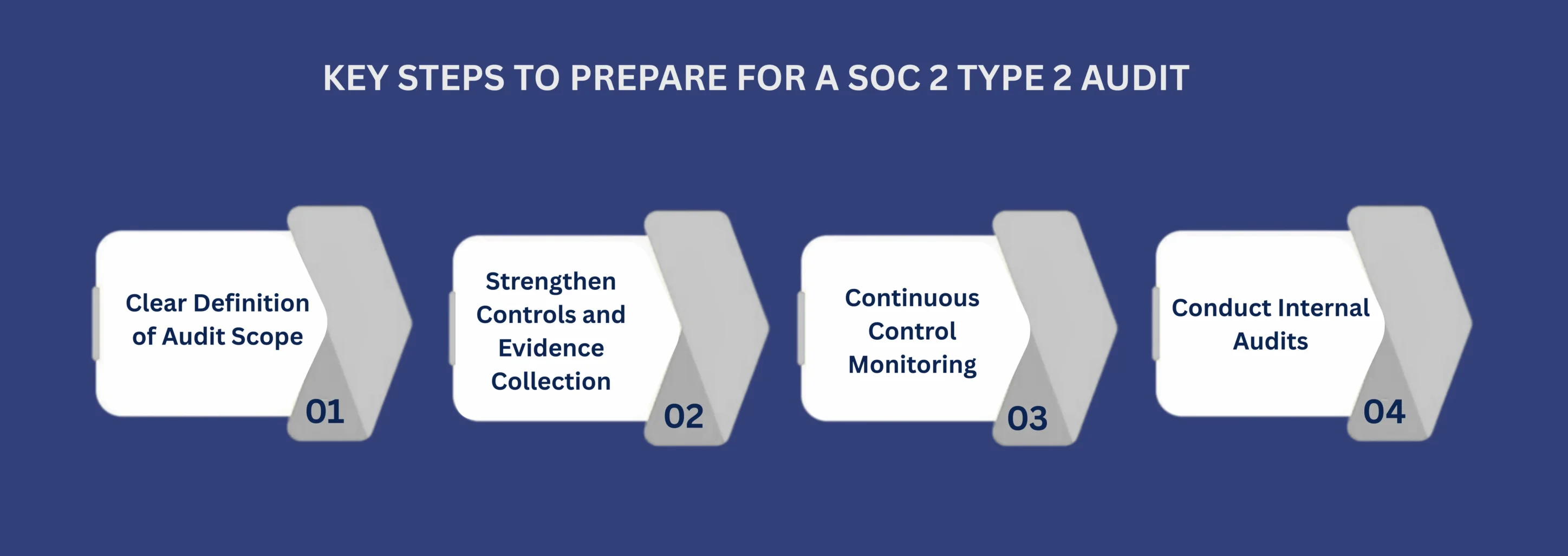
- ✓Stage 1: Scope Definition and System Description
- ✓Stage 2: Control Identification and Audit Program Development
- ✓Stage 3: Fieldwork and Evidence Review
- ✓Stage 4: Nonconformity Review and Management Response
- ✓Stage 5: Report Issuance and Attestation
- ✓Stage 6: Surveillance and Recertification
Benefits of SOC 2 Certification for Waterloo Organizations
SOC 2 Certification in Waterloo delivers measurable operational and commercial benefits to organizations across the technology, financial services, and professional services sectors. Beyond satisfying vendor qualification requirements, SOC 2 attestation strengthens internal security practices, reduces the likelihood of data breaches, and establishes a documented foundation for regulatory compliance. The following sections detail the principal benefits of SOC 2 compliance for Waterloo organizations seeking to grow their enterprise client base and strengthen their security posture.
SOC 2 certification is a commercial prerequisite for selling to enterprise clients across North America. Fortune 500 companies, US federal agencies, Canadian Crown corporations, and major financial institutions routinely require SOC 2 reports from technology vendors as part of their vendor onboarding and annual vendor review processes. For Waterloo companies without a current SOC 2 report, the absence of certification creates a direct barrier to contract award — regardless of product quality or pricing competitiveness.
SOC 2 certification also reduces the friction associated with security questionnaires — lengthy, repetitive documents that procurement teams use to evaluate vendor security posture. A current SOC 2 Type II report satisfies the majority of security questionnaire requirements, enabling sales teams to respond efficiently and accurately.
For Waterloo SaaS companies managing multiple enterprise prospects simultaneously, the ability to reference a SOC 2 audit report significantly reduces the time and cost associated with vendor qualification — accelerating deal cycles and improving win rates in competitive procurement processes.
The process of preparing for and completing a SOC 2 audit produces tangible internal security improvements. Organizations that implement controls to meet the Trust Services Criteria — regardless of their pre-existing security maturity — emerge with more formalized access management, improved incident response capabilities, documented change management procedures, and structured vendor oversight programs. These improvements reduce the organization’s exposure to data breaches, insider threats, and operational disruptions.
SOC 2 audit findings, where they occur, provide organizations with documented, prioritized information about control gaps. Unlike internal security reviews — which may lack the rigor and independence of a formal audit — SOC 2 audit findings represent objective assessments from a Licensed CPA Firm. Addressing these findings as part of the recertification cycle creates a continuous improvement mechanism for the organization’s information security program, reducing risk year over year.
For Waterloo organizations subject to Canadian privacy legislation — including PIPEDA, the Personal Health Information Protection Act (PHIPA) in Ontario, and the proposed Consumer Privacy Protection Act (CPPA) under Bill C-27 — SOC 2 certification provides documented evidence that privacy-related controls are operational. While SOC 2 is not a privacy regulation, the Privacy Trust Services Criterion directly addresses notice, consent, collection limitation, use and retention, access, disclosure, security, quality, and monitoring.
These privacy principles align closely with the requirements of Canadian privacy law, making SOC 2 compliance a practical and efficient way for Waterloo organizations to demonstrate privacy control effectiveness to regulators and clients simultaneously.
SOC 2 certification signals to clients, partners, and prospects that an organization has subjected its information security controls to independent, third-party evaluation. This institutional credibility is particularly valuable for early-stage companies and growing technology firms that lack the brand recognition of established enterprise vendors.
A SOC 2 attestation report from a Licensed CPA Firm carries significantly more weight in vendor due diligence than self-reported security postures, internal audit findings, or unverified compliance claims. For Waterloo organizations competing for enterprise contracts, SOC2 Certification is one of the clearest differentiators available in a crowded marketplace.
- ✓Enables qualification for enterprise contracts requiring third-party security attestation
- ✓Reduces vendor onboarding friction by satisfying security questionnaire requirements
- ✓Provides documented evidence of security controls for regulatory and client audits
- ✓Strengthens internal access management, change control, and incident response practices
- ✓Supports Canadian privacy law compliance through documented privacy controls
- ✓Establishes institutional credibility with financial institution and healthcare clients
- ✓Creates a continuous security improvement cycle through annual SOC 2 audit requirements
- ✓Differentiates the organization in competitive procurement processes
- ✓Supports OSFI third-party risk management requirements for financial sector vendors
- ✓Reduces the likelihood of data breaches through formalized security control implementation
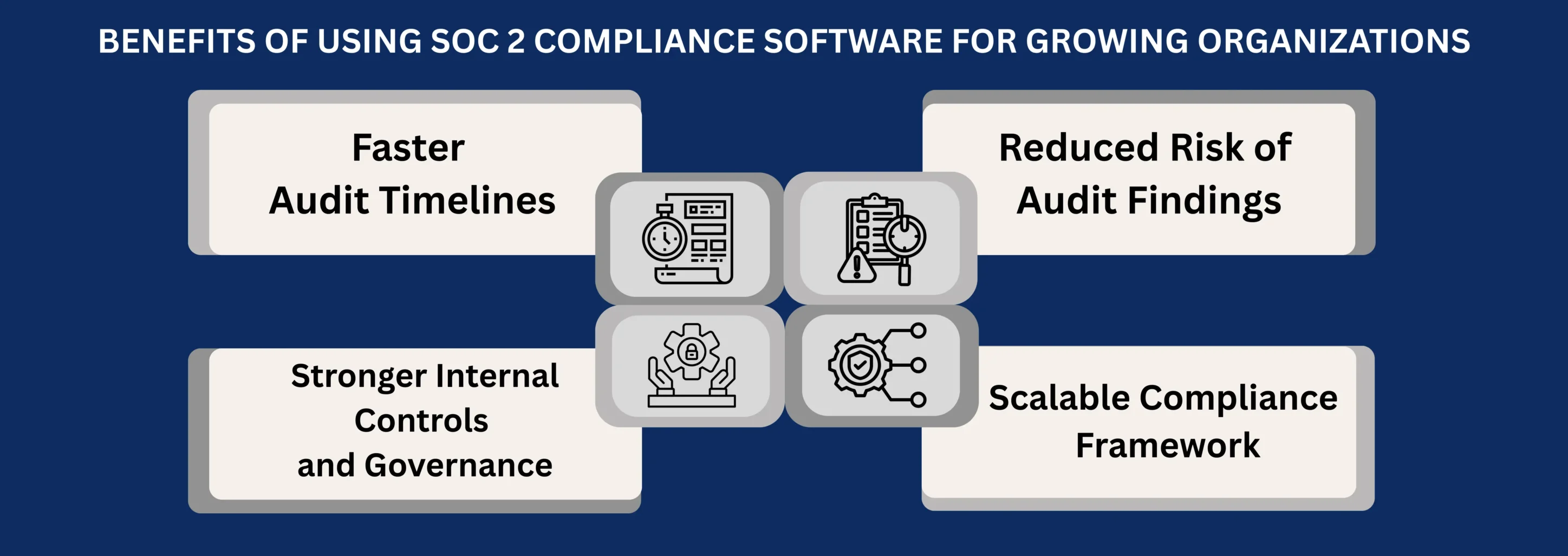
- ✓Market Access and Enterprise Sales Enablement
- ✓Strengthened Internal Security Controls
- ✓Regulatory and Contractual Compliance Support
- ✓Client Trust and Competitive Differentiation
SOC 2 Compliance in Waterloo: Sector-Specific Considerations
SOC 2 compliance requirements in Waterloo vary in emphasis across industry sectors. While the Trust Services Criteria are consistent regardless of industry, the controls most relevant to a given organization depend on the nature of its services, the sensitivity of the data it processes, and the regulatory environment in which it operates. Waterloo’s diverse technology economy encompasses organizations across multiple sectors, each with distinct SOC 2 considerations that should inform scope selection and audit preparation strategy.
SaaS and Software Development Companies
For Waterloo SaaS companies, SOC 2 compliance focuses heavily on the Security and Availability criteria. SaaS providers must demonstrate robust access controls, secure software development lifecycle (SDLC) practices, vulnerability management programs, and service availability monitoring. Code review processes, deployment pipelines, and environment separation controls are frequently evaluated during SOC 2 audit fieldwork for software development organizations.
Waterloo’s software development community includes organizations operating across healthcare IT, legal technology, educational software, and enterprise resource planning — all sectors where clients impose SOC 2 requirements as part of their software procurement process. SOC 2 certification for Waterloo tech companies in the software space must include documented evidence of secure development practices, including penetration testing, code review, dependency management, and release management procedures. Completing a SOC 2 audit that addresses these areas gives software companies a credible security narrative to present during enterprise evaluations.
Fintech and Payment Processing Organizations
SOC 2 compliance for Waterloo fintech companies involves particular emphasis on the Security, Confidentiality, and Processing Integrity criteria. Fintech organizations process financial transactions, store payment data, and manage sensitive personal financial information — controls that directly address the risk of financial fraud, unauthorized access, and data corruption are therefore central to the audit.
Processing Integrity controls ensure that financial data is processed completely, accurately, and in a timely manner — a critical assurance for clients relying on the accuracy of financial calculations and reporting. SOC 2 Certification in Waterloo’s fintech sector is increasingly a baseline expectation rather than a competitive advantage, making early engagement with the audit process strategically important.
For Waterloo fintech organizations subject to FINTRAC reporting obligations or operating under provincial securities regulation, SOC 2 attestation in Waterloo provides a documented audit trail that supports regulatory compliance reviews. While SOC 2 does not replace sector-specific regulatory requirements, the control documentation produced during the audit process is directly relevant to regulatory examination procedures and third-party risk reviews conducted by institutional clients.
Managed Service Providers and IT Outsourcers
Managed service providers (MSPs) and IT outsourcing organizations in Waterloo occupy a unique position in the SOC 2 landscape. These organizations manage IT infrastructure on behalf of clients, meaning that their security controls directly affect their clients’ own compliance posture. Many of these clients are themselves subject to SOC 2 or other compliance requirements and require their MSPs to maintain current SOC 2 reports as a contractual obligation.
SOC 2 audit services in Waterloo, Ontario for MSPs typically encompass the Security, Availability, and Confidentiality criteria, addressing the full scope of services provided to client environments. For MSPs, maintaining current SOC 2 certification is both a contractual necessity and a powerful differentiator in a competitive managed services market.
CertPro’s SOC 2 Audit Services in Waterloo
CertPro is a Licensed CPA Firm authorized to conduct SOC 2 attestation engagements under AICPA standards. CertPro’s SOC 2 audit engagements in Waterloo are conducted by experienced professionals with demonstrated expertise across the technology, financial services, and data management sectors.
Audit engagements are structured to provide organizations with a clear, defensible SOC 2 report that satisfies the requirements of enterprise procurement, regulatory examination, and client due diligence processes. Every SOC 2 audit conducted by CertPro in Waterloo is designed to produce an attestation report that withstands scrutiny from sophisticated enterprise buyers and regulatory bodies alike.
Licensed CPA Firm Credentials and AICPA Attestation Standards
SOC 2 reports can only be issued by a Licensed CPA Firm — a requirement established by the AICPA to ensure that SOC 2 attestation engagements are conducted by qualified professionals subject to professional standards, peer review, and ethical obligations. CertPro’s credentials as a Licensed CPA Firm are a foundational element of the SOC 2 report’s credibility and utility.
Organizations that receive SOC 2 reports from non-CPA entities — including technology consultants or compliance software platforms — should be aware that such reports do not constitute formal SOC 2 attestation under AICPA standards. Only a Licensed CPA Firm can issue a valid SOC2 Certification report recognized by enterprise procurement teams and regulators.
CertPro’s attestation engagements are conducted under AT-C Section 205 (Examination Engagements), which governs the standards for SOC 2 examinations. This standard requires independence between the auditor and the organization under examination, professional skepticism in evidence evaluation, and documentation standards that support the auditor’s conclusions.
Organizations receiving a SOC 2 report from CertPro receive a report that meets these professional standards and can withstand scrutiny from client procurement teams, external auditors, and regulatory bodies — providing the highest level of assurance available through the SOC 2 audit process.
Audit Scope and Engagement Structure for Waterloo Clients
CertPro’s SOC 2 audit engagements for Waterloo organizations begin with a formal engagement letter that defines the scope, observation period, applicable Trust Services Criteria, deliverables, and timeline. The engagement letter also establishes management’s responsibilities — including the preparation of the system description, the assertion over the completeness and accuracy of the description, and the provision of evidence requested by the auditor. This formal structure ensures clarity of expectations and accountability throughout the audit process.
For organizations new to SOC 2 Certification in Waterloo, CertPro structures initial engagements as Type I assessments to establish a baseline attestation quickly, followed by a transition to annual Type II assessments. This sequencing allows organizations to obtain an initial SOC 2 report for immediate use in sales and procurement processes while building the evidence base required for a full Type II engagement.
The transition from Type I to Type II is planned as part of the initial engagement structure to minimize duplication of effort and ensure that the organization’s SOC 2 compliance program matures efficiently over successive audit cycles.
Audit Timelines for SOC 2 Certification in Waterloo
SOC 2 Type I audit timelines for Waterloo organizations typically range from eight to sixteen weeks from engagement commencement to report issuance, depending on the complexity of the organization’s systems, the number of applicable Trust Services Criteria, and the completeness of the organization’s documentation at the time of engagement.
SOC 2 Type II audit timelines include the observation period (typically twelve months) plus the fieldwork and reporting period (typically eight to twelve weeks), resulting in a total engagement duration of fourteen to sixteen months from initial engagement to final report for a first-year Type II assessment. Organizations planning SOC 2 Certification in Waterloo should account for these timelines when setting enterprise sales objectives or responding to client certification requirements.
| Engagement Type | Typical Duration | Observation Period | Primary Output |
|---|---|---|---|
| SOC 2 Type I | 8–16 weeks | Point in time (audit date) | Design effectiveness opinion |
| SOC 2 Type II (First Year) | 14–16 months total | 12 months | Design and operating effectiveness opinion |
| SOC 2 Type II (Annual Renewal) | 12–14 months total | 12 months | Annual operating effectiveness opinion |
SOC 2 Certification vs. Other Compliance Frameworks
Waterloo organizations frequently evaluate SOC 2 alongside other information security certifications and compliance frameworks. Understanding the distinctions between SOC 2 and alternative frameworks enables organizations to make informed decisions about their certification priorities and to communicate accurately with clients about their compliance posture. The following comparisons address the most commonly evaluated alternatives to SOC 2 certification for Waterloo companies pursuing market access and enterprise vendor qualification.
SOC 2 vs. ISO 27001
SOC 2 and ISO 27001 are the two most commonly pursued information security certifications for technology companies. SOC 2 is a US-originated attestation standard administered by the AICPA, while ISO 27001 is an internationally recognized management system standard administered by the International Organization for Standardization (ISO). The primary practical difference is that SOC 2 tests specific controls based on Trust Services Criteria, service commitments, and contractual requirements, while ISO 27001 prescribes a comprehensive information security management system (ISMS) with 93 controls organized across four themes.
For Waterloo companies primarily serving North American markets, SOC 2 is generally the higher-priority certification given its widespread requirement in US enterprise procurement. For companies with significant European client bases or global operations, ISO 27001 may be prioritized or pursued in parallel.
Many Waterloo organizations pursue both certifications over time, leveraging the overlap between SOC 2 control requirements and ISO 27001 Annex A controls to reduce duplicative effort. The decision of which to pursue first should be driven by customer requirements and target market geography — with SOC 2 audit completion typically representing the most immediate commercial return for North American-focused businesses.
SOC 2 vs. SOC 1
SOC 1 and SOC 2 are distinct report types with different objectives and audiences. SOC 1 reports address internal controls over financial reporting (ICFR) — they are relevant for organizations whose services can affect the financial statements of their clients. SOC 2 reports address information security, availability, processing integrity, confidentiality, and privacy — they are relevant for organizations whose services involve the processing, storage, or transmission of client data.
When enterprise clients request a SOC report, they are typically requesting a SOC 2 report. However, organizations serving payroll processors, benefits administrators, and financial data providers may need to determine whether SOC 1 or SOC 2 — or both — is appropriate for their engagement. CertPro can assist Waterloo organizations in making this determination as part of the initial scope discussion.
SOC 2 and PIPEDA/Canadian Privacy Law
SOC 2 is not a privacy regulation and does not replace compliance with Canadian privacy law. However, organizations subject to PIPEDA or Ontario’s PHIPA that include the Privacy Trust Services Criterion in their SOC 2 scope produce documented evidence of privacy controls that is directly relevant to privacy compliance reviews. The Privacy TSC addresses ten privacy principles derived from the Generally Accepted Privacy Principles (GAPP), which closely align with PIPEDA’s fair information practices.
For Waterloo organizations subject to both SOC 2 requirements and Canadian privacy law, including the Privacy criterion in the SOC 2 scope creates efficiency in compliance documentation and demonstrates to clients and regulators that privacy controls have been independently verified through the SOC 2 audit process.
Steps to Obtain SOC 2 Certification in Waterloo
The steps to obtain SOC 2 Certification in Waterloo follow a structured sequence that organizations can plan against well in advance of their target certification date. Each step produces specific outputs that feed into subsequent stages of the SOC 2 audit process. The following process description is structured for direct use in organizational planning activities, enabling teams to allocate resources and set realistic timelines for achieving SOC2 Certification.
- Define the audit scope: identify the systems, services, data, personnel, and Trust Services Criteria to be included in the SOC 2 engagement
- Engage a Licensed CPA Firm: execute an engagement letter with CertPro covering scope, observation period, deliverables, timeline, and responsibilities
- Prepare the system description: document the organization’s services, infrastructure, software, data flows, and personnel in a formal system description
- Implement and document controls: ensure that all controls mapped to the applicable Trust Services Criteria are implemented, documented, and operating as designed
- Establish evidence collection procedures: implement systematic processes for capturing and retaining evidence of control operation throughout the observation period
- Conduct Stage 1 fieldwork (Type I): provide the auditor with control documentation, system description, and design evidence for evaluation at the assessment date
- Complete Type II observation period: operate controls consistently over the twelve-month observation period, maintaining evidence for all control activities
- Conduct Stage 2 fieldwork (Type II): provide the auditor with operational evidence across the observation period for testing of operating effectiveness
- Review draft findings: respond to auditor findings with factual corrections, additional evidence, or management responses as appropriate
- Receive final SOC 2 report: obtain the signed SOC 2 attestation report from CertPro and distribute to clients and prospects under appropriate non-disclosure agreements
- Plan annual recertification: establish the next observation period immediately following report issuance to maintain continuous SOC 2 coverage
SOC 2 Attestation: Understanding the Report and Its Use
SOC 2 attestation in Waterloo produces a formal report that serves as the primary deliverable of the audit engagement. Understanding the structure and appropriate use of the SOC 2 report enables organizations to communicate accurately with clients, respond to procurement requirements, and manage the distribution of sensitive audit findings appropriately. The SOC 2 attestation report is a restricted-use document — it is intended for specified parties, typically the organization under examination and its existing or prospective clients.
Reading the SOC 2 Auditor’s Opinion
The auditor’s opinion letter — Section I of the SOC 2 report — contains the Licensed CPA Firm’s formal conclusion about the organization’s controls. An unqualified (clean) opinion states that the description of the system is fairly presented, that the controls described are suitably designed (Type I), and that the controls operated effectively throughout the observation period (Type II). A qualified opinion indicates that while the overall conclusion is favorable, specific exceptions or limitations have been noted. Organizations should understand that a qualified opinion is not necessarily disqualifying — clients review the nature and severity of exceptions when evaluating the SOC 2 compliance report.
The distinction between SOC 2 certified and SOC 2 compliant is important for accurate communication. SOC 2 certification refers to having a current SOC 2 attestation report issued by a Licensed CPA Firm following an independent examination. SOC 2 compliance refers to following internal controls or regulatory requirements without independent verification.
Organizations that claim SOC 2 compliance without a formal audit report from a Licensed CPA Firm are not SOC 2 certified — a distinction that sophisticated procurement teams and enterprise clients recognize and act upon when evaluating vendor qualifications.
Distributing the SOC 2 Report to Clients
SOC 2 reports contain detailed information about an organization’s security controls — information that could be valuable to malicious actors if disclosed without appropriate controls. Standard practice is to distribute SOC 2 reports under a non-disclosure agreement (NDA) that restricts the recipient’s ability to share the report further.
Many organizations maintain a standardized NDA for SOC 2 report requests that can be executed quickly as part of the sales or vendor onboarding process. Organizations may also provide an executive summary or bridge letter — a shorter document that confirms the SOC 2 audit report exists and summarizes key findings — for situations where full report distribution is not appropriate.
SOC 2 Bridge Letters and Continuous Coverage
Between annual SOC 2 report issuances, organizations may be asked by clients to confirm that no material changes have occurred to the controls described in the most recent report. A SOC 2 bridge letter — also known as a gap letter — is a management assertion document that covers the period between the most recent report’s end date and the current date.
Bridge letters are not a substitute for annual SOC 2 reports but serve to provide clients with interim assurance while the next annual audit cycle is in progress. CertPro’s Waterloo clients are provided with guidance on bridge letter preparation as part of ongoing engagement support, ensuring that SOC 2 attestation coverage remains continuous throughout the year.
SOC 2 Certification Cost and Timeline in Waterloo
The cost of SOC 2 Certification in Waterloo is determined by several variables: the complexity of the organization’s systems, the number of applicable Trust Services Criteria, the organization’s existing security maturity, the size of the audit population (number of employees, systems, and processes in scope), and the type of assessment (Type I or Type II). Organizations seeking to plan their SOC 2 investment should understand the primary cost drivers and the relationship between audit scope and total engagement cost.
Cost Drivers for SOC 2 Audits
The number of Trust Services Criteria selected directly affects audit scope and cost — each additional criterion adds control domains that must be evaluated during fieldwork. Organizations that limit their SOC 2 scope to the mandatory Security criterion incur lower audit costs than organizations that include multiple additional criteria. However, limiting scope must be driven by genuine relevance rather than cost reduction — including criteria that are not relevant to the organization’s services creates unnecessary audit burden, while excluding criteria that clients expect to be covered can undermine the SOC 2 report’s utility.
The organization’s security maturity at the time of engagement also affects cost — not directly in audit fees, but in the internal investment required to bring controls to the standard required for an unqualified opinion. Organizations with well-documented, consistently operated security controls can move more efficiently through the SOC 2 audit process than organizations with gaps in documentation or inconsistencies in control operation.
Investing in documentation and evidence collection infrastructure prior to engagement reduces the likelihood of findings and the cost of remediation during the audit cycle — making pre-engagement preparation one of the highest-return activities in the SOC 2 compliance journey.
Planning SOC 2 Investment for Waterloo Organizations
Waterloo technology companies should plan for SOC 2 certification as a recurring annual operating cost rather than a one-time project. The annual cost structure includes audit fees paid to the Licensed CPA Firm, internal staff time for evidence collection and audit coordination, technology investments in security monitoring and logging tools, and any costs associated with addressing control exceptions identified during the audit.
Organizations that integrate SOC 2 evidence collection into their standard operational procedures — rather than treating it as a periodic project — typically find that the marginal cost of annual recertification decreases significantly after the first year. This integration approach also supports a more consistent security posture, reducing the risk of control gaps emerging between audit cycles.
Secure SOC 2 Certification in Waterloo with CertPro
CertPro conducts SOC 2 certification engagements for organizations across Waterloo, Ontario, providing formal attestation under AICPA standards through a Licensed CPA Firm audit process. SOC 2 Certification in Waterloo through CertPro delivers a recognized, defensible attestation report that satisfies enterprise procurement requirements, supports regulatory due diligence, and provides clients with documented evidence of independently evaluated information security controls. Whether your organization is pursuing an initial SOC2 Certification or renewing an existing attestation, CertPro’s structured audit methodology ensures a clear and efficient path to report issuance.
CertPro’s SOC 2 audit services in Waterloo, Ontario encompass the full audit lifecycle — from scope definition and engagement agreement through fieldwork, evidence evaluation, findings review, and final report issuance. Annual recertification programs maintain continuous SOC 2 coverage for organizations whose clients require current attestation reports as part of ongoing vendor management. CertPro’s audit methodology is aligned with AT-C Section 205 and reflects the Trust Services Criteria applicable to Waterloo’s technology, financial services, and data management sectors.
Organizations in Waterloo seeking SOC 2 attestation can contact CertPro to discuss audit scope, applicable Trust Services Criteria, engagement timelines, and the transition from initial Type I certification to annual Type II assessments. CertPro’s team brings sector-specific expertise in SOC 2 Certification in Waterloo across SaaS, fintech, managed services, and cloud infrastructure — ensuring that every SOC 2 audit engagement is scoped appropriately and that the resulting report meets the expectations of the organization’s clients and partners.
FAQ
▶
What is SOC 2 certification and why does it matter for Waterloo companies?
▶
What is the difference between SOC 2 Type I and Type II?
▶
How long does SOC 2 certification take for a Waterloo organization?
▶
Who can issue a SOC 2 report in Waterloo?
▶
Which Trust Services Criteria should a Waterloo company include in its SOC 2 scope?
▶
What is the difference between SOC 2 certified and SOC 2 compliant?
▶
How often must SOC 2 certification be renewed?
▶
Can a SOC 2 report satisfy Canadian privacy law requirements?

SOC 1 VS SOC 2: WHICH REPORT YOUR CUSTOMERS ACTUALLY ASK FOR
If you sell SaaS or provide outsourced services, you have likely been asked for a SOC report. However, the follow-up question is rarely easy to answer…
SOC 2 Certified: What Does It Mean for Your Business
For companies that handle sensitive data or run cloud-based services, the question “Can you provide your SOC 2 report?” carries enormous weight. Yet, …

Secure Email Platform Exclaimer Renews ISO, SOC 2
Excerpt from The Manila Times Article, Published on February 26, 2026 Secure email solutions provider Exclaimer has renewed its ISO and SOC 2 certific…
Get In Touch
have a question? let us get back to you.