
ISO 42001 Certification in Estonia
Executive Summary: ISO 42001 Certification in Estonia is conducted by a Licensed CPA Firm providing independent third-party assessment of Artificial Intelligence Management Systems against ISO/IEC 42001:2023 requirements. The ISO 42001 certification process evaluates governance structures, risk controls, transparency mechanisms, and accountability frameworks across AI-enabled organizations operating within Estonia’s digitally advanced regulatory environment.
OUR CLIENTS




Independent ISO 42001 Certification by a Licensed CPA Firm in Estonia
ISO 42001 Certification in Estonia is delivered by CertPro as a Licensed CPA Firm providing independent, third-party assessment of Artificial Intelligence Management Systems (AIMS) against the requirements of ISO/IEC 42001:2023. The ISO 42001 certification process evaluates whether an organization has established, implemented, maintained, and continually improved an AIMS in alignment with the international standard governing responsible AI governance.
CertPro operates strictly as a certification body — not as a consultant or advisor. All certification decisions are made by an independent certification committee applying objective, evidence-based evaluation criteria. This structural separation ensures the integrity and credibility of every ISO 42001 assessment outcome.
Estonia presents a uniquely significant context for ISO 42001 Certification. As one of Europe’s most digitally advanced economies, Estonia operates a sophisticated e-governance infrastructure underpinning public services, financial transactions, and cross-border data exchange. Estonian organizations — from government agencies and SaaS providers to fintech platforms and cloud service operators — increasingly deploy AI-driven systems in regulated environments where accountability, transparency, and structured risk management are operationally essential.
ISO 42001 Certification in Estonia provides an independently verified mechanism to demonstrate that AI systems are governed through documented controls, lifecycle oversight processes, and structured risk treatment plans. This independent verification is what distinguishes ISO AIMS certification from internal self-assessments or informal governance reviews.
The regulatory context shaping demand for ISO 42001 compliance in Estonia is multidimensional. Estonian organizations operate within the European Union’s legal framework, making them subject to the General Data Protection Regulation (GDPR), the EU AI Act — which establishes risk-based obligations across prohibited, high-risk, and limited-risk AI categories — and sector-specific directives governing financial services, digital infrastructure, and public procurement.
The intersection of these regulatory obligations creates clear institutional demand for an internationally recognized AI governance standard that maps to legal requirements. ISO/IEC 42001:2023 serves as that standard, and ISO 42001 Certification provides third-party validation that an organization’s AIMS satisfies its requirements.
A representative cross-border compliance scenario illustrates the practical demand for ISO 42001 Certification in Estonia. Consider an Estonian SaaS provider deploying AI-powered analytics services to enterprise clients across Germany, the Netherlands, and Finland. During procurement evaluations, those enterprise clients require documented evidence of AI governance certification as a condition of contract.
ISO AIMS certification — issued following a successful audit against ISO/IEC 42001:2023 — constitutes exactly that evidence. The certification report, scope definition, and certificate of conformance become part of the vendor qualification record. This enables the Estonian provider to satisfy due diligence expectations across multiple jurisdictions through a single internationally recognized ISO 42001 audit.
The independence of the certification body is foundational to the value of ISO 42001 assessment. CertPro, operating as a Licensed CPA Firm, applies a structured audit methodology and evaluates organizational controls without any advisory relationship to the auditee. This structural independence ensures that the certification decision reflects an objective assessment of conformance evidence rather than a consulting engagement outcome.
The certification committee responsible for the final determination reviews audit findings, evaluates nonconformities, and issues a binary decision based solely on documented evidence of AIMS conformance. This model aligns with internationally recognized principles for certification body independence and is essential to the credibility that ISO AIMS certification Estonia organizations rely upon for both regulatory and commercial purposes.
ISO/IEC 42001:2023 as the Governing Standard
ISO/IEC 42001:2023 is the first international standard specifically designed to govern Artificial Intelligence Management Systems. Published by the International Organization for Standardization in 2023, it establishes requirements for organizations that provide or use AI-based products and services to manage AI-related risks through structured governance mechanisms.
The standard follows the High-Level Structure (HLS) framework common to other ISO management system standards — including ISO 27001, ISO 9001, and ISO 31000 — enabling organizations to integrate AIMS controls with existing management system infrastructure. This structural compatibility is particularly relevant for Estonian organizations that already hold ISO 27001 certification, as controls, policies, and review cycles can be cross-mapped rather than duplicated.
ISO/IEC 42001:2023 addresses AI governance across the full lifecycle of AI systems — from initial design and data sourcing through deployment, monitoring, and decommissioning. The standard requires organizations to define their organizational context for AI use, identify interested parties and their requirements, establish AI policy and objectives, assess and treat AI-related risks, and implement operational controls aligned with AI system characteristics.
Organizations must also maintain documented evidence of all governance activities. The standard’s annexes provide normative guidance on AI system impact assessment, data governance, and responsible AI principles including fairness, transparency, accountability, and robustness. These requirements directly address the governance concerns articulated in the EU AI Act and GDPR, making ISO 42001 compliance a strategically significant investment for Estonian organizations subject to European regulatory obligations.
Estonia’s Digital Governance Infrastructure and AI Regulatory Environment
Estonia has developed one of the world’s most sophisticated digital governance frameworks, anchored by the X-Road data exchange layer, digital identity infrastructure, and a legislative environment that actively supports digital innovation. Estonian public institutions and private sector organizations operate in a context where AI-driven decision support, automated processing, and algorithmic systems have been deployed at scale across healthcare, financial services, legal processing, and public administration.
This advanced deployment environment means that governance deficiencies in AI systems carry material regulatory and reputational risk — creating strong institutional incentives for structured AI management certification. ISO 42001 Certification in Estonia directly addresses this need by providing an externally validated governance baseline for AI system operations.
The Estonian Information System Authority (RIA) and the Data Protection Inspectorate (AKI) are the primary regulatory bodies overseeing digital infrastructure security and data protection compliance respectively. Estonian organizations deploying AI systems that process personal data are subject to GDPR accountability requirements, which demand documented evidence of privacy-by-design principles, data protection impact assessments, and appropriate technical and organizational measures.
ISO 42001 compliance that Estonian organizations achieve through certification provides a structured framework for satisfying these documentation requirements. Furthermore, the EU AI Act’s risk classification system — which categorizes AI systems by their potential for harm and imposes corresponding governance obligations — creates an additional regulatory layer that ISO 42001’s risk management controls are specifically designed to address.

ISO 42001 Certification Audit Process
The ISO 42001 audit process conducted by CertPro follows a structured, multi-stage methodology designed to systematically evaluate an organization’s AIMS against the requirements of ISO/IEC 42001:2023. Each stage of the audit program produces documented findings that form the evidentiary basis for the certification committee’s decision. The process is strictly audit-focused, with no advisory activities conducted at any stage.
Organizations seeking ISO 42001 Certification in Estonia initiate the process through a formal application that triggers scope definition and audit program planning — the first of several structured steps toward achieving independently verified AIMS conformance.
The ISO 42001 certification process begins with an application review in which the auditor evaluates the organization’s stated scope of AI systems, the nature of AI use within the organization, the size and complexity of the AIMS, and any sector-specific regulatory requirements applicable to the organization’s operations.
For Estonian organizations, this review considers the full regulatory environment — including GDPR obligations, EU AI Act risk classifications applicable to the organization’s AI systems, and sector-specific requirements from financial regulators or public procurement frameworks. The application review results in an audit program determination specifying the audit stages, estimated timeline, auditor assignments, and scope boundaries.
The audit program determination also establishes the criteria against which the AIMS will be evaluated. For ISO 42001 assessment, these criteria are derived from the normative requirements of ISO/IEC 42001:2023 — specifically Clauses 4 through 10 governing the management system requirements — and the applicable controls in the standard’s annexes.
Organizations with existing ISO 27001 or other management system certifications may have audit programs structured to leverage common elements, reducing duplication in areas where management system requirements overlap. The determination of audit scope is a critical quality control step that ensures the ISO 42001 audit Estonia organizations undergo is appropriately calibrated to their operational context.
The Stage 1 audit involves a structured review of the organization’s AIMS documentation to assess whether the management system has been designed and documented in conformance with ISO/IEC 42001:2023 requirements. The Stage 1 audit reviews the AI policy, AI objectives, organizational context documentation, interested party analysis, risk assessment methodology and results, risk treatment plan, Statement of Applicability for AIMS controls, and documented evidence of management review activities.
For Estonian organizations, the Stage 1 audit also covers documentation addressing applicable legal and regulatory requirements — including GDPR processing records, data protection impact assessments for high-risk AI processing activities, and EU AI Act conformance documentation where applicable.
The Stage 1 audit produces a documented assessment of documentation conformance, identifying areas where documentation does not satisfy standard requirements before the Stage 2 operational audit proceeds. Findings are communicated to the organization, and any documentation deficiencies must be addressed prior to Stage 2 commencement.
The Stage 1 audit is not an advisory engagement — it is an evidence-based evaluation of whether documented AIMS elements satisfy the requirements of ISO/IEC 42001:2023. The distinction between documentation review at Stage 1 and operational effectiveness evaluation at Stage 2 is fundamental to the structured ISO 42001 assessment methodology.
The Stage 2 audit evaluates the operational effectiveness of the organization’s AIMS by examining evidence of control implementation, process execution, monitoring activities, and continual improvement mechanisms. Activities include interviews with personnel responsible for AI governance, review of operational records such as AI system logs, incident records, monitoring reports, and management review outputs, and assessment of whether AI risk treatment controls are functioning as designed.
For organizations deploying AI systems across multiple operational contexts — for example, an Estonian fintech platform using AI for credit scoring, fraud detection, and customer service automation — the Stage 2 audit scope covers each AI application domain included within the certified AIMS scope.
Stage 2 audit findings are documented in a structured audit report that categorizes observations and identifies nonconformities where evidence of control implementation or effectiveness is absent. Nonconformities are classified and reported with supporting evidence citations. The organization must provide documented corrective actions addressing identified nonconformities before a certification recommendation is submitted to the certification committee.
The Stage 2 audit is the primary mechanism through which ISO 42001 compliance Estonia organizations demonstrate through operational evidence rather than documentation alone. Together, Stage 1 documentation review and Stage 2 operational assessment provide the comprehensive evidentiary basis required for a valid ISO 42001 assessment determination.
Following completion of the Stage 2 audit and nonconformity review, all audit findings and corrective action responses are submitted to the independent certification committee for review. The committee evaluates whether the totality of audit evidence supports a conclusion that the organization’s AIMS conforms to ISO/IEC 42001:2023 requirements. The committee’s decision is binary — certification is either granted or withheld — and is based solely on documented audit evidence.
The certification committee operates independently of the audit team to ensure that certification decisions are not influenced by the audit relationship. Upon a positive decision, a certificate of conformance is issued specifying the certified scope, the applicable standard, and the certification validity period.
ISO 42001 certification is issued for a three-year certification cycle, with annual surveillance audits conducted to verify continued conformance. Surveillance audits evaluate whether the AIMS remains effective, whether corrective actions from previous audits have been implemented, whether the organization has maintained its AI policy and objectives, and whether significant changes to AI systems or organizational context have been assessed within the AIMS.
Recertification audits are conducted at the end of the three-year cycle to re-evaluate full AIMS conformance and renew certification. Failure to maintain conformance during the surveillance cycle may result in suspension or withdrawal of certification, recorded and reported in accordance with CertPro’s certification body policies.
| Audit Stage | Primary Activity | Key Output |
|---|---|---|
| Application Review | Scope definition and audit program planning | Audit program document |
| Stage 1 Audit | Documentation and AIMS design review | Stage 1 findings report |
| Stage 2 Audit | Operational effectiveness evaluation | Stage 2 audit report with nonconformities |
| Certification Committee Review | Independent decision based on audit evidence | Certificate of conformance or deferral |
| Surveillance Audit | Annual conformance verification | Surveillance audit findings report |
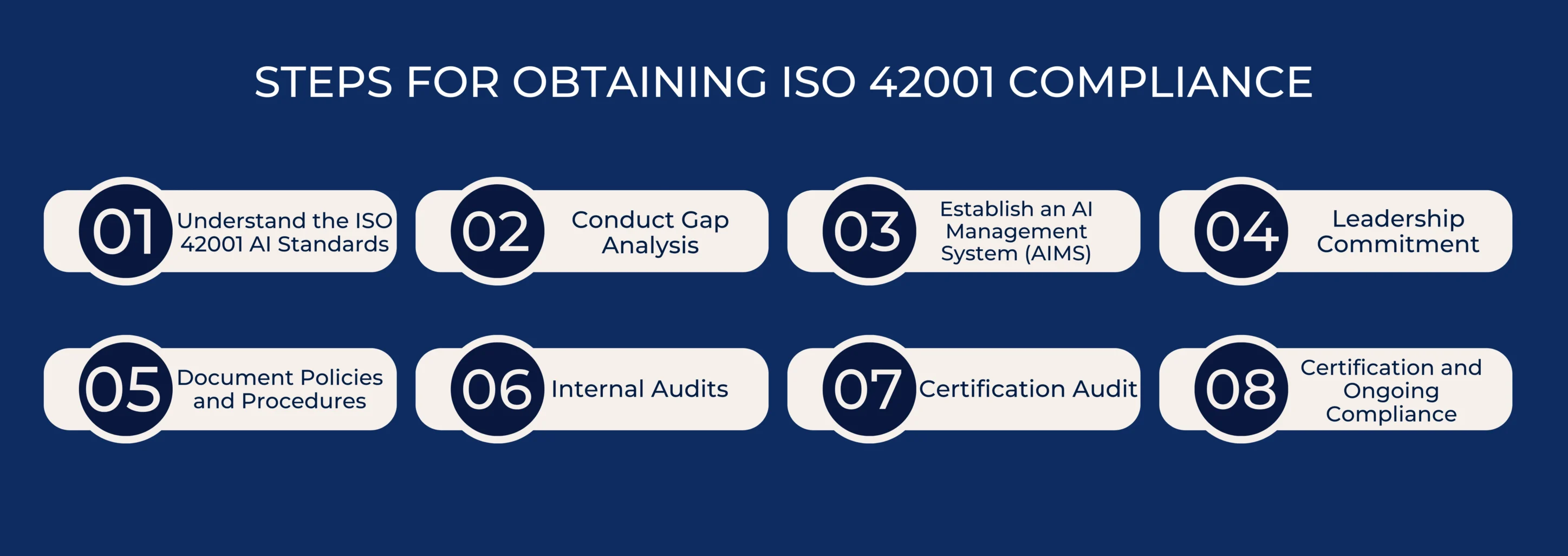
- ✓Application Review and Audit Program Determination
- ✓Stage 1 Audit: Documentation and System Review
- ✓Stage 2 Audit: Operational Effectiveness Evaluation
- ✓Certification Committee Decision, Surveillance, and Recertification
ISO 42001 Certification Requirements and Evaluation Criteria
ISO 42001 assessment evaluates an organization’s AIMS against the normative requirements of ISO/IEC 42001:2023. These requirements span management system governance, AI risk management, operational controls, and continual improvement. They are assessed through a combination of documentation review and operational evidence examination.
Organizations seeking ISO 42001 Certification in Estonia must demonstrate conformance across all applicable clauses and controls within the certified scope. The evaluation criteria are objective and evidence-based. The ISO 42001 audit process does not accommodate subjective judgments about organizational intent or planned future activities — only documented, verifiable evidence of current AIMS conformance counts.
ISO/IEC 42001:2023 Clauses 4 through 10 establish the management system requirements forming the structural foundation of the AIMS. Clause 4 requires organizations to determine the internal and external context relevant to AI use, identify interested parties and their requirements, and define the AIMS scope. For Estonian organizations, the external context includes the EU regulatory environment, industry-specific requirements, and the expectations of customers and business partners across European markets.
Clause 5 requires top management to demonstrate leadership and commitment to the AIMS through the establishment of AI policy, the assignment of roles and responsibilities, and active participation in management review processes. This visible leadership commitment is a core requirement assessed during the ISO 42001 audit.
Clause 6 addresses planning and requires organizations to assess risks and opportunities associated with AI systems, establish AI objectives aligned with organizational strategy, and plan actions to address identified risks. The AI risk assessment process must be systematic, documented, and repeatable, producing a risk treatment plan that specifies controls selected to address each identified risk.
Clause 7 covers support requirements including resources, competence, awareness, communication, and documented information. Clause 8 governs operational planning and control, requiring organizations to implement and control the processes needed to meet AIMS requirements and manage AI system lifecycle activities. Clauses 9 and 10 address performance evaluation and continual improvement, requiring monitoring, measurement, internal audit, and management review activities to be conducted systematically and documented comprehensively.
The ISO 42001 audit evaluates the implementation and effectiveness of AI governance controls across the organization’s certified AIMS scope. Core documentation requirements include the AI policy, AI risk assessment records and risk treatment plans, the Statement of Applicability identifying which controls from the standard’s annexes have been selected or excluded and the rationale for those decisions, and AI system lifecycle documentation covering design, development, validation, deployment, monitoring, and decommissioning activities.
Organizations must also maintain records of management review outcomes. For each AI system within scope, documented evidence of the controls applied, the risks addressed, and the monitoring activities conducted is essential to a successful ISO 42001 assessment.
ISO/IEC 42001:2023 Annex A provides a reference set of AI governance controls addressing areas including AI system impact assessment, data governance, transparency and explainability mechanisms, human oversight provisions, AI system performance monitoring, and incident response processes. The audit evaluates both the design adequacy of selected controls — whether controls are capable of addressing the identified risks — and their operating effectiveness — whether they are consistently applied and producing intended outcomes.
For organizations subject to GDPR, the AI impact assessment controls in Annex A can be aligned with data protection impact assessment requirements, creating an integrated governance documentation structure that satisfies both AIMS and data protection regulatory requirements simultaneously. This dual-purpose alignment is a significant efficiency benefit of pursuing ISO 42001 compliance.
The scope of ISO 42001 Certification defines the boundaries within which the AIMS has been assessed and found to conform. The scope must precisely identify which AI systems, organizational units, geographic locations, and AI use cases are covered by the certificate. Organizations may elect to certify a defined subset of their AI operations — for example, certifying the AIMS governing customer-facing AI applications while excluding internal operational AI tools — provided scope boundaries are clearly documented and do not misrepresent the extent of certified controls.
For Estonian organizations with international operations, the scope may cover Estonian operations specifically or extend to cross-border AI system deployments, depending on organizational requirements and audit program design.
Certification may be suspended or withdrawn under defined conditions. Suspension occurs when an organization fails to resolve nonconformities identified during surveillance audits within the required timeframe, when significant changes to the AIMS or AI systems are made without appropriate notification and re-assessment, or when the organization fails to permit surveillance audits to proceed as scheduled.
Withdrawal of certification is a more severe outcome, occurring when suspension conditions are not resolved within the specified period or when evidence of material misrepresentation of AIMS conformance is identified. These conditions are communicated to the organization at the time of certification and are binding throughout the certification cycle — safeguarding the integrity of ISO AIMS certification and ensuring that certificates accurately reflect current organizational conformance.
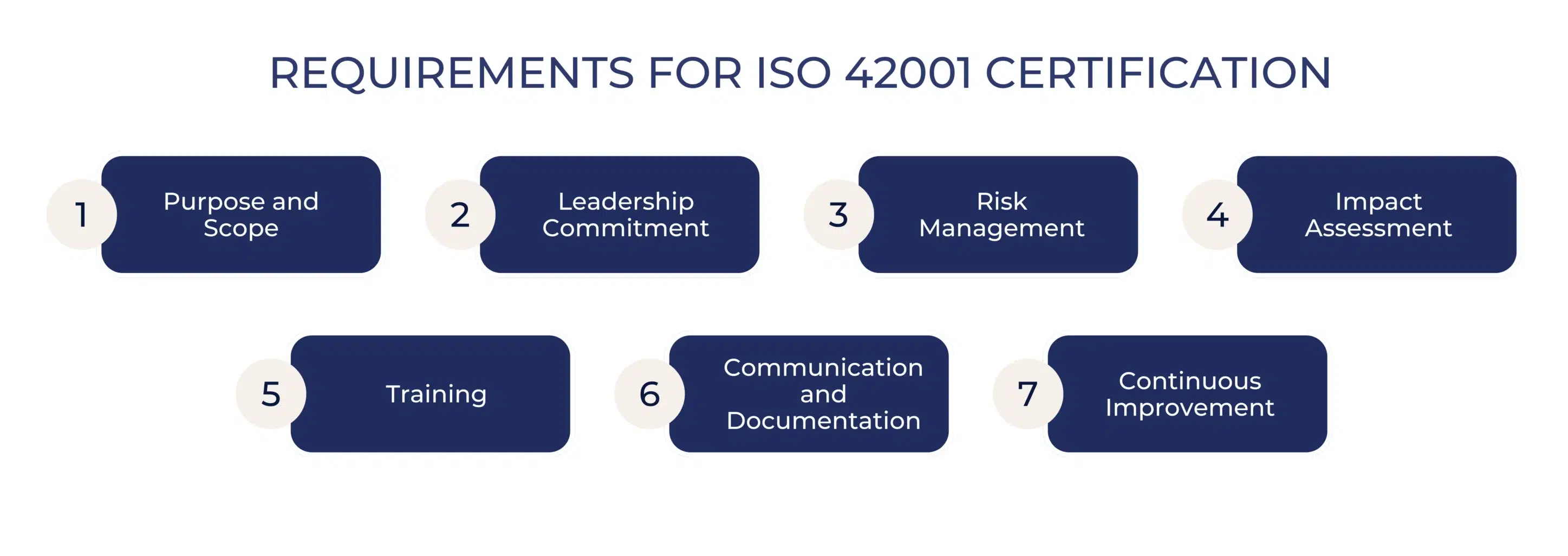
- ✓Management System Requirements: Clauses 4 Through 10
- ✓AI System Governance Controls and Documentation Requirements
- ✓Scope Definition and Conditions for Certification Suspension
Business Sectors in Estonia Seeking ISO 42001 Certification
ISO 42001 certification for Estonia companies spans a diverse range of industries reflecting the country’s advanced digital economy and its position as a gateway for technology-driven enterprises accessing European markets. Demand for AIMS certification is driven by a combination of regulatory pressure, enterprise procurement requirements, and organizational commitment to responsible AI governance.
The following sectors represent the primary sources of demand for ISO 42001 Certification in Estonia, based on the intersection of AI system deployment patterns, regulatory obligations, and market expectations.
Financial Services and Fintech Organizations
Estonia has established itself as a significant fintech hub, with a concentration of licensed payment institutions, e-money issuers, and AI-driven financial services providers operating under Estonian and European financial regulation. Estonian fintech organizations deploy AI systems across credit assessment, fraud detection, anti-money laundering screening, customer due diligence, and algorithmic trading applications.
These AI applications are subject to regulatory scrutiny from the Estonian Financial Supervision Authority (Finantsinspektsioon) and from European Banking Authority guidelines addressing AI use in financial services. ISO 42001 compliance that Estonian fintech organizations achieve through certification provides documented evidence of structured AI risk management satisfying both regulatory expectations and the vendor due diligence requirements of institutional partners and enterprise clients.
The intersection of AI governance and financial regulation is particularly acute for organizations subject to the EU AI Act’s high-risk AI system classifications. Credit scoring, creditworthiness assessment, and AI systems used in employment-related decisions are classified as high-risk under the EU AI Act, requiring conformance with specific transparency, accuracy, robustness, and human oversight obligations.
ISO 42001 assessment provides a structured framework for documenting conformance with these obligations, and ISO AIMS certification offers third-party validation that governance controls satisfy the standard’s requirements. For Estonian fintech organizations seeking to expand into Germany, France, or the Nordic markets, ISO 42001 Certification in Estonia functions as a market access credential that satisfies AI governance requirements across multiple European jurisdictions simultaneously.
SaaS Providers and Cloud Service Organizations
Estonia’s technology ecosystem includes a substantial concentration of SaaS providers and cloud service organizations that incorporate AI functionality into their product offerings. Estonian SaaS companies serving enterprise clients across Europe encounter AI governance requirements at multiple points in the vendor qualification process. Procurement security reviews conducted by large enterprise clients increasingly include AI governance assessments as a standard component of vendor due diligence — particularly for SaaS solutions deployed in regulated sectors such as healthcare, legal services, human resources, and financial management.
ISO 42001 Certification in Estonia provides SaaS organizations with a certification credential that can be presented in response to vendor security questionnaires, contract requirements, and RFP evaluation criteria — streamlining the sales process and reducing ad hoc documentation burdens.
Cloud service providers operating from Estonia face particular AI governance requirements when serving customers subject to sector-specific regulations. Healthcare AI applications may be subject to Medical Device Regulation (MDR) requirements in addition to GDPR and EU AI Act obligations. Legal technology platforms using AI for document review or contract analysis must address transparency and explainability requirements. HR technology platforms using AI for recruitment, performance assessment, or workforce analytics are subject to high-risk AI classifications under the EU AI Act.
For each of these use cases, ISO 42001 certification for Estonia companies establishes a documented governance baseline that supports regulatory conformance across the applicable legal and regulatory framework.
Public Sector and E-Governance Organizations
Estonia’s internationally recognized e-governance infrastructure includes AI-assisted systems deployed across public administration, tax authority operations, judicial support, and digital identity management. Public sector organizations deploying AI systems in Estonia are subject to the EU AI Act — which imposes specific obligations on public authorities using AI in law enforcement, judicial, and public service contexts — as well as the broader accountability expectations of Estonia’s data protection and public administration legal frameworks.
ISO 42001 Certification that Estonian e-governance organizations pursue provides a structured mechanism for documenting AI governance practices, demonstrating accountability to citizens and oversight bodies, and managing the reputational and legal risks associated with AI-driven public services.
- ✓Financial services organizations using AI for credit assessment, fraud detection, and AML screening
- ✓Fintech platforms deploying AI-driven payment processing and risk management systems
- ✓SaaS providers incorporating AI functionality into enterprise software products
- ✓Cloud service organizations hosting AI workloads for regulated industry clients
- ✓Healthcare technology companies deploying AI-assisted diagnostic or clinical decision support tools
- ✓Legal technology platforms using AI for document analysis and contract management
- ✓HR technology providers using AI for recruitment, workforce analytics, and performance management
- ✓Public sector organizations using AI in administrative decision-making and service delivery
- ✓E-commerce platforms using AI for personalization, pricing, and fraud prevention
- ✓Cybersecurity organizations deploying AI-driven threat detection and response systems
Benefits of ISO 42001 Certification in Estonia
ISO 42001 Certification delivers measurable organizational outcomes across governance quality, regulatory alignment, and market positioning. The benefits associated with achieving and maintaining ISO AIMS certification are grounded in the structural improvements the certification process demands and the independent verification a successful audit provides.
For Estonian organizations competing in European markets, the following benefits represent the primary value drivers of ISO 42001 Certification in Estonia.
The primary benefit of ISO 42001 Certification is independent, third-party verification that an organization’s AI governance controls are documented, implemented, and operating effectively. Unlike self-assessment frameworks or internal audit programs, ISO AIMS certification involves an objective evaluation conducted by an independent Licensed CPA Firm that applies standardized criteria to assess control design and effectiveness.
This independence is the defining characteristic that distinguishes certification from self-declaration. It is also the basis on which enterprise clients, regulators, and business partners treat the ISO 42001 audit outcome as credible evidence of AI governance maturity.
For Estonian organizations subject to regulatory scrutiny — whether from financial supervisors, data protection authorities, or EU AI Act enforcement bodies — a current ISO 42001 certificate from an independent Licensed CPA Firm provides documented evidence that the organization’s AIMS has been externally assessed. This evidence can be presented in regulatory examinations, supervisory inquiries, and enforcement proceedings as substantiation of the organization’s commitment to structured AI governance.
The ongoing surveillance audit cycle ensures that the certificate reflects a current assessment of conformance rather than a historical snapshot — maintaining the relevance of the certification evidence throughout the three-year certification period.
ISO 42001 certification is increasingly recognized in enterprise procurement processes as evidence that an AI system vendor has implemented structured AI governance controls. Large enterprise buyers across financial services, healthcare, and public sector procurement in Europe are incorporating AI governance certification requirements into their vendor qualification frameworks.
ISO AIMS certification that Estonian organizations hold is a qualifying criterion enabling participation in procurement processes where AI governance evidence is required. Without certification, organizations may be excluded from competitive procurement processes or required to provide significantly more extensive documentation to satisfy due diligence requirements on an ad hoc basis — creating a clear commercial incentive for ISO 42001 Certification in Estonia.
Achieving ISO 42001 Certification requires organizations to establish a structured AIMS that systematically identifies, assesses, and treats AI-related risks. This governance structure — including documented risk assessments, risk treatment plans, control implementations, monitoring processes, and management review activities — represents a substantive improvement in organizational AI risk management regardless of the certification outcome.
Organizations that pursue ISO 42001 audit discipline establish institutional processes for identifying emerging AI risks, responding to AI system incidents, and maintaining accountability for AI governance decisions at board and executive levels. The result is a governance infrastructure that delivers ongoing operational value beyond the certificate itself.
- ✓Independent third-party verification of AI governance control design and operating effectiveness
- ✓Recognition as a qualifying credential in enterprise vendor due diligence and procurement processes
- ✓Documented evidence of AIMS conformance for presentation to regulatory authorities
- ✓Structured framework for systematic AI risk identification, assessment, and treatment
- ✓Alignment with EU AI Act obligations through documented risk-based governance controls
- ✓Integration with existing ISO 27001 and ISO 9001 management system frameworks
- ✓Ongoing surveillance audit cycle maintaining continuous conformance verification
- ✓Clear scope definition enabling precise communication of certified AI governance boundaries
- ✓Competitive differentiation in European markets requiring AI governance certification
- ✓Board and executive accountability mechanisms for AI governance decision-making
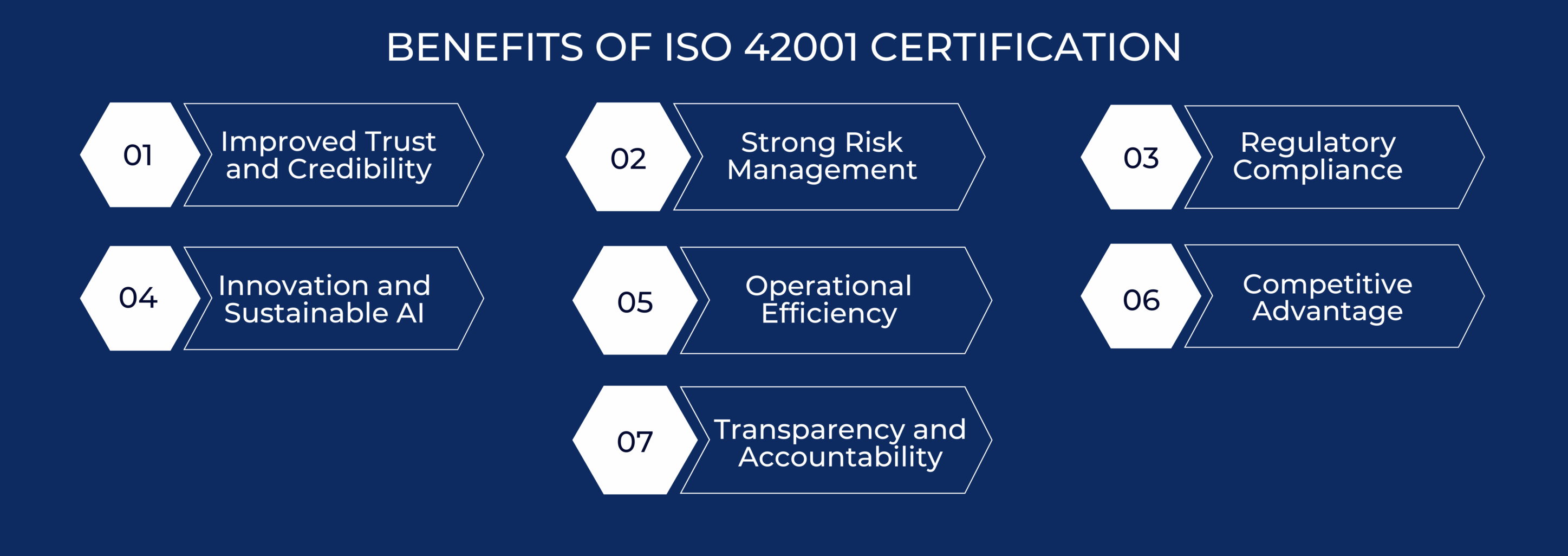
- ✓Independent Verification of AI Governance Controls
- ✓Recognition in Enterprise Procurement and Vendor Due Diligence
- ✓Structured AI Risk Management and Governance Framework
ISO 42001 AIMS Framework: Governance Structures and Lifecycle Controls
The Artificial Intelligence Management System framework established by ISO/IEC 42001:2023 encompasses governance structures, lifecycle oversight mechanisms, risk management controls, transparency requirements, and continual improvement processes. Understanding the AIMS framework is essential for organizations preparing their systems for ISO 42001 assessment, as the audit evaluates conformance across all framework components within the defined scope.
The following sections describe the primary AIMS framework elements and their evaluation criteria in the ISO 42001 audit context.
AI Governance Structures and Accountability Mechanisms
ISO/IEC 42001:2023 requires organizations to establish clear governance structures for AI management that define roles, responsibilities, and accountability mechanisms at all levels of the organization. Top management must demonstrate visible commitment to the AIMS through the establishment and communication of AI policy, the allocation of resources for AIMS implementation and maintenance, and active participation in management review activities.
The AI policy must articulate the organization’s commitments regarding responsible AI use, risk management, compliance with applicable legal requirements, and continual improvement of the AIMS. For Estonian organizations operating under public scrutiny — such as government agencies, public utilities, or regulated financial institutions — the AI policy represents a public commitment to responsible AI governance that is subject to external verification through the ISO 42001 certification process.
Accountability mechanisms within the AIMS must address AI system ownership, decision authority for AI risk acceptance, escalation pathways for AI system incidents, and reporting structures for AI governance performance. The ISO 42001 audit evaluates whether accountability structures are documented, understood by relevant personnel, and consistently applied in practice.
Organizations must demonstrate that AI system owners have clearly defined responsibilities for monitoring AI system performance, responding to deviations from expected behavior, and initiating corrective actions when AI systems produce harmful or unintended outputs. The assignment of these responsibilities to identified individuals or roles — rather than diffuse organizational units — is a key control design requirement assessed during the audit.
AI System Lifecycle Oversight and Operational Controls
ISO/IEC 42001:2023 requires organizations to implement operational controls covering the full lifecycle of AI systems within the certified scope. The AI system lifecycle encompasses design and development, data acquisition and preparation, model training and validation, deployment and integration, operational monitoring, and decommissioning. At each lifecycle stage, the standard requires organizations to apply documented controls appropriate to the risks associated with that stage and the characteristics of the AI system.
Design controls must address intended use documentation, bias assessment in training data, model performance validation criteria, and human oversight mechanisms. Deployment controls must address integration testing, production environment security, access controls, and output monitoring configuration.
Operational monitoring controls require organizations to continuously track AI system performance against defined metrics, detect anomalies and performance degradation, investigate and respond to AI system incidents, and maintain records of monitoring activities and outcomes. For Estonian organizations deploying AI in regulated contexts — such as AI-assisted medical imaging analysis, automated credit decisions, or AI-driven fraud detection — operational monitoring controls must address the specific regulatory requirements applicable to those use cases, including explainability requirements, human review thresholds, and incident reporting obligations.
The ISO 42001 audit evaluates the design and operating effectiveness of lifecycle controls by reviewing monitoring records, incident logs, performance reports, and evidence of corrective actions taken in response to identified AI system issues.
Transparency, Explainability, and Responsible AI Principles
ISO/IEC 42001:2023 incorporates responsible AI principles — including transparency, fairness, accountability, privacy, safety, and security — as foundational requirements for AIMS governance. These principles are not aspirational statements; they are operational requirements that must be implemented through documented controls and demonstrated through operational evidence.
Transparency requirements mandate that organizations maintain documentation of AI system design decisions, training data characteristics, model performance limitations, and the basis for AI-generated outputs. Explainability controls must ensure that individuals affected by AI decisions can obtain meaningful information about the factors influencing those decisions — a requirement aligning directly with GDPR’s Article 22 right to explanation for automated decision-making.
Fairness controls require organizations to assess AI systems for discriminatory bias across protected characteristics and to implement corrective measures when bias is identified. Safety controls address the prevention of AI system outputs that could cause physical, psychological, or economic harm to individuals or groups. Security controls protect AI systems against adversarial attacks, data poisoning, and model extraction attempts.
The ISO 42001 audit evaluates the implementation of these responsible AI controls through documentation review and operational evidence assessment, examining bias assessment reports, security testing records, and evidence of human oversight mechanisms. The integration of these controls within a certified AIMS distinguishes ISO AIMS certification from purely compliance-focused documentation exercises.
ISO 42001 and EU AI Act Alignment for Estonian Organizations
The EU AI Act, which entered into force in August 2024 and applies progressively across risk categories through 2026 and 2027, establishes legally binding obligations for organizations that develop, deploy, or use AI systems within the European Union. Estonian organizations are subject to the EU AI Act as EU member state entities, and compliance with its requirements is a legal obligation rather than a voluntary governance commitment.
ISO 42001 compliance provides a structured framework that maps to many of the EU AI Act’s substantive requirements, creating meaningful efficiency gains for organizations that implement AIMS controls as part of their EU AI Act conformance strategy. This alignment makes ISO 42001 Certification in Estonia particularly valuable for organizations navigating both frameworks simultaneously.
High-Risk AI System Obligations and ISO 42001 Controls
The EU AI Act classifies AI systems into risk categories based on the potential for harm to fundamental rights, health, safety, and democratic processes. High-risk AI systems — including those used in critical infrastructure, education, employment, essential services, law enforcement, migration, justice, and democratic processes — are subject to extensive obligations covering risk management systems, data governance, technical documentation, record-keeping, transparency, human oversight, accuracy, robustness, and cybersecurity.
The ISO 42001 assessment framework addresses each of these obligation areas through specific AIMS requirements and controls, enabling organizations to use certification evidence as part of their EU AI Act conformance documentation.
For Estonian organizations deploying high-risk AI systems, the alignment between ISO 42001 controls and EU AI Act obligations is particularly significant. The EU AI Act requires providers of high-risk AI systems to implement a quality management system — which the AIMS under ISO 42001 can satisfy — and to maintain technical documentation demonstrating conformance with applicable requirements.
ISO 42001 audit documentation, including the certified scope, audit findings, and conformance evidence, can serve as a component of the technical documentation required by the EU AI Act. While ISO 42001 Certification does not constitute formal EU AI Act conformance assessment under the Act’s notified body framework, it provides a substantive governance baseline that supports EU AI Act compliance Estonian organizations are required to achieve.
GDPR Integration and Data Governance Requirements
The intersection of ISO 42001 data governance controls and GDPR requirements creates significant integration opportunities for Estonian organizations that process personal data through AI systems. GDPR’s requirements for data minimization, purpose limitation, accuracy, storage limitation, and security — as applied to AI training data, inference inputs, and AI-generated outputs — map directly to ISO 42001’s data governance control requirements.
Organizations that implement AIMS data governance controls in satisfaction of ISO 42001 requirements simultaneously address many of the documented evidence obligations that GDPR compliance requires. These include records of processing activities, data protection impact assessments for high-risk processing, and technical and organizational measures for data security. This dual-compliance efficiency is a compelling reason for Estonian organizations to pursue ISO 42001 compliance as part of a broader EU regulatory alignment strategy.
| Regulatory Requirement | ISO 42001 Control Alignment | Applicable Estonian Context |
|---|---|---|
| EU AI Act – High-Risk AI Quality Management | AIMS Clauses 4-10 and Annex A controls | Fintech, healthcare, HR technology, public sector AI |
| GDPR – Data Protection Impact Assessment | AI System Impact Assessment (Annex B) | All organizations processing personal data via AI |
| EU AI Act – Human Oversight | Human review controls and oversight mechanisms | Automated decision-making systems in regulated sectors |
| GDPR – Accountability (Article 5(2)) | AIMS documentation and management review records | All AI-processing organizations subject to GDPR |
| EU AI Act – Technical Documentation | AIMS audit documentation and certification evidence | Providers of high-risk AI systems in EU market |
ISO 42001 Certification and Integration with ISO 27001
ISO 42001 shares structural DNA with ISO 27001 through their common adoption of the High-Level Structure (HLS) framework governing ISO management system standards. This structural compatibility enables organizations that hold or are pursuing ISO 27001 certification to integrate AIMS controls with their existing Information Security Management System (ISMS) infrastructure, reducing duplication of governance documentation, role assignments, internal audit activities, and management review processes.
For the significant proportion of Estonian technology organizations that hold ISO 27001 certification as a requirement for enterprise market access, ISO 42001 Certification represents a logical extension of their existing management system investment rather than a wholly separate compliance program.
Integrated Management System Audit Approach
Organizations holding both ISO 27001 and ISO 42001 certifications may elect to pursue an integrated management system audit approach in which both standards are assessed simultaneously by audit teams with competencies in both frameworks. This approach consolidates audit activities, reduces organizational disruption from separate audit programs, and enables auditors to assess the integration between information security controls and AI governance controls — an increasingly important governance consideration as AI systems process sensitive data and operate within secure IT environments.
The ISO 42001 audit that Estonian organizations conduct through an integrated approach must still produce standard-specific findings for each certification, but evidence collection and process evaluation activities can be coordinated to minimize duplication and organizational resource demands.
The relationship between ISO 27001 security controls and ISO 42001 AI governance controls is substantive rather than merely structural. ISO 27001 controls addressing access management, cryptographic protection, vulnerability management, and incident response apply directly to the security of AI systems — protecting AI models, training data, inference APIs, and AI system outputs from unauthorized access and malicious interference.
ISO 42001 extends these security controls to address AI-specific threats including model poisoning, adversarial inputs, and data integrity attacks that fall outside the scope of ISO 27001. An organization with an integrated AIMS and ISMS can map these complementary controls to demonstrate comprehensive governance across both information security and AI system-specific risk domains, strengthening the evidence base for both certifications simultaneously.
ISO 42001 Audit Estonia: National Demand Drivers and Market Context
The demand for ISO 42001 audit that Estonian organizations are experiencing is shaped by a convergence of regulatory developments, market expectations, and Estonia’s unique position as a digital economy at the forefront of AI adoption in European public and private sector contexts. Understanding the national demand drivers provides organizational decision-makers with the regulatory and commercial context needed to assess the timing and scope of their ISO 42001 certification program.
EU AI Act Implementation Timeline and Regulatory Pressure
The EU AI Act’s progressive implementation timeline creates a structured schedule of regulatory obligations for Estonian organizations deploying AI systems. Prohibited AI practices became enforceable in February 2025. Obligations for high-risk AI systems in Annex I sectors — including AI in critical infrastructure, biometric identification, and AI used in educational and employment contexts — become applicable in August 2026. General-purpose AI model obligations apply from August 2025.
This implementation schedule means that Estonian organizations with high-risk AI system deployments are already operating under active regulatory obligations, creating immediate demand for governance documentation that satisfies EU AI Act requirements. ISO 42001 Certification in Estonia directly addresses this demand by providing a structured, independently audited governance baseline.
ISO 42001 compliance that Estonian organizations demonstrate through certification provides a documented governance baseline supporting EU AI Act conformance. While the EU AI Act establishes its own conformance assessment mechanisms for high-risk AI systems — including self-assessment and, for certain applications, third-party notified body assessment — ISO AIMS certification provides supplementary evidence of governance maturity that strengthens the overall conformance case.
For Estonian organizations subject to supervisory examination by financial regulators, data protection authorities, or sector-specific oversight bodies, a current ISO 42001 certificate demonstrates proactive AI governance engagement that may be weighed favorably in regulatory assessments.
Estonian Startup and Scale-Up Ecosystem AI Governance Requirements
Estonia’s startup and scale-up ecosystem — which has produced globally recognized technology companies including Skype, TransferWise (now Wise), Bolt, Pipedrive, and a substantial roster of emerging AI-focused technology ventures — faces AI governance certification requirements as organizations scale into enterprise markets. Enterprise clients in regulated industries across Europe routinely include security and governance certification requirements in their vendor contracts, and AI governance certifications are increasingly being added to these requirements as the EU AI Act creates legal accountability for AI system procurement decisions.
Estonian technology companies in growth phases that deploy AI-powered products are encountering ISO 42001 requirements during enterprise sales cycles, creating a market-driven demand for ISO 42001 Certification that complements regulatory compliance motivations.
ISO 42001 Certification in Estonia: Summary and Certification Pathway
ISO 42001 Certification in Estonia represents the internationally recognized standard for independent verification of Artificial Intelligence Management System governance. For Estonian organizations operating in one of Europe’s most digitally advanced regulatory environments — navigating GDPR accountability requirements, EU AI Act obligations, sector-specific regulatory expectations, and enterprise procurement standards — ISO AIMS certification provides a structured, auditable governance framework assessed by an independent Licensed CPA Firm applying objective, evidence-based criteria.
The certification pathway commences with a formal application and scope definition, proceeds through Stage 1 documentation review and Stage 2 operational effectiveness evaluation, and culminates in an independent certification committee decision based on the totality of audit evidence. Organizations that achieve ISO 42001 Certification in Estonia demonstrate to regulators, enterprise clients, and business partners that their AI systems are governed through documented controls, lifecycle oversight processes, and structured accountability mechanisms assessed against the requirements of ISO/IEC 42001:2023.
The ongoing surveillance audit cycle maintains the relevance and credibility of the certification throughout the three-year certification period, ensuring that ISO 42001 compliance reflects current operational conformance rather than a historical assessment.
As AI governance moves from a voluntary commitment to a regulatory obligation for Estonian organizations subject to the EU AI Act, ISO 42001 Certification provides the structured governance infrastructure and independent verification mechanism required to demonstrate responsible AI management at scale. CertPro, as a Licensed CPA Firm, conducts ISO 42001 certification audits in Estonia with institutional independence, structured audit methodology, and certification committee oversight — ensuring each ISO 42001 assessment decision accurately reflects evidence-based conformance with the international standard.
- Submit a formal application specifying the intended AIMS scope and AI systems to be included in the certification
- Complete the application review and audit program determination with CertPro’s audit team
- Conduct the Stage 1 audit covering AIMS documentation review and conformance assessment
- Address any documentation deficiencies identified in Stage 1 findings before Stage 2 commencement
- Conduct the Stage 2 audit evaluating operational effectiveness of AIMS controls across the certified scope
- Review Stage 2 audit findings and provide documented corrective action responses for identified nonconformities
- Await the independent certification committee’s review and decision based on audit evidence
- Receive the certificate of conformance specifying scope, applicable standard, and certification validity period
- Schedule and complete annual surveillance audits to maintain certification during the three-year cycle
- Initiate recertification audit process before the end of the three-year certification period
FAQ
▶
What is ISO 42001 Certification and what does it certify?
▶
Which Estonian organizations are required to obtain ISO 42001 Certification?
▶
How long does the ISO 42001 certification audit process take?
▶
How does ISO 42001 relate to the EU AI Act for Estonian organizations?
▶
Can Estonian organizations with ISO 27001 certification integrate ISO 42001 into their existing management system?
▶
What documentation must an Estonian organization maintain for ISO 42001 certification?
▶
How long is an ISO 42001 certificate valid?
▶
Does ISO 42001 certification cover all AI systems in an organization?
ISO 42001 CERTIFIED: WHY AI GOVERNANCE CERTIFICATION IS BECOMING A BOARD-LEVEL REQUIREMENT
ISO 42001 Certified: Board-Level AI Governance Guide | CertPro CPA LLC HERO ══════════════════════════════ –> src=”https://certpro.com/wp-content/uplo…

MindSec Launches AI Compliance for Law 25 & ISO 42001
Excerpt from Barchart Article, Published on December 3, 2025 Today, Canadian organizations face increasing pressure to comply with stringent privacy a…
Get In Touch
have a question? let us get back to you.