
ISO 42001 Certification in Hamburg
CertPro is a Licensed CPA Firm and independent third-party audit and certification body conducting ISO 42001 assessment and certification in Hamburg for organizations operating AI-driven systems. ISO 42001 Certification in Hamburg is issued upon successful evaluation against the ISO/IEC 42001:2023 standard, confirming that an organization’s Artificial Intelligence Management System meets internationally recognized requirements for responsible AI governance.
OUR CLIENTS







What Is ISO 42001?
ISO 42001 is the first internationally recognized standard for Artificial Intelligence Management Systems (AIMS), published by the International Organization for Standardization as ISO/IEC 42001:2023. The standard defines the requirements organizations must establish, implement, maintain, and continually improve to govern AI-related risks, responsibilities, and ethical obligations in a structured and verifiable manner. ISO 42001 Certification confirms that an organization’s AI governance framework satisfies these normative requirements through independent third-party audit.
Definition of the AIMS Framework
An Artificial Intelligence Management System (AIMS), as defined by ISO/IEC 42001:2023, is a structured organizational framework consisting of policies, processes, controls, roles, and responsibilities that collectively govern how AI systems are developed, deployed, monitored, and retired. The AIMS is not a technology system itself — it is a governance construct that ensures AI operations are conducted responsibly, transparently, and in alignment with applicable legal and ethical frameworks. ISO AIMS certification confirms that this framework is operational, documented, and subject to continual improvement.
ISO 42001 requires organizations to define the context of their AI use, identify internal and external stakeholders, establish AI-specific risk and impact assessment processes, and integrate AI governance into overall organizational management. The standard applies to organizations of all sizes and sectors — from large multinational corporations to small and medium-sized enterprises — wherever AI systems are developed, provided, or used. ISO 42001 Certification is applicable across industries including healthcare, logistics, financial services, manufacturing, and technology.
Alignment with ISO Management System Families
ISO 42001 shares its high-level structure (Annex SL) with other ISO management system standards, including ISO 27001 for information security and ISO 31000 for risk management. This structural alignment means organizations already certified under ISO 27001 can integrate ISO 42001 requirements into their existing management system architecture. They can reuse documented policies, roles, review cycles, and audit programs rather than building a separate governance structure from scratch. The shared framework reduces duplication while extending formal governance coverage to AI-specific risks.
ISO 42001 compliance also connects directly to regulatory responsibilities under the EU AI Act and GDPR. Where regulators or auditors inquire about AI risk management processes, organizations holding ISO 42001 Certification can reference mapped controls, documented approvals, and monitored outcomes as evidence of structured compliance. This connection makes ISO 42001 a foundational element of AI regulatory readiness — particularly for organizations operating in jurisdictions with mandatory AI governance requirements, including Hamburg and the broader European Union.
Scope and Normative Requirements
The normative requirements of ISO/IEC 42001:2023 span ten clauses, covering organizational context, leadership and commitment, planning, support resources, operational controls, performance evaluation, and continual improvement. Clause 6 requires organizations to conduct formal AI risk assessments and establish objectives for managing identified risks. Clause 8 governs operational planning and AI system impact assessments. Clause 9 mandates internal audit and management review processes. Clause 10 addresses corrective actions and improvement cycles. ISO 42001 Certification is issued only when all applicable normative clauses are satisfied through documented evidence reviewed during the certification audit.

Introduction to ISO 42001 Certification in Hamburg
ISO 42001 Certification in Hamburg is increasingly relevant as the city’s economy integrates AI across its most critical sectors. Hamburg is Germany’s second-largest city and one of Europe’s premier hubs for logistics, maritime trade, financial services, and technology. The Port of Hamburg — one of the world’s busiest — relies on AI-powered logistics optimization, predictive maintenance, and automated cargo handling. The HafenCity technology cluster hosts a growing base of SaaS companies, AI startups, and digital transformation firms. Large industrial Mittelstand enterprises throughout the Hamburg metropolitan region are also deploying machine learning models in manufacturing, quality assurance, and supply chain management.
ISO 42001 Certification in Hamburg provides these organizations with a formally verified framework for governing AI risks, demonstrating regulatory alignment, and building measurable trust with customers, partners, and regulators. As AI governance obligations under the EU AI Act move toward mandatory enforcement, organizations operating AI systems in Hamburg face concrete pressure to demonstrate structured, auditable AI governance — a requirement that ISO 42001 assessment and certification directly addresses. CertPro conducts ISO 42001 audits in Hamburg as an independent, Licensed CPA Firm and certification body, issuing certification upon formal evaluation of an organization’s AIMS against all normative requirements of the standard.
Hamburg’s AI-Driven Business Environment
Hamburg’s business environment is characterized by strong digital infrastructure, a sophisticated data ecosystem, and a significant concentration of international enterprises requiring cross-border AI governance alignment. Companies headquartered or operating in Hamburg interact with counterparts across the EU, North America, and Asia — jurisdictions where AI governance certifications are increasingly requested as part of procurement, partnership, and regulatory due diligence processes. ISO 42001 Certification in Hamburg serves as a universally recognized credential confirming that AI governance meets international standards, regardless of the contracting jurisdiction.
The Hamburg Chamber of Commerce and the City of Hamburg’s digital strategy have both emphasized responsible AI adoption as a priority for the local economy. Sector-specific regulators — including those overseeing financial services, healthcare data, and transportation safety — have begun referencing AI governance standards in their supervisory expectations. ISO 42001 compliance in Hamburg therefore represents not only a competitive advantage but a proactive response to an evolving regulatory environment in which structured AI governance is becoming a baseline expectation rather than a differentiator.
The Role of Independent Certification
Independent third-party certification distinguishes ISO 42001 Certification from self-declarations or internal compliance assessments. When CertPro conducts an ISO 42001 audit in Hamburg, the certification outcome is based on objective evidence gathered by auditors with no financial or operational stake in the organization’s AI systems. This independence is the foundation of certification credibility. Regulators, customers, and partners who receive an ISO 42001 certificate issued by an independent Licensed CPA Firm can rely on it as an objective verification — not a self-assessment — that the organization’s AIMS satisfies all standard requirements at the time of audit.
ISO 42001 AIMS Framework: Components and Structure
The ISO 42001 AIMS framework establishes a comprehensive governance architecture for organizations that develop, deploy, or use AI systems. Understanding the AIMS structure is essential for organizations pursuing ISO 42001 Certification, as the certification audit evaluates whether each component is properly established, operationalized, and maintained. The framework is organized around six core functional areas: governance and leadership, risk and impact management, operational controls, monitoring and performance evaluation, documentation and evidence management, and continual improvement.
Governance and Leadership Requirements
ISO 42001 requires top management to demonstrate active leadership and commitment to the AIMS. This includes establishing an AI policy that defines the organization’s principles for responsible AI use, assigning accountability for AI governance at the executive level, and ensuring that AI governance objectives are integrated into strategic planning. Auditors assess whether leadership commitment is documented, communicated, and reflected in resource allocation decisions — not merely stated in policy documents. Evidence of management review meetings, documented AI governance decisions, and executive accountability assignments are all subject to evaluation during an ISO 42001 audit in Hamburg.
AI Risk Assessment and Impact Management
ISO 42001 requires organizations to conduct formal AI risk assessments that identify risks associated with each AI system in scope. These include risks of bias, discriminatory outcomes, data privacy violations, security vulnerabilities, and transparency failures. In addition to risk assessment, the standard mandates AI impact assessments evaluating the potential effects of AI systems on individuals, communities, and society. These assessments must be documented, reviewed at defined intervals, and updated when AI systems are modified or new AI applications are introduced. The risk and impact management process is one of the most closely scrutinized areas during ISO 42001 assessment and certification.
ISO 42001 does not prescribe a single risk assessment methodology but requires that the chosen approach be systematic, repeatable, and proportionate to the AI system’s potential impact. Organizations using high-risk AI systems — as defined under the EU AI Act — must demonstrate a correspondingly rigorous risk assessment process. For Hamburg organizations in sectors such as healthcare, financial services, or transportation, where AI decisions can affect individual rights and safety, the depth and documentation of the risk assessment process is directly linked to both ISO 42001 compliance and EU AI Act readiness.
Operational Controls and AI System Lifecycle
ISO 42001 Clause 8 establishes requirements for operational controls that govern the entire AI system lifecycle — from initial design and development through deployment, monitoring, and eventual decommissioning. Organizations must demonstrate that AI systems are developed according to documented procedures incorporating ethical design principles, data quality requirements, and transparency obligations. Operational controls must also address third-party AI systems and components acquired from external providers, ensuring that vendor AI governance meets the organization’s established AIMS standards. Supply chain AI governance is particularly relevant for Hamburg companies with complex international supplier networks.
Requirements for ISO 42001 Certification in Hamburg
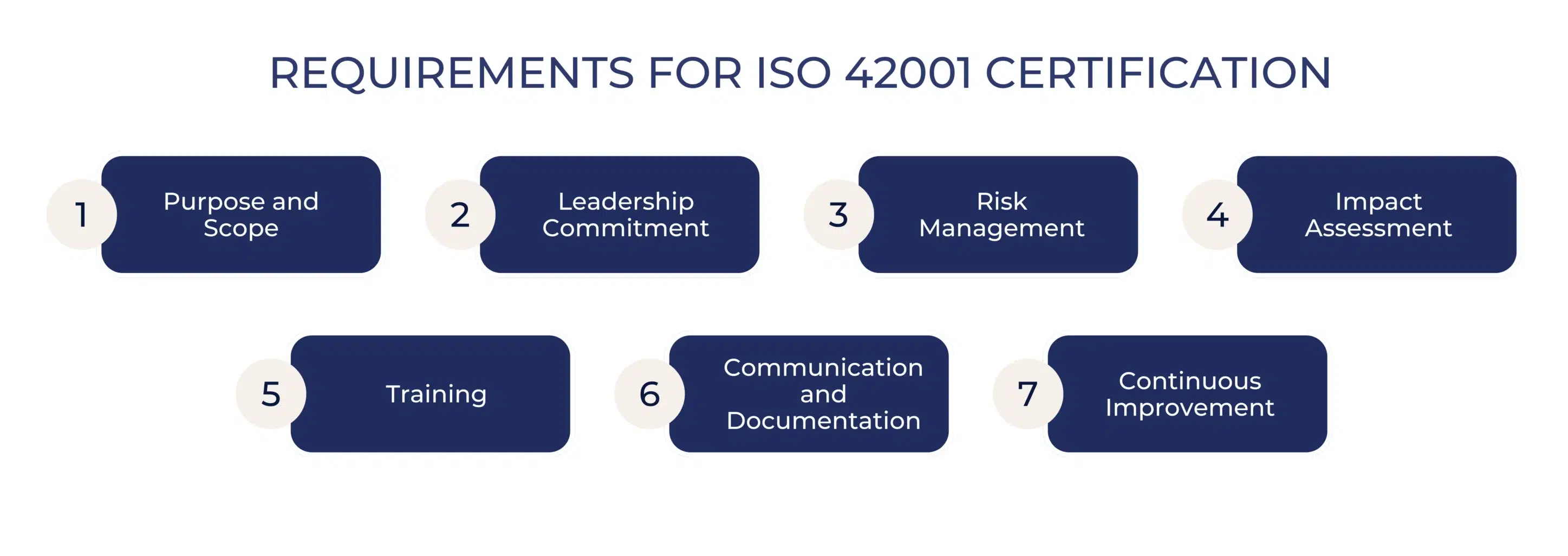
Achieving ISO 42001 assessment and certification in Hamburg requires organizations to satisfy all normative requirements of ISO/IEC 42001:2023 across the AIMS framework. CertPro’s ISO 42001 audit in Hamburg evaluates documented evidence, interviews with responsible personnel, and operational evidence demonstrating that each requirement is implemented and functioning. The following requirements represent the primary areas evaluated during the certification audit.
- Documented AI Policy: A formal AI policy defining the organization’s principles, objectives, and commitments for responsible AI use, approved by top management and communicated throughout the organization.
- Organizational Context Analysis: A documented assessment of internal and external factors affecting AI governance, including the organization’s AI use cases, regulatory environment, and stakeholder expectations.
- AI Risk Assessment Process: A systematic, repeatable methodology for identifying, analyzing, and evaluating risks associated with each AI system in scope, with documented results and treatment decisions.
- AI Impact Assessment: Formal evaluation of potential impacts of AI systems on individuals, groups, and society, updated at defined intervals and when AI systems are materially changed.
- AIMS Objectives and Plans: Documented AI governance objectives aligned with the AI policy, with measurable targets, assigned responsibilities, and defined timelines for achievement.
- Roles and Responsibilities: Clear assignment of accountability for AIMS implementation, including at least one designated AI governance officer or equivalent role with executive-level sponsorship.
- Competence and Awareness: Evidence that personnel involved in AI development, deployment, and governance possess documented competence and have received appropriate training on AI ethics, risks, and the AIMS.
- Operational Controls Documentation: Documented procedures governing AI system design, development, deployment, monitoring, and decommissioning, including data quality and bias mitigation controls.
- Internal Audit Program: A scheduled program of internal AIMS audits with documented findings, corrective actions, and evidence of follow-up verification.
- Management Review: Documented evidence of periodic management review of AIMS performance, including review of audit results, risk status, nonconformities, and continual improvement actions.
- Corrective Action Process: A documented nonconformity and corrective action procedure with evidence that identified gaps are addressed systematically and verified as resolved.
- Continual Improvement Records: Documentation demonstrating that the AIMS is subject to ongoing improvement cycles, with evidence of changes implemented in response to audit findings, changing risks, or new regulatory requirements.
ISO 42001 requires a specific body of documented information as mandatory evidence for certification. This includes the AI policy, AI risk assessment and impact assessment records, AIMS objectives documentation, internal audit reports, management review minutes, corrective action records, and the scope statement defining which AI systems and organizational functions are covered by the AIMS. Documentation must be controlled, versioned, and accessible to authorized personnel. During the certification audit, auditors verify that documented information accurately reflects actual organizational practices. Discrepancies between documentation and operational reality constitute audit findings that must be resolved before ISO 42001 Certification is issued.
Beyond documentation, ISO 42001 Certification requires organizations to demonstrate operational implementation of AIMS controls. Auditors must be able to observe or obtain evidence that AI systems are actually governed according to documented procedures. For example, if the AIMS specifies that all AI model outputs are monitored for bias indicators, auditors will request records showing that this monitoring occurs — including frequency, responsible parties, and actions taken when anomalies are detected. This operational evidence requirement means that ISO 42001 compliance cannot be achieved through documentation alone. The governance framework must be demonstrably functioning within the organization’s actual AI operations.
- ✓Documentation Requirements
- ✓Technical and Operational Requirements
How to Get ISO 42001 Certification in Hamburg: The Certification Process
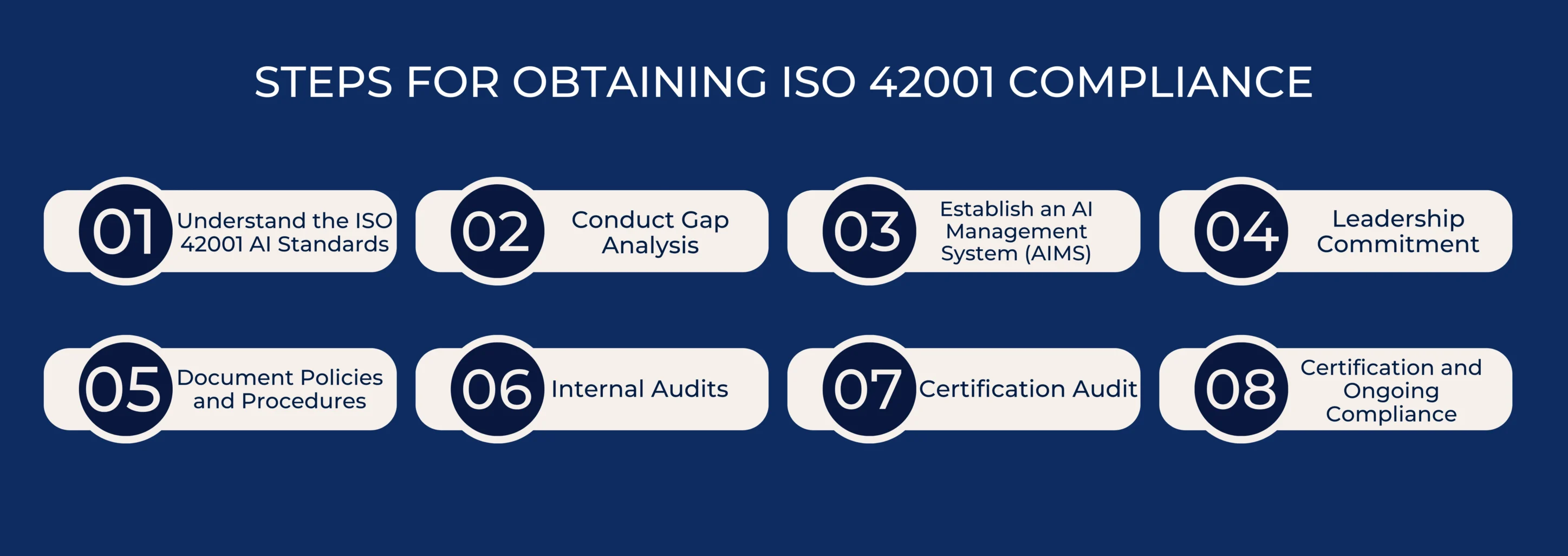
The ISO 42001 certification process as conducted by CertPro follows a structured audit and evaluation program aligned with international accreditation requirements for management system certification bodies. Each stage is designed to produce objective, evidence-based findings that support a formal certification decision. Organizations seeking ISO 42001 Certification in Hamburg follow the process outlined below.
- Scope Definition: The organization defines the boundaries of the AIMS, identifying which AI systems, organizational units, processes, and locations are included within the certification scope. CertPro reviews the proposed scope for completeness and alignment with the organization’s actual AI operations before the audit program is finalized.
- Audit Program Determination: CertPro determines the audit program based on the defined scope, the complexity of AI systems in use, the organization’s size, and the applicable clauses of ISO/IEC 42001:2023. Audit days are calculated according to accreditation body guidelines and the scope of AI activities covered.
- Stage 1 Audit (Documentation Review): CertPro conducts a Stage 1 audit to review the organization’s AIMS documentation against the normative requirements of ISO 42001. This stage assesses whether the documented AIMS is sufficiently developed and ready for operational assessment. Stage 1 findings are communicated to the organization, and any significant gaps must be addressed before Stage 2 proceeds.
- Stage 2 Audit (Operational Assessment): CertPro conducts the Stage 2 audit on-site (or remotely where applicable) to evaluate the operational effectiveness of the AIMS. Auditors interview personnel, observe AI governance activities, and review operational records. The Stage 2 audit produces documented findings categorized as conformities, observations, minor nonconformities, or major nonconformities.
- Nonconformity Review and Response: For any nonconformities identified during Stage 2, the organization submits a corrective action plan addressing root cause analysis and remediation steps. CertPro reviews and verifies corrective actions before the certification decision is made. Major nonconformities require verified resolution; minor nonconformities may be accepted with a follow-up verification plan.
- Certification Decision: CertPro’s certification decision is made by a reviewer independent of the audit team. The decision is based on audit findings, the organization’s corrective action responses, and an overall assessment of AIMS conformance. A certification decision cannot be influenced by commercial, relationship, or timing considerations.
- Issuance of ISO 42001 Certificate: Upon a positive certification decision, CertPro issues an ISO 42001 certificate confirming that the organization’s AIMS conforms to ISO/IEC 42001:2023. The certificate specifies the certification scope, the certified organization’s name and location, the certification date, and the expiry date of the three-year certification cycle.
- Surveillance Audits: CertPro conducts annual surveillance audits during the three-year certification cycle to verify that the AIMS continues to conform to standard requirements and that the organization is addressing improvement actions identified in previous audits. Surveillance audits may be conducted on-site or remotely.
- Recertification Audit: At the end of the three-year certification cycle, CertPro conducts a full recertification audit to renew the ISO 42001 certificate. The recertification audit evaluates continued AIMS conformance, incorporating any changes to the standard, the organization’s AI operations, or applicable regulatory requirements that have occurred during the certification period.
During the Stage 1 audit of an ISO 42001 audit in Hamburg, CertPro auditors review the organization’s AIMS documentation to determine whether the management system is sufficiently developed to proceed to operational assessment. Key documentation reviewed includes the AI policy, AIMS scope statement, risk assessment methodology and results, impact assessment records, internal audit plans, and management review records. Auditors also assess whether the organization has clearly defined the AI systems within scope and whether documented procedures reflect actual AI operations. The Stage 1 report identifies areas of concern and clarifies the audit focus areas for Stage 2.
The Stage 2 audit of the ISO 42001 certification process is the operational heart of the evaluation. CertPro auditors conduct structured interviews with personnel responsible for AI governance, AI development, data management, risk management, and executive leadership. Interview responses are cross-referenced with documented procedures and operational records to assess whether the AIMS is functioning as documented. Auditors also review records from AI monitoring systems, bias detection logs, incident reports, corrective action registers, and training completion records. This comprehensive, evidence-based approach ensures that the ISO 42001 certification decision reflects actual organizational practice — not theoretical documentation compliance alone.
- ✓Stage 1 Audit: What Auditors Assess
- ✓Stage 2 Audit: Operational Evidence and Interviews
Benefits of ISO 42001 Certification in Hamburg
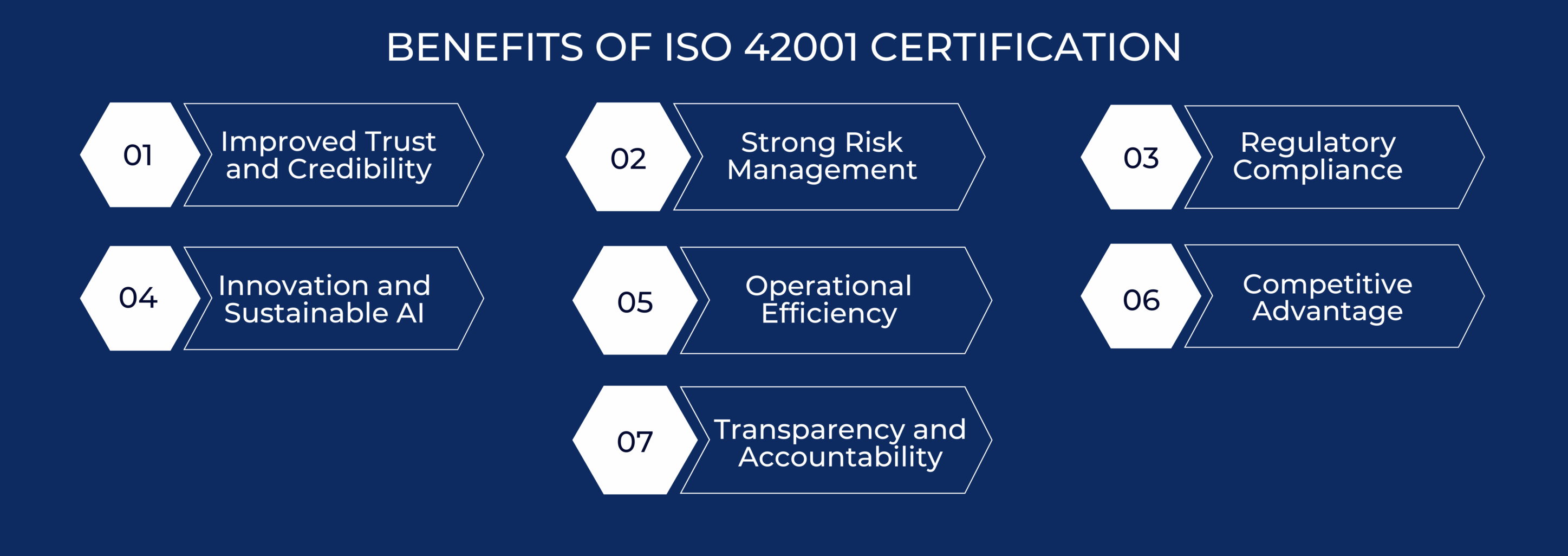
ISO 42001 assessment and certification in Hamburg delivers measurable business, regulatory, and reputational benefits for organizations operating AI systems. The following represent the primary categories of benefit that certified organizations realize across operational, commercial, and compliance dimensions.
- ✓Demonstrated AI Governance Credibility: ISO 42001 certification provides independent, third-party verification that the organization’s AI governance framework meets internationally recognized standards — a credential that self-declarations cannot replicate.
- ✓EU AI Act Compliance Readiness: Certified organizations can reference their ISO 42001 AIMS as structured evidence of AI risk management practices aligned with EU AI Act governance requirements, supporting regulatory engagement and inspection readiness.
- ✓GDPR Alignment: The AIMS framework’s data governance controls directly support GDPR compliance obligations related to automated decision-making, data minimization, and purpose limitation — reducing regulatory risk across AI-driven data processing activities.
- ✓Customer and Partner Trust: ISO 42001 certification signals to customers, business partners, and institutional investors that AI operations are governed responsibly, ethically, and transparently — a differentiation that is increasingly decisive in procurement and partnership evaluations.
- ✓Reduced AI-Related Risk: The systematic risk assessment and operational control requirements of the AIMS reduce the probability and impact of AI failures, biased outputs, security incidents, and reputational damage from AI-related controversies.
- ✓Competitive Market Position: Organizations holding ISO 42001 Certification in Hamburg gain a verifiable competitive advantage in markets where AI governance credentials are requested during RFP processes, enterprise sales cycles, or public sector procurement.
- ✓Board-Level AI Governance Assurance: ISO 42001 certification provides boards of directors and executive leadership with formal assurance that AI governance meets established standards, supporting fiduciary responsibility for AI risk management.
- ✓Operational Efficiency Through Governance Clarity: The AIMS framework establishes clear roles, responsibilities, and processes for AI operations — reducing governance ambiguity, accelerating AI deployment decisions, and improving organizational accountability.
- ✓Supply Chain AI Governance: Certification extends AI governance expectations to third-party AI providers and vendors, strengthening the organization’s overall supply chain risk management posture.
- ✓Integration with Existing Management Systems: For organizations already certified under ISO 27001 or ISO 9001, ISO 42001 integrates with existing management system infrastructure, minimizing duplication and leveraging established governance processes.
ISO 42001 compliance provides Hamburg organizations with a structured response to an evolving regulatory landscape in which AI governance obligations are increasing across multiple legal frameworks simultaneously. The EU AI Act, fully effective from August 2026 for high-risk AI systems, requires organizations to demonstrate risk management, transparency, and human oversight — requirements that directly map to ISO 42001 AIMS controls. Organizations holding ISO 42001 Certification can present their AIMS documentation as evidence of structured compliance readiness during regulatory inspections, market surveillance activities, or enforcement investigations.
Under GDPR, organizations using AI systems for automated decision-making with significant individual impacts must maintain documented evidence of lawful processing, data minimization, and safeguards against discriminatory outcomes. The ISO 42001 AIMS framework’s data governance and bias mitigation controls directly support these obligations, providing Hamburg data protection officers with a structured foundation for GDPR AI compliance documentation. The Federal Commissioner for Data Protection and Freedom of Information (BfDI) has indicated that structured AI governance frameworks are viewed positively in supervisory assessments, making ISO 42001 certification a relevant credential in BfDI oversight contexts.
In Hamburg’s competitive business environment, ISO 42001 Certification is increasingly cited in enterprise procurement requirements — particularly in financial services, healthcare, and public sector contracting. Organizations that present an independently verified ISO 42001 certificate as part of a tender response or vendor qualification process gain a measurable advantage over competitors relying on self-certified AI governance claims. As EU AI Act obligations become fully operative, the market for ISO 42001-certified vendors is expected to expand significantly. Early certification therefore represents a strategic positioning investment for Hamburg companies seeking to maintain and expand enterprise customer relationships.
- ✓Regulatory and Legal Benefits
- ✓Commercial and Competitive Benefits
Hamburg Regulatory Context: GDPR, EU AI Act, and AI Governance
Hamburg organizations operating AI systems face a multi-layered regulatory environment that combines EU-level AI governance frameworks with German national data protection law and sector-specific supervisory expectations. ISO 42001 Certification in Hamburg provides a governance foundation that addresses obligations across all three layers simultaneously, making it one of the most operationally efficient investments in AI regulatory compliance available to Hamburg businesses.
EU AI Act Obligations for Hamburg Organizations
The EU AI Act, which entered into force in August 2024, establishes a risk-based regulatory framework for AI systems operating in the European Union. High-risk AI systems — including those used in critical infrastructure, employment decisions, credit scoring, healthcare diagnostics, and education — are subject to mandatory risk management, transparency, human oversight, and documentation requirements. Hamburg organizations in logistics, financial services, and healthcare deploying such systems face concrete legal obligations requiring structured AI governance programs. ISO 42001 assessment and certification in Hamburg provides a formally verified governance framework that maps to EU AI Act requirements, supporting both compliance readiness and regulatory defense in enforcement scenarios.
The EU AI Act also establishes obligations for general-purpose AI (GPAI) model providers and deployers of AI systems with systemic risk. Hamburg-based technology companies and SaaS providers building products powered by large language models or foundation models must evaluate whether their GPAI deployments fall within the scope of these obligations. The ISO 42001 AIMS framework — with its structured approach to AI system lifecycle governance and third-party AI risk management — provides a documented basis for demonstrating compliance with GPAI governance requirements under the EU AI Act.
GDPR and Automated Decision-Making
GDPR Article 22 restricts solely automated individual decision-making that produces legal or similarly significant effects. It requires organizations to provide meaningful information about the logic of automated processing, implement safeguards, and ensure a right to human review. For Hamburg organizations using AI in credit decisions, insurance underwriting, recruitment screening, or customer service personalization, GDPR Article 22 compliance requires documented processes that align directly with ISO 42001 transparency and human oversight controls. The AIMS framework’s requirements for explainability documentation, bias monitoring, and human oversight mechanisms support GDPR Article 22 compliance in a structured and auditable way.
Federal Commissioner for Data Protection and AI Supervision
The Federal Commissioner for Data Protection and Freedom of Information (BfDI) in Germany serves as both the national GDPR supervisory authority and the AI governance oversight body for many federal-level activities. Hamburg also has its own state data protection authority — the Hamburg Commissioner for Data Protection and Freedom of Information (HmbBfDI) — which exercises supervisory jurisdiction over private sector organizations established in Hamburg. Both authorities have published guidance indicating that structured AI governance frameworks, including management system certifications, are relevant evidence in supervisory assessments and complaint investigations. ISO 42001 certification in Hamburg therefore carries specific weight in the context of German data protection supervision.
Industries Served: ISO 42001 Certification for Hamburg Companies
ISO 42001 certification for Hamburg companies spans multiple sectors, reflecting the city’s diverse and AI-intensive economic base. CertPro conducts ISO 42001 audits across all industry verticals, with particular depth of experience in the sectors most prominent in Hamburg’s economy. Each sector presents distinct AI governance challenges that the AIMS framework addresses through tailored risk assessment, operational controls, and monitoring requirements.
| Industry Sector | Key AI Applications | Primary ISO 42001 Governance Focus |
|---|---|---|
| Logistics & Port Operations | Predictive cargo routing, automated customs processing, maintenance forecasting | AI system reliability, safety, operational transparency |
| Financial Services | Credit scoring, fraud detection, algorithmic trading, KYC automation | Bias mitigation, explainability, regulatory alignment, risk controls |
| Healthcare & Life Sciences | Diagnostic AI, patient risk stratification, drug discovery | Patient safety, data privacy, human oversight, outcome monitoring |
| Manufacturing & Engineering | Quality inspection AI, predictive maintenance, supply chain optimization | Data integrity, system reliability, supplier AI governance |
| Technology & SaaS | AI product development, GPAI deployment, NLP applications | Lifecycle governance, third-party AI risk, transparency documentation |
Logistics and Maritime Sector
Hamburg’s logistics sector — anchored by the Port of Hamburg and a dense network of freight forwarders, logistics technology companies, and supply chain management firms — is among the most AI-intensive in Europe. AI systems manage container routing, predict vessel arrival times, optimize crane operations, and automate customs documentation processing at scale. ISO 42001 certification for Hamburg logistics organizations requires addressing AI governance across systems where operational failures carry significant safety, financial, and regulatory consequences. The AIMS framework for logistics AI must include robust operational controls for system reliability, failover procedures, and human override capabilities alongside standard risk and impact assessment processes.
Financial Services and Fintech
Hamburg’s financial services sector — including banking, insurance, asset management, and a growing fintech ecosystem in the HafenCity and Altstadt districts — relies heavily on AI for credit risk assessment, fraud detection, customer segmentation, and regulatory reporting automation. Financial services AI applications are subject to both EU AI Act high-risk classification requirements and BaFin supervisory guidance regarding AI use in regulated financial activities. ISO 42001 compliance provides financial services organizations in Hamburg with a documented AI governance foundation that satisfies both standard requirements and BaFin’s model risk management expectations for AI-based decision systems.
Healthcare, Life Sciences, and Digital Health
Hamburg’s healthcare sector — centered on the University Medical Center Hamburg-Eppendorf (UKE) and a concentration of medical technology, digital health, and pharmaceutical companies — is deploying AI across diagnostic imaging, clinical decision support, patient risk stratification, and clinical trial optimization. Healthcare AI applications in Hamburg are subject to EU AI Act high-risk classification, GDPR health data processing restrictions, and EU Medical Device Regulation (MDR) requirements for AI-based software as a medical device. ISO 42001 Certification provides healthcare organizations with a structured governance framework that addresses these overlapping obligations through a single integrated AIMS, reducing governance fragmentation and audit burden across multiple regulatory frameworks.
ISO 42001 Certification Cost in Hamburg
The cost of ISO 42001 Certification in Hamburg varies based on several organizational factors, including the number of AI systems within the certification scope, organizational size, the complexity of AI operations, and whether the organization is pursuing initial certification or renewal. CertPro structures ISO 42001 certification packages at fixed, transparent pricing — providing organizations with cost certainty and eliminating the unpredictability of variable or time-and-materials billing models.
Factors Influencing Certification Cost
The primary cost drivers for an ISO 42001 audit in Hamburg are the number of audit days required (which scales with organizational size and AI system complexity), the geographic scope of the audit (single-site versus multi-site certification), and the maturity of the organization’s existing governance infrastructure. Organizations with existing ISO 27001 or ISO 9001 certifications typically incur lower incremental costs because established documentation, audit programs, and management review processes can be extended to cover AIMS requirements — reducing the audit scope needed to evaluate AI-specific governance additions.
Small and medium-sized enterprises (SMEs) in Hamburg — particularly Mittelstand industrial companies and early-stage technology firms — can access ISO 42001 Certification at cost points proportionate to their typically narrower AI system scopes. CertPro’s fixed-price certification packages provide SMEs with the same certification credibility as larger enterprises while maintaining cost accessibility appropriate to their scale. The three-year certification cycle, including initial certification plus two annual surveillance audits, is priced as a single predictable package to support organizational budget planning.
Fixed-Price Certification Packages
CertPro’s fixed-price ISO 42001 certification packages for Hamburg organizations include Stage 1 audit (documentation review), Stage 2 audit (operational assessment), certification decision and certificate issuance, and the two annual surveillance audits required during the three-year certification cycle. Fixed pricing means organizations receive a complete cost disclosure before the engagement begins — with no unexpected audit day extensions or supplementary billing for standard certification activities. This pricing model supports organizational procurement processes that require defined cost commitments before ISO 42001 certification engagements are approved.
| Organization Type | Typical Audit Scope | Pricing Model |
|---|---|---|
| Small Enterprise (1–50 employees) | 1–3 AI systems in scope | Fixed-price package, entry-level tier |
| Medium Enterprise (50–250 employees) | 3–8 AI systems in scope | Fixed-price package, mid-tier |
| Large Enterprise (250+ employees) | Multiple AI systems, multi-site | Fixed-price package, enterprise tier |
| Multi-site / International Scope | Complex AI portfolio, distributed operations | Custom fixed-price package |
Why Choose CertPro for ISO 42001 Certification in Hamburg
CertPro is a Licensed CPA Firm and independent third-party audit and certification body with established expertise in ISO 42001 assessment and certification. Organizations in Hamburg selecting CertPro as their certification body engage an institution with formal accreditation, documented independence, and a methodology grounded in management system audit standards. CertPro does not provide consulting, advisory, or implementation services — its sole function is to conduct independent audits and issue certifications based on objective evidence. This ensures that every ISO 42001 certification decision reflects genuine conformance rather than commercial relationships.
Independence and Objectivity
CertPro’s independence from consulting and implementation services is a fundamental differentiator in the ISO 42001 certification market. Some certification market participants offer both advisory services and certification, creating an inherent conflict of interest that compromises the objectivity of certification decisions. CertPro conducts only audit and certification activities — assessing, certifying, and issuing certificates based exclusively on audit findings. This strict separation ensures that organizations, their customers, and their regulators can rely on CertPro-issued ISO 42001 certificates as genuinely independent verifications of AIMS conformance.
Licensed CPA Firm Positioning and E-E-A-T
CertPro’s Licensed CPA Firm status provides an additional layer of institutional credibility that distinguishes it from non-CPA certification bodies. CPA licensing imposes regulatory obligations for competence, independence, and professional standards that reinforce the rigor of CertPro’s ISO 42001 audit engagements. Organizations in Hamburg operating in regulated sectors — financial services, healthcare, and public procurement — often require their certification bodies to meet heightened credibility standards. CertPro’s dual positioning as both a Licensed CPA Firm and an ISO management system certification body satisfies these heightened requirements while maintaining the full scope of ISO 42001 assessment and certification capabilities.
Sector-Specific Audit Expertise
CertPro’s auditors bring sector-specific expertise relevant to Hamburg’s AI-intensive industries, including logistics technology, financial services AI, healthcare AI, and industrial manufacturing systems. Sector expertise ensures that audit teams can meaningfully evaluate the AI-specific risks and controls relevant to an organization’s actual operations — rather than applying generic management system audit approaches that may miss sector-specific AI governance requirements. For organizations in Hamburg’s port logistics sector, for example, CertPro auditors assess AI governance controls with a working understanding of port operational technology environments, safety-critical systems, and maritime regulatory requirements that generalist auditors may lack.
ISO 42001 Consultants Hamburg: What CertPro Is Not
Organizations searching for ISO 42001 consultants in Hamburg should understand the distinction between certification bodies and consulting firms. ISO 42001 consultants provide advisory services, helping organizations design and implement their AIMS prior to certification. CertPro is not a consultant — CertPro does not design AIMS frameworks, draft policies, or assist with implementation. CertPro’s role begins when an organization has established its AIMS and seeks independent third-party verification through formal audit. This distinction is essential for maintaining the integrity of ISO 42001 Certification: the auditing body and the advising body must remain independent entities. Organizations may engage separate consultants for implementation support, then engage CertPro for independent certification audit.
ISO 42001 Certification Requirements: A Structured Summary
The following table provides a structured summary of ISO/IEC 42001:2023 clause requirements as evaluated during CertPro’s ISO 42001 assessment and certification process in Hamburg. Each clause maps to the corresponding AIMS component and the primary evidence type reviewed during the certification audit.
| ISO 42001 Clause | Requirement Area | Primary Evidence Reviewed |
|---|---|---|
| Clause 4 | Organizational Context and Stakeholders | Context analysis records, stakeholder register, AIMS scope statement |
| Clause 5 | Leadership and AI Policy | AI policy document, management commitment records, role assignments |
| Clause 6 | AI Risk and Impact Assessment | Risk assessment methodology, completed risk assessments, impact assessment records, treatment plans |
| Clause 7 | Support Resources and Competence | Training records, competence assessments, awareness communications, documentation controls |
| Clause 8 | Operational Controls and AI Lifecycle | AI development procedures, deployment controls, monitoring logs, supplier AI governance records |
| Clause 9 | Performance Evaluation and Internal Audit | Internal audit reports, management review minutes, KPI measurement records |
| Clause 10 | Improvement and Corrective Action | Nonconformity records, root cause analyses, corrective action closure evidence, improvement logs |
Secure Your ISO 42001 Certification in Hamburg with CertPro
ISO 42001 Certification in Hamburg represents a strategic governance milestone for organizations committed to responsible, transparent, and auditable AI operations. As EU AI Act obligations become operative and market demand for verified AI governance credentials intensifies, organizations that complete ISO 42001 assessment and certification ahead of regulatory deadlines position themselves with a demonstrable compliance foundation. This advantage cannot be replicated by self-declared AI ethics commitments alone.
CertPro conducts ISO 42001 audits in Hamburg as an independent, Licensed CPA Firm and internationally recognized certification body. Certification is issued upon successful completion of the two-stage audit process and a formal certification decision by an independent reviewer. ISO AIMS certification issued by CertPro confirms that the organization’s Artificial Intelligence Management System conforms to ISO/IEC 42001:2023 through objective, evidence-based evaluation — providing the highest level of verifiable AI governance assurance available in the international certification marketplace.
Organizations in Hamburg that have established or are developing their AIMS should contact CertPro to initiate the certification scope discussion and receive a fixed-price certification package proposal. Early certification engagement provides a defined timeline, cost certainty, and the competitive advantage of holding ISO 42001 Certification in Hamburg before regulatory enforcement timelines create market-wide demand that extends audit scheduling lead times.
FAQ
▶
What is ISO 42001 and why is it relevant for Hamburg organizations?
▶
What does ISO 42001 certification confirm?
▶
How long does the ISO 42001 certification process take in Hamburg?
▶
What is the difference between ISO 42001 and ISO 27001?
▶
Does ISO 42001 compliance satisfy EU AI Act requirements?
▶
Which Hamburg industries need ISO 42001 certification most urgently?
▶
How does CertPro conduct an ISO 42001 audit in Hamburg?
▶
What is ISO AIMS certification and how does it differ from ISO 42001?
ISO 42001 CERTIFIED: WHY AI GOVERNANCE CERTIFICATION IS BECOMING A BOARD-LEVEL REQUIREMENT
AI is now an inevitable component of major business activities in the current corporate world. To elaborate, it is now part of product design, custome…

MindSec Launches AI Compliance for Law 25 & ISO 42001
Excerpt from Barchart Article, Published on December 3, 2025 Today, Canadian organizations face increasing pressure to comply with stringent privacy a…

UNDERSTANDING ISO 42001: A GUIDE FOR RESPONSIBLE AI MANAGEMENT SYSTEMS
The invention of artificial intelligence (AI) has changed the operational processes of many industries. However, the rapid growth of technology increa…
Get In Touch
have a question? let us get back to you.