
SOC 2 Certification in Toronto
CertPro is a Licensed CPA Firm conducting SOC 2 certification audits for service organizations operating in Toronto. Audits are performed against the AICPA Trust Services Criteria, covering Security, Availability, Confidentiality, Processing Integrity, and Privacy. Every engagement results in a formal SOC 2 attestation report applicable to both Type I and Type II assessments, giving Toronto businesses independently verified evidence of their control environment.
OUR CLIENTS










Introduction to SOC 2 Certification in Toronto
SOC 2 Certification in Toronto is a formal attestation process through which a Licensed CPA Firm evaluates a service organization’s internal controls against the AICPA Trust Services Criteria (TSC). The resulting SOC 2 report communicates to clients, partners, and stakeholders whether a service organization’s systems are designed and operating in a manner that protects data security, ensures availability, maintains confidentiality, upholds processing integrity, and safeguards privacy.
For Toronto-based organizations—particularly those operating in financial services, healthcare technology, SaaS, and cloud infrastructure—achieving SOC 2 certification is a recognized standard that demonstrates institutional accountability over data management practices. SOC 2 compliance has become a baseline expectation in enterprise procurement, making it one of the most commercially significant certifications available to Toronto service organizations today.
Toronto is Canada’s largest financial center and one of North America’s most active technology hubs. The city hosts thousands of cloud service providers, fintech firms, managed service providers, data centers, and SaaS companies that routinely handle sensitive client data across international boundaries.
As enterprise procurement teams and institutional clients demand independent verification of data protection controls, SOC 2 compliance has become a practical prerequisite for vendor onboarding across many industry verticals. Organizations headquartered or operating in Toronto are increasingly expected to present a valid SOC 2 attestation report as part of their vendor qualification process. Those without current SOC 2 certification risk losing contracts to competitors who have already completed the audit process.
What Is SOC 2 and How Does It Apply to Toronto Organizations
SOC 2, which stands for System and Organization Controls 2, is a framework developed by the American Institute of Certified Public Accountants (AICPA) to evaluate whether a service organization maintains adequate controls over data security and related operational commitments. Unlike regulatory compliance frameworks such as PCI DSS or HIPAA, SOC 2 is not mandated by law. Instead, it is a voluntary attestation standard that serves as independent evidence of a service organization’s control environment.
A SOC 2 audit is conducted exclusively by Licensed CPA Firms, and the resulting report is a formal attestation document—not a certification issued by a regulatory body. This distinction matters: only a SOC 2 audit performed by a Licensed CPA Firm produces a report that carries formal attestation value for enterprise clients and institutional buyers.
For Toronto-based companies, SOC 2 compliance directly addresses client concerns about data handling, access control, incident response, and system reliability. Many enterprise clients in the United States and Canada require their service vendors to present a current SOC 2 report before contracts are finalized. This requirement is particularly prevalent in financial technology, healthcare IT, legal technology, and cloud infrastructure sectors.
Toronto organizations that pursue SOC 2 certification position themselves as accountable vendors in competitive procurement environments where independent audit evidence is a minimum threshold for consideration. Without SOC2 Certification, many enterprises will not advance a vendor through the procurement process at all.
SOC 2 Trust Services Criteria: The Evaluation Foundation
The Trust Services Criteria (TSC) form the evaluative foundation of every SOC 2 audit. Security is the only mandatory category and is assessed in every SOC 2 engagement. The remaining four categories—Availability, Confidentiality, Processing Integrity, and Privacy—are selected based on the service commitments and system requirements specified in the organization’s Description of the System.
During a SOC 2 audit in Toronto, auditors examine documented controls, review policies and procedures, test the operating effectiveness of controls, and evaluate whether the organization’s system description accurately represents its control environment. Selecting the right combination of criteria at the outset is a strategic decision that shapes the scope and cost of the entire SOC 2 compliance program.
| Trust Services Criterion | Core Focus Area | Applicability |
|---|---|---|
| Security | Logical and physical access controls, threat management | Mandatory for all SOC 2 audits |
| Availability | System uptime, performance monitoring, incident recovery | Selected based on service commitments |
| Confidentiality | Data classification, encryption, retention policies | Selected when confidential data is processed |
| Processing Integrity | Completeness, accuracy, and timeliness of processing | Selected for transaction processing services |
| Privacy | Collection, use, retention, and disposal of personal information | Selected when personal data is managed |
SOC 2 Type I vs. SOC 2 Type II: Key Distinctions
SOC 2 engagements are conducted under two distinct assessment structures. A SOC 2 Type I audit evaluates whether a service organization’s controls are suitably designed as of a specific point in time. The auditor assesses the design of controls and whether they are appropriately structured to meet the selected Trust Services Criteria.
A SOC 2 Type I audit Toronto engagement is often the entry point for organizations pursuing SOC 2 certification for the first time. It establishes a documented baseline of control design without requiring an extended observation period, making it an efficient first step toward full SOC 2 compliance.
A SOC 2 Type II audit evaluates both the design suitability and the operating effectiveness of controls over a defined audit period—typically six to twelve months. A SOC 2 Type II audit Toronto engagement requires auditors to examine evidence collected across the full audit period, test controls at multiple points in time, and confirm that controls operated consistently as described.
Enterprise clients and institutional buyers place significantly more weight on Type II reports because they confirm sustained control performance rather than a single-point assessment. Most Toronto organizations transitioning from an initial Type I engagement will proceed to Type II within their first or second annual SOC 2 audit cycle, as this is increasingly the standard expected by large enterprise clients.

Why SOC 2 Certification Matters for Toronto Businesses
Toronto’s business environment is defined by dense interconnection between financial services, technology, and regulated industries. The city is home to all of Canada’s major chartered banks, a growing cluster of fintech and insurtech firms, and a substantial base of enterprise SaaS companies serving North American and global markets.
In this environment, the ability to present a current SOC 2 attestation is increasingly a baseline expectation rather than a competitive differentiator. SOC 2 certification for Toronto companies signals that independent auditors have evaluated control environments, tested operational effectiveness, and issued a formal report confirming that security and related criteria are met. For organizations that have not yet completed a SOC 2 audit, the absence of this credential is becoming a visible gap in enterprise sales conversations.
SOC 2 Certification Toronto Fintech and Financial Services Sector
Toronto’s financial services sector is one of the most concentrated in North America. The city hosts the headquarters of the five largest Canadian banks, hundreds of asset management firms, insurance companies, and a rapidly expanding fintech ecosystem. For technology vendors supplying services to these institutions, SOC 2 certification Toronto financial services requirements are often embedded directly into procurement contracts.
Enterprise procurement teams at major financial institutions in Toronto routinely require SOC 2 Type II reports as a condition of vendor approval—particularly for cloud-based platforms handling financial data, payment processing systems, or customer relationship management tools. SOC 2 compliance is not optional in this environment; it is a contractual prerequisite.
SOC 2 certification pursued by Toronto fintech organizations is directly aligned with regulatory expectations set by Canada’s Office of the Superintendent of Financial Institutions (OSFI) and the Financial Consumer Agency of Canada (FCAC). While SOC 2 is not itself a regulatory requirement under Canadian law, it serves as independent evidence of control maturity that regulators and institutional clients recognize as meaningful due diligence.
Toronto fintech companies serving US-based clients face additional pressure, as US enterprise procurement standards have long treated SOC 2 Type II as a standard vendor qualification requirement across banking, insurance, and investment management sectors. Achieving SOC2 Certification strengthens a Toronto fintech firm’s position on both sides of the border.
Cloud, SaaS, and Technology Vendors in Toronto
Toronto’s technology sector includes a substantial concentration of SaaS companies, managed service providers (MSPs), data centers, and cloud infrastructure operators. These organizations frequently process, transmit, or store sensitive client data as the core of their service delivery.
For SaaS platforms serving enterprise clients, SOC 2 compliance is routinely listed as a prerequisite in vendor security questionnaires, master service agreements, and data processing addenda. Without a current SOC 2 report, Toronto-based SaaS companies may find themselves excluded from enterprise procurement shortlists or required to complete lengthy security questionnaires as a substitute for independent audit evidence—a time-consuming process that a SOC 2 attestation eliminates.
Toronto’s data center operators and cloud infrastructure providers face similar market expectations. Enterprise clients colocating infrastructure or consuming cloud services require evidence that their provider maintains adequate controls over physical security, logical access, availability, and incident response.
A SOC 2 audit conducted by a Licensed CPA Firm provides standardized, independently verified evidence that addresses these concerns systematically. The SOC 2 attestation report produced by the audit serves as the primary artifact that enterprise clients review during vendor due diligence processes, making it the single most efficient way for Toronto technology vendors to satisfy client security requirements at scale.
Cross-Border Data Considerations for Toronto Organizations
Toronto organizations that process data belonging to individuals in the European Union, the United Kingdom, or the United States operate under multiple overlapping data protection frameworks. Canada’s Personal Information Protection and Electronic Documents Act (PIPEDA), the EU’s General Data Protection Regulation (GDPR), and US state-level privacy laws such as the California Consumer Privacy Act (CCPA) impose distinct obligations on data processors.
While SOC 2 compliance does not constitute legal compliance with any of these frameworks, it provides documentary evidence of control maturity that is recognized across jurisdictions as a measure of data protection diligence. For Toronto organizations navigating cross-border data obligations, SOC 2 attestation strengthens their position in vendor assessments, data transfer agreements, and regulatory inquiries alike.
Benefits of SOC 2 Certification for Toronto Service Organizations
The benefits of SOC 2 Certification in Toronto extend across commercial, operational, and risk management dimensions. Achieving SOC 2 certification delivers value that is immediately recognizable to enterprise procurement teams, legal and compliance functions, and executive leadership at client organizations.
The following list represents the primary categories of benefit that Toronto service organizations realize through successful SOC 2 attestation—from faster enterprise sales cycles to stronger internal security practices.
- ✓Independent verification of security controls builds client trust and reduces procurement friction in enterprise sales cycles
- ✓SOC 2 attestation replaces lengthy vendor security questionnaires with a standardized, auditor-verified report accepted by enterprise clients globally
- ✓Demonstrates sustained control effectiveness over time, particularly for Type II engagements covering six to twelve months
- ✓Supports vendor qualification requirements imposed by financial institutions, healthcare organizations, and regulated industry clients in Toronto
- ✓Strengthens organizational data governance practices through systematic control documentation and testing
- ✓Reduces risk of data breaches by requiring organizations to maintain and test access controls, monitoring systems, and incident response procedures
- ✓Provides a competitive market advantage when competing for contracts with enterprise clients that require SOC 2 compliance as a vendor prerequisite
- ✓Facilitates cross-border data transfer agreements with US and EU counterparties who require evidence of data protection control maturity
- ✓Supports alignment with Canadian regulatory expectations under PIPEDA and sector-specific guidelines from OSFI and FCAC
- ✓Creates a reusable audit artifact that can be shared under NDA with multiple prospective clients, reducing repetitive due diligence burden
SOC 2 compliance requires organizations to implement, document, and maintain controls across all selected Trust Services Criteria categories. The audit process itself drives organizations to examine their control environments systematically—identifying gaps in access management, monitoring, incident response, and data handling before those gaps become exploitable vulnerabilities.
Auditors review evidence of control operation over the audit period, which creates an ongoing incentive for organizations to maintain consistent security practices rather than treating security as a point-in-time activity. This discipline is one of the most underappreciated benefits of pursuing SOC 2 certification in Toronto.
The operational discipline required to sustain SOC 2 compliance generates measurable security improvements. Organizations pursuing SOC 2 Certification in Toronto typically formalize access control policies, implement systematic user access reviews, deploy centralized logging and monitoring systems, and establish documented incident response procedures.
These controls reduce both the probability and potential impact of security incidents, creating direct risk reduction value that extends well beyond the audit report itself. For Toronto-based organizations handling sensitive financial, healthcare, or personal data, this risk reduction is operationally valuable and commercially significant—reducing exposure to incidents that could damage client relationships and regulatory standing.
Enterprise procurement processes at large financial institutions, healthcare organizations, and technology companies in Toronto routinely include security due diligence requirements. Vendors that cannot produce a current SOC 2 report are frequently required to complete extensive vendor security questionnaires—a process that can consume weeks of internal resources and may still result in procurement delays or contract conditions.
A current SOC 2 attestation report replaces this questionnaire burden with a standardized document that enterprise security teams can evaluate against their own requirements, dramatically reducing friction for both the vendor and the buyer.
For Toronto-based SaaS companies and managed service providers competing for enterprise contracts, the ability to deliver a SOC 2 report immediately upon request can be the determining factor in closing deals efficiently. Sales cycles in enterprise markets are frequently measured in months, and security due diligence is a known bottleneck.
Organizations holding a current SOC 2 Type II report reduce this friction significantly. They position themselves as vendors whose security posture has already been independently validated—rather than requiring the buyer to conduct their own evaluation from scratch. In competitive markets, this advantage translates directly into faster revenue and stronger client retention.
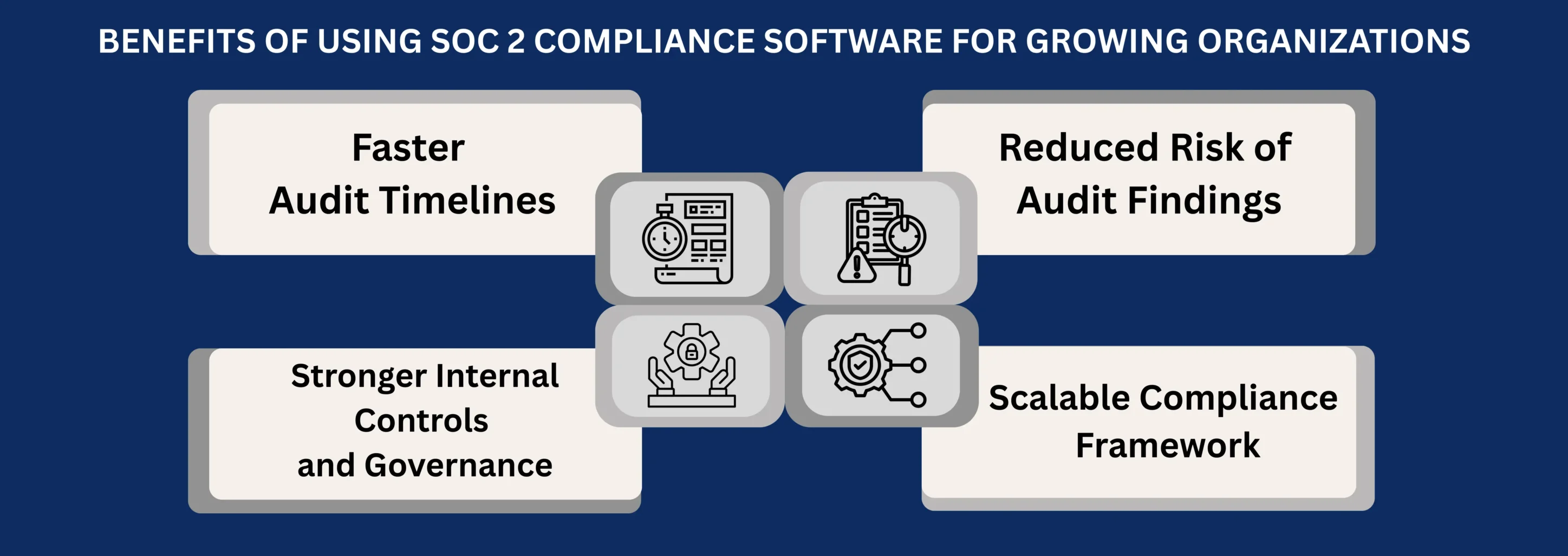
- ✓Stronger Security Posture Through Audited Controls
- ✓Commercial Acceleration and Enterprise Sales Enablement
SOC 2 Audit Process: How CertPro Conducts Engagements in Toronto
CertPro conducts SOC 2 audits in Toronto as a Licensed CPA Firm operating under AICPA attestation standards. The SOC 2 audit process follows a structured sequence of evaluation stages, each producing specific artifacts that inform the subsequent stage and ultimately support the issuance of a formal SOC 2 attestation report.
The process described below reflects the standard CertPro engagement structure for both Type I and Type II assessments conducted for Toronto service organizations. Each stage is designed to ensure audit quality, minimize organizational disruption, and produce a report that satisfies enterprise client requirements.
Scope definition is the foundational stage of every SOC 2 audit engagement. During this stage, auditors work with the service organization to identify the system boundaries subject to audit, the Trust Services Criteria categories applicable to the engagement, and the service commitments and system requirements that will inform control evaluation.
The system description—a formal document that describes the components of the system and the controls in place—is reviewed for completeness and accuracy against the actual operating environment. Scope boundaries must be clearly defined before audit procedures commence, as they determine which systems, processes, and personnel are subject to examination during the SOC 2 audit.
For Toronto service organizations with complex multi-tenant environments, hybrid cloud infrastructure, or multiple service lines, scope definition requires careful analysis to ensure that the audit boundary accurately represents the services provided to clients. Auditors evaluate whether the system description includes all relevant components—infrastructure, software, people, procedures, and data—and whether the description accurately reflects how the organization operates.
Inaccuracies in the system description can result in qualifications in the final SOC 2 attestation report, making this stage a critical determinant of overall audit outcomes. Investing time in thorough scope definition pays dividends throughout every subsequent stage of the SOC 2 compliance process.
Following scope definition, auditors develop the audit program—a structured plan that maps specific controls to the applicable Trust Services Criteria and identifies the procedures that will be applied to test each control. Control mapping involves analyzing the organization’s documented control inventory against AICPA TSC requirements to determine which controls address which criteria points.
For each control, auditors determine the appropriate testing approach: inquiry, observation, inspection of documentation, or re-performance. The audit program provides the structured framework that governs all subsequent evidence collection and testing activities during the SOC 2 audit. A well-constructed audit program keeps the engagement on schedule and reduces back-and-forth evidence requests during fieldwork.
Control testing is the primary execution phase of the SOC 2 audit. Auditors collect and evaluate evidence that controls operated as described during the audit period. For a SOC 2 Type II audit Toronto engagement, this means examining evidence spanning the full audit observation period—typically six to twelve months.
Evidence types include system-generated logs, access control reports, user provisioning and deprovisioning records, security monitoring alerts, incident response documentation, change management records, and vendor management documentation. Auditors assess whether each piece of evidence confirms that the associated control was operating effectively at the times tested, building the factual foundation for the final SOC 2 attestation report.
For organizations pursuing a SOC 2 Type I audit Toronto engagement, control testing focuses on design suitability rather than operating effectiveness. Auditors assess whether controls are appropriately designed to meet the relevant TSC criteria as of the assessment date.
While the evidence collection scope is narrower for Type I assessments, auditors still require documented policies, procedures, and configuration evidence demonstrating that controls are in place and structured to achieve their stated objectives. Design deficiencies identified during a Type I audit require remediation before the organization can successfully complete a Type II assessment and achieve full SOC 2 compliance.
When auditors identify exceptions or control deficiencies during testing, these findings are documented as potential exceptions in the audit work papers. The audit team reviews each exception to determine its nature—whether it represents a design deficiency, an operating exception, or an isolated instance rather than a systemic control failure.
Management is provided the opportunity to review identified exceptions and provide written responses that clarify context, confirm remediation steps, or document compensating controls. This review stage ensures that the final SOC 2 attestation report accurately characterizes the nature and significance of any exceptions identified, giving enterprise clients a complete and transparent picture of the organization’s control environment.
Upon completion of all audit procedures and resolution of identified exceptions, CertPro issues the formal SOC 2 attestation report. The report includes the Independent Service Auditor’s Report, the management assertion, the system description, and the description of tests of controls and results. For Type II engagements, the report also includes the auditor’s conclusion on operating effectiveness across the full audit period.
The SOC 2 attestation report is the primary deliverable of the engagement and is typically shared by the service organization with clients and prospective clients under a non-disclosure agreement. The report remains valid as evidence of current control operation for twelve months from the end of the audit observation period, after which organizations must complete a new SOC 2 audit cycle to maintain current certified status.
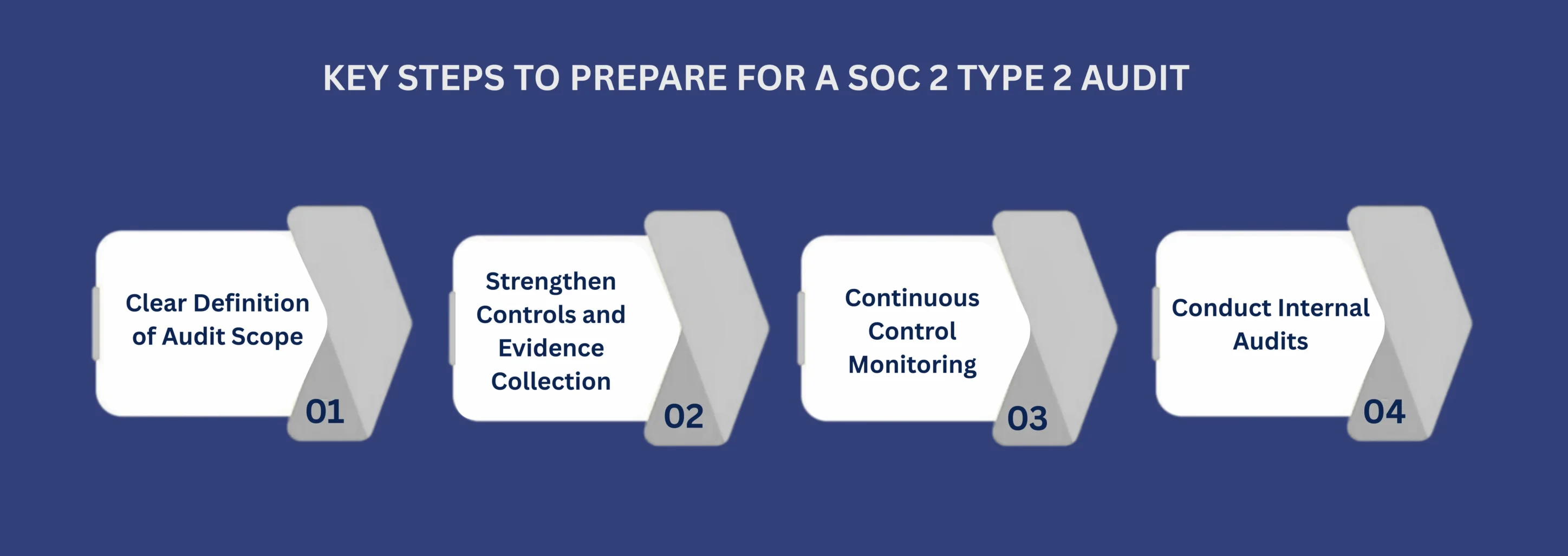
- ✓Stage 1: Scope Definition and System Boundary Determination
- ✓Stage 2: Audit Program Determination and Control Mapping
- ✓Stage 3: Control Testing and Evidence Collection
- ✓Stage 4: Nonconformity Review and Management Response
- ✓Stage 5: Attestation Report Issuance
Steps to Obtain SOC 2 Certification in Toronto
Obtaining SOC 2 Certification in Toronto follows a structured sequence of organizational and audit activities. The steps outlined below represent the standard pathway from initial engagement through formal attestation for Toronto service organizations pursuing SOC 2 compliance through CertPro. Following this sequence ensures that each prerequisite is addressed before the next stage begins, reducing delays and rework during the audit.
- Determine the applicable Trust Services Criteria categories based on service commitments and client requirements
- Define the system boundary and document the system description covering infrastructure, software, people, procedures, and data
- Inventory existing controls and map them against the applicable TSC criteria to identify documentation gaps
- Formalize all required policies, procedures, and control documentation required by the selected TSC categories
- Engage CertPro as the Licensed CPA Firm to conduct the SOC 2 audit under AICPA attestation standards
- Complete the Stage 1 (Type I) assessment to validate control design suitability as of the assessment date
- Operate controls consistently throughout the audit observation period (typically six to twelve months) for Type II assessment
- Collect and retain evidence of control operation throughout the audit period, including logs, reports, and records
- Participate in auditor fieldwork, provide requested evidence, and respond to auditor inquiries during control testing
- Review draft audit findings, provide management responses to identified exceptions, and confirm remediation status
- Receive and review the final SOC 2 attestation report issued by CertPro upon completion of all audit procedures
- Distribute the attestation report to clients and prospective clients under NDA and initiate planning for the next annual SOC 2 audit cycle
Requirements for SOC 2 Certification in Toronto
SOC 2 certification requirements are defined by the AICPA Trust Services Criteria and applied by the Licensed CPA Firm conducting the audit. For Toronto service organizations, the following categories of requirements must be addressed to successfully complete a SOC 2 audit. These requirements span documentation, technical controls, organizational governance, and operational procedures—each of which is examined by auditors during the engagement.
Comprehensive documentation is a fundamental requirement of SOC 2 compliance. Auditors evaluate written policies and procedures that govern the organization’s control environment across all selected Trust Services Criteria categories. Required documentation includes information security policies, access control procedures, data classification standards, incident response plans, business continuity and disaster recovery plans, vendor management policies, change management procedures, and risk assessment documentation.
Each policy must be formally approved, version-controlled, and communicated to relevant personnel. Auditors verify that documentation accurately reflects the organization’s actual operating practices rather than aspirational standards—a critical distinction that organizations preparing for their first SOC 2 audit in Toronto must understand and address early in the process.
System description documentation is a specific requirement that distinguishes SOC 2 from other control frameworks. The system description must provide a comprehensive and accurate representation of the service organization’s system, including the types of services provided, the infrastructure components used to deliver those services, the software and data included in the system, the people involved in system operation, and the procedures governing system management.
Auditors assess the completeness and accuracy of the system description as a foundational element of the SOC 2 audit. Inaccuracies in this document can result in qualified audit opinions, directly undermining the commercial value of the SOC 2 certification for Toronto organizations. Treating the system description as a living document that is updated alongside infrastructure and service changes is a best practice for organizations committed to long-term SOC 2 compliance.
Technical controls form the operational backbone of SOC 2 compliance and are evaluated extensively during a SOC 2 audit. The Security Trust Services Criterion—mandatory in all SOC 2 engagements—requires organizations to implement logical and physical access controls, network security measures, system monitoring capabilities, vulnerability management processes, and encryption for data in transit and at rest.
Auditors test these controls by reviewing system configurations, examining access control reports, inspecting monitoring logs, and verifying that security tools are properly deployed and maintained. Organizations that have not yet invested in systematic security tooling often discover this gap during preparation for SOC 2 certification in Toronto.
For organizations selecting additional Trust Services Criteria categories, technical requirements expand accordingly. Availability criteria require monitoring systems that track uptime, performance thresholds, and system capacity, along with tested recovery procedures for system failures. Confidentiality criteria require encryption, data classification, and access restrictions for confidential data. Processing Integrity criteria require controls ensuring completeness, accuracy, and timeliness of data processing transactions. Privacy criteria require technical mechanisms that support data subject rights, consent management, and data retention and disposal procedures aligned with the organization’s privacy commitments.
Each of these technical layers is reviewed during the SOC 2 audit to confirm that controls exist, are properly configured, and are functioning as intended throughout the audit period.
SOC 2 compliance requires organizational governance structures that support systematic control operation and oversight. The Common Criteria related to the Control Environment require organizations to demonstrate a commitment to integrity and ethical values, board or management oversight of control objectives, defined organizational structures with clear lines of authority and accountability, and processes for attracting, developing, and retaining personnel with the competencies necessary to support control objectives.
Auditors evaluate whether governance structures are formalized, documented, and demonstrably functional—rather than existing only on paper. Organizations preparing for SOC 2 certification in Toronto should assess their governance posture early and close any gaps before the audit period begins.
Risk assessment processes are a specific governance requirement evaluated in every SOC 2 audit. Organizations must demonstrate that they formally identify risks to the achievement of their service commitments and system requirements, assess the significance of those risks, and select control activities designed to address them.
For Toronto service organizations operating in rapidly evolving technology environments, risk assessment must be an ongoing process rather than an annual exercise. Auditors review risk assessment documentation, risk registers, and evidence that risk-identified items are tracked through to resolution or acceptance by appropriate organizational authority. A mature, continuously updated risk assessment process is one of the strongest signals of a well-governed SOC 2 compliance program.
Toronto service organizations that rely on third-party vendors or subservice organizations to deliver components of their services must demonstrate that vendor management controls are in place and operating effectively. SOC 2 compliance requires organizations to identify vendors that affect the achievement of their service commitments, assess vendor risk, monitor vendor performance against contractual requirements, and maintain documentation of vendor oversight activities.
Auditors review vendor contracts, risk assessments, and monitoring evidence to confirm that third-party risk management is systematic rather than ad hoc. Where subservice organizations are included in the scope of the SOC 2 audit, the carve-out or inclusive method must be clearly defined and consistently applied throughout the audit period. Weak vendor management practices are a frequently cited exception in SOC 2 attestation reports for Toronto organizations that have not yet formalized this area of their control environment.

- ✓Documentation Requirements
- ✓Technical Control Requirements
- ✓Organizational and Governance Requirements
- ✓Vendor and Subservice Organization Management
SOC 2 Certification Cost in Toronto
SOC 2 certification cost in Toronto varies based on multiple organizational and engagement factors. The primary cost drivers include the complexity and size of the service organization’s environment, the number of Trust Services Criteria categories selected, whether the engagement is Type I or Type II, the scope of systems included within the audit boundary, and the maturity of the organization’s existing control environment.
Organizations with well-documented controls, comprehensive policy libraries, and established monitoring capabilities typically complete SOC 2 audits more efficiently than organizations formalizing their control environments for the first time. Understanding these cost drivers before engaging an auditor allows Toronto organizations to plan their SOC 2 compliance investment more effectively.
Key Factors That Influence SOC 2 Audit Cost
The scope of systems included in the SOC 2 audit boundary is one of the most significant cost determinants. Organizations with a small number of in-scope systems, limited user populations, and a single geographic location typically incur lower audit fees than organizations with distributed infrastructure, multi-region deployments, or complex multi-tenant environments.
Each additional system or service line included in the audit scope increases the volume of evidence that must be collected and tested, directly affecting the time and resources required to complete the SOC 2 audit program. Organizations that carefully define their audit boundary before engagement initiation can often reduce costs without compromising the commercial value of the resulting attestation report.
The number of Trust Services Criteria categories selected also affects SOC 2 audit cost. A SOC 2 engagement covering only the Security criterion involves a defined set of Common Criteria controls. Each additional criterion—Availability, Confidentiality, Processing Integrity, or Privacy—adds criterion-specific controls that must be documented, mapped, and tested.
Toronto organizations that select multiple criteria should expect higher audit fees reflecting the expanded control testing scope. The decision regarding which criteria to include should be driven by client requirements and actual service commitments rather than cost minimization. Selecting criteria that do not align with services provided creates unnecessary SOC 2 audit complexity without delivering commercial benefit.
| Cost Factor | Lower Cost Scenario | Higher Cost Scenario |
|---|---|---|
| Engagement Type | SOC 2 Type I (point-in-time) | SOC 2 Type II (12-month observation period) |
| System Scope | Single platform, limited infrastructure | Multi-system, distributed infrastructure |
| Criteria Selected | Security only (mandatory) | Security + multiple additional criteria |
| Organization Size | Small team, simple environment | Large organization, complex environment |
| Control Maturity | Well-documented, tested controls | Emerging control environment, extensive documentation required |
Type I vs. Type II Cost Comparison
A SOC 2 Type I audit generally involves lower direct audit fees than a Type II engagement because the scope of evidence collection and testing is more limited. Type I assessments focus on control design at a point in time, requiring auditors to review documentation, verify configurations, and assess structural control design without examining evidence of sustained operation over months.
Organizations for which a Type I report meets current client requirements can achieve initial SOC 2 attestation at lower cost. However, it is important to understand that clients demanding Type II evidence will require a subsequent full-period SOC 2 audit—so the Type I engagement is best viewed as a stepping stone toward ongoing SOC 2 compliance rather than a permanent solution.
A SOC 2 Type II audit requires auditors to collect and test evidence spanning the full audit observation period—typically a minimum of six months and commonly twelve months for annual certification cycles. The extended evidence collection and testing scope increases audit fees relative to Type I engagements.
However, the commercial value of a Type II report is substantially higher, as enterprise clients broadly prefer Type II attestation as evidence of sustained control effectiveness. Toronto organizations should consider the full-cycle cost of maintaining annual SOC 2 Type II certification when evaluating the total investment associated with SOC 2 compliance—recognizing that the commercial return on that investment typically exceeds the cost for organizations serving enterprise markets.
SOC 2 Compliance: Maintaining Certification Status in Toronto
SOC 2 compliance is not a static achievement. SOC 2 attestation reports are time-bound documents that reflect a service organization’s control environment during a specific audit period. Enterprise clients and institutional buyers in Toronto typically require vendors to maintain current SOC 2 certification by completing annual audit cycles.
An organization whose most recent SOC 2 report covers a period ending more than twelve months prior is considered to have lapsed certification for practical purposes. The report no longer provides current assurance about the organization’s control environment, and procurement teams at enterprise clients will flag this gap during vendor reviews. Continuous SOC 2 compliance requires a proactive, year-round commitment rather than a reactive effort triggered by client requests.
Annual Audit Cycles and Continuous Control Operation
Maintaining SOC 2 compliance in Toronto requires organizations to operate controls consistently throughout the year, collect ongoing evidence of control effectiveness, and engage their Licensed CPA Firm annually for a new SOC 2 audit. The annual cycle typically involves scheduling the subsequent audit period to begin immediately after the conclusion of the prior period, ensuring continuous coverage without gaps in attestation.
Organizations that allow gaps in their audit coverage—even brief intervals—may face questions from clients about the continuity of their control environment during the uncovered period. Scheduling continuity is one of the simplest and most impactful steps Toronto organizations can take to maintain uninterrupted SOC 2 certification status.
Continuous control operation requires organizational processes that sustain evidence generation throughout the audit period. Access reviews, security monitoring alerts, change management approvals, incident response records, and vendor oversight activities must be documented systematically rather than assembled retrospectively at the time of the SOC 2 audit.
Organizations that operate controls consistently and maintain organized evidence archives throughout the year typically complete subsequent audit cycles more efficiently. Auditors can access required evidence without delays attributable to evidence reconstruction efforts, reducing fieldwork time and the overall cost of maintaining annual SOC 2 compliance in Toronto.
Control Changes and Scope Adjustments Between Audit Cycles
Toronto service organizations frequently evolve their technology environments, expand service offerings, or modify their infrastructure between annual audit cycles. Changes that affect the system boundary, the controls in place, or the Trust Services Criteria applicable to the organization must be reflected in subsequent SOC 2 audit engagements.
Significant changes—such as migration to a new cloud platform, addition of a new service line, or material modification of access control architecture—require coordination with the audit firm to determine how the changes affect the audit scope and whether additional audit procedures are required to address the changed control environment. Proactively communicating infrastructure changes to your SOC 2 auditor is a best practice that prevents surprises during fieldwork and keeps attestation timelines on track.
SOC 2 Attestation: Understanding the Formal Report Structure
The SOC 2 attestation report produced by a Licensed CPA Firm following a completed audit is a formal document governed by AICPA attestation standards. Understanding the structure and content of the SOC 2 attestation is important for Toronto service organizations, as the report will be reviewed carefully by enterprise clients, legal teams, and procurement officers.
The report structure is standardized across all SOC 2 engagements, though the specific content varies based on the service organization’s system, the criteria covered, and the findings of the audit. Familiarity with each component of the report enables Toronto organizations to present their SOC 2 attestation confidently and address client questions accurately during the vendor qualification process.
Components of the SOC 2 Attestation Report
The SOC 2 attestation report consists of several distinct sections, each serving a specific purpose in the overall attestation structure. The Independent Service Auditor’s Report is the primary opinion document, in which the Licensed CPA Firm states its conclusions regarding the fairness of the system description and the suitability of control design (for Type I) or the operating effectiveness of controls (for Type II).
This section of the report is the most scrutinized by enterprise clients and serves as the definitive statement of the auditor’s findings. A clean, unqualified Independent Service Auditor’s Report is the outcome every Toronto organization pursues when completing a SOC 2 audit.
The management assertion is a written statement by service organization management confirming that the system description is fair and accurate, that the controls are suitably designed to meet the applicable Trust Services Criteria, and—for Type II engagements—that the controls operated effectively throughout the audit period.
The system description provides detailed information about the service organization’s system components, service commitments, and the boundaries of the system subject to audit. The description of tests of controls and results (included in Type II SOC 2 reports) documents each control tested, the testing procedures applied, and the results of testing, including any identified exceptions. Together, these components give enterprise clients and procurement teams a complete, transparent picture of the organization’s SOC 2 compliance posture.
Qualified vs. Unqualified SOC 2 Opinions
The auditor’s opinion in a SOC 2 attestation report can be unqualified or qualified, depending on the findings of the audit. An unqualified opinion indicates that the auditor found no material exceptions—the system description is fair and accurate, and controls are suitably designed and (for Type II) operated effectively throughout the audit period.
An unqualified SOC 2 opinion is the standard expectation for organizations pursuing certification and is the report type that enterprise clients and procurement teams regard as fully satisfactory for vendor qualification purposes. Achieving an unqualified opinion should be the explicit goal of every SOC 2 audit engagement for Toronto service organizations.
A qualified opinion indicates that the auditor identified one or more exceptions that are material to the overall assessment. Qualified opinions may result from design deficiencies in specific controls, operating exceptions observed during the audit period, or inaccuracies in the system description.
Enterprise clients that receive a SOC 2 report with a qualified opinion will typically require the service organization to explain the exceptions, describe remediation steps taken, and may request a follow-up assessment before approving the vendor. Toronto organizations that identify potential control weaknesses should address them systematically during the audit period to minimize the risk of qualified opinions in their SOC 2 attestation reports—a proactive approach that protects both the audit outcome and client relationships.
How SOC 2 Differs from Other Compliance Frameworks Relevant to Toronto
Toronto service organizations often evaluate SOC 2 alongside other compliance and certification frameworks when determining their compliance strategy. Understanding how SOC 2 differs from alternative frameworks allows organizations to make informed decisions about which certifications address their specific client requirements, regulatory environment, and operational context.
The following comparisons address the most common alternative frameworks considered by Toronto organizations alongside SOC 2—helping leadership teams allocate compliance investment where it delivers the greatest commercial and operational return.
SOC 2 vs. ISO 27001
SOC 2 and ISO 27001 are the two most frequently compared information security frameworks in the Toronto market. SOC 2 is a US-originated attestation standard conducted exclusively by Licensed CPA Firms under AICPA standards. It evaluates specific controls based on the Trust Services Criteria and the organization’s service commitments. ISO 27001 is an internationally recognized information security management system (ISMS) standard that requires organizations to implement a comprehensive information security management framework and submit to certification audits conducted by accredited certification bodies.
ISO 27001 certification provides global recognition that is particularly valued in European markets and organizations with international operations. For Toronto organizations serving primarily US or Canadian enterprise clients, SOC 2 is typically the more immediately relevant standard, while ISO 27001 becomes a priority as international market reach expands.
The primary distinction between SOC 2 and ISO 27001 lies in the nature of the audit output. A SOC 2 audit produces a detailed attestation report that describes the organization’s system, its controls, and the results of auditor testing—providing transparency into the specific controls tested and their outcomes. ISO 27001 certification results in a certificate confirming that the organization’s ISMS conforms to the standard’s requirements, without the same level of operational detail.
Toronto organizations serving US enterprise clients typically prioritize SOC 2, while those with European or global client bases may pursue ISO 27001 or maintain both certifications simultaneously. The control environment overlap between the two frameworks is substantial, making dual certification more achievable than it might initially appear.
SOC 2 vs. SOC 1
SOC 1 and SOC 2 are distinct attestation types that address different client needs. A SOC 1 report evaluates controls at a service organization that are relevant to user entities’ internal control over financial reporting (ICFR). SOC 1 reports are typically required by service organizations whose services directly affect the financial statement processing of their clients—such as payroll processors, benefits administrators, and certain financial transaction processing platforms.
SOC 2 addresses a broader set of security and operational concerns—including data security, availability, confidentiality, processing integrity, and privacy—that are not tied specifically to financial reporting. Understanding this distinction helps Toronto organizations determine which report type their clients actually need and avoid investing in the wrong audit engagement.
Toronto organizations frequently misidentify which SOC report their clients require. Enterprise clients in financial services may request a SOC 1 report when their primary concern is the service organization’s impact on their financial reporting controls, or a SOC 2 report when they are concerned with data security and operational integrity more broadly.
Some Toronto service organizations in financial services sectors maintain both SOC 1 and SOC 2 reports to address the full range of client assurance requirements. Determining which report type is required should be based on a clear understanding of the client’s specific assurance needs rather than assumptions based on industry sector alone. When in doubt, asking the client’s procurement or audit team directly is the most efficient path to clarity.
Why Choose CertPro for SOC 2 Certification and Auditing in Toronto
CertPro is a Licensed CPA Firm that conducts SOC 2 audits for service organizations operating across Toronto and throughout Canada. Engagements are performed under AICPA attestation standards by credentialed auditors with direct experience evaluating control environments across cloud services, financial technology, healthcare IT, and managed services sectors.
CertPro’s auditors apply structured, evidence-based evaluation methodologies that produce formally credible SOC 2 attestation reports recognized by enterprise clients, institutional buyers, and regulatory stakeholders in Toronto and globally. Whether your organization is pursuing its first SOC 2 certification or maintaining annual compliance, CertPro brings the credentials, sector experience, and process discipline to complete engagements efficiently and accurately.
Licensed CPA Firm Credentials and AICPA Attestation Standards
SOC 2 audits can only be performed by Licensed CPA Firms operating under AICPA attestation standards. This requirement is not merely procedural—it ensures that the audit is conducted by professionals with formal credentials, professional liability obligations, and adherence to standards that govern audit quality and independence.
Organizations that engage non-CPA firms or technology vendors to conduct SOC 2 assessments do not receive a valid SOC 2 attestation report. They receive a self-assessment or gap review that carries no formal attestation value for enterprise clients. CertPro’s status as a Licensed CPA Firm is the foundational credential that makes its SOC 2 audit reports formally valid under AICPA standards—and the reason enterprise clients accept CertPro-issued reports without question in vendor qualification processes across Toronto and beyond.
CertPro conducts SOC 2 audits across a range of industry sectors common in Toronto, including financial technology, cloud infrastructure, enterprise SaaS, managed security services, and healthcare technology. The firm’s auditors bring direct sector experience to each engagement, enabling efficient and accurate evaluation of control environments that reflect the specific operational characteristics of each industry.
This sector expertise reduces friction in the SOC 2 audit process and supports accurate system description documentation that reflects the real-world operating environment of Toronto service organizations. Clients benefit from auditors who understand their business context—not just the abstract requirements of the AICPA Trust Services Criteria.
SOC 2 Audit Toronto: Engagement Scope and Deliverables
A SOC 2 audit Toronto engagement with CertPro produces a formal attestation report that meets AICPA standards and satisfies enterprise client requirements for vendor security assurance. The engagement scope is defined in the audit engagement letter, which specifies the Trust Services Criteria covered, the audit period (for Type II engagements), the systems included in the audit boundary, and the attestation standards under which the SOC 2 audit is conducted.
The final deliverable is a complete SOC 2 attestation report suitable for distribution to clients and prospective clients under NDA, and for use in enterprise procurement processes, regulatory responses, and vendor qualification submissions. CertPro’s Toronto clients receive a report that is immediately usable, clearly structured, and backed by the formal credentials enterprise buyers expect from a Licensed CPA Firm.
FAQ
▶
What is the difference between SOC 2 certified and SOC 2 compliant?
▶
How long does a SOC 2 audit take in Toronto?
▶
Which Toronto businesses require SOC 2 certification?
▶
What is the minimum audit period for a SOC 2 Type II report?
▶
Can a small Toronto business afford SOC 2 certification?
▶
How is SOC 2 attestation different from a self-assessment or questionnaire?
▶
Should Toronto organizations pursue SOC 2 or ISO 27001 first?
▶
How often must SOC 2 certification be renewed in Toronto?
SOC 1 VS SOC 2: WHICH REPORT YOUR CUSTOMERS ACTUALLY ASK FOR
If you sell SaaS or provide outsourced services, you have likely been asked for a SOC report. However, the follow-up question is rarely easy to answer…

Secure Email Platform Exclaimer Renews ISO, SOC 2
Excerpt from The Manila Times Article, Published on February 26, 2026 Secure email solutions provider Exclaimer has renewed its ISO and SOC 2 certific…
SOC 2 FRAMEWORK REQUIREMENTS IN 2026. WHAT HAS CHANGED?
Security reviews used to happen at the tail end of a deal. Today, they happen in the first conversation. Enterprise buyers come prepared. They ask abo…
Get In Touch
have a question? let us get back to you.