
SOC 2 Certification in Vancouver
CertPro is a Licensed CPA Firm conducting SOC 2 certification audits in Vancouver under the AICPA Trust Services Criteria. The certification scope covers security, availability, processing integrity, confidentiality, and privacy controls for service organizations operating across Vancouver’s technology, financial, and data infrastructure sectors. Whether you need SOC 2 Type I or Type II attestation, CertPro delivers independently verified reports accepted by enterprise procurement teams worldwide.
OUR CLIENTS










Introduction to SOC 2 Certification in Vancouver
SOC 2 Certification in Vancouver represents a formal attestation framework developed by the American Institute of Certified Public Accountants (AICPA). It evaluates the design and operational effectiveness of an organization’s internal controls as they relate to the Trust Services Criteria (TSC). The framework applies to service organizations that store, process, or transmit customer data — making it directly relevant to Vancouver’s rapidly expanding technology and financial services sectors. A SOC 2 audit is conducted by a licensed CPA firm and results in an independent attestation report. That report communicates the organization’s control environment to clients, partners, and stakeholders with credibility that self-assessed compliance cannot match.
Vancouver has emerged as one of Canada’s most prominent technology hubs, hosting a dense concentration of SaaS companies, cloud service providers, fintech firms, managed security service providers, and data center operators. As these organizations compete for enterprise contracts in North American and global markets, customers increasingly demand evidence of SOC 2 compliance as a prerequisite for vendor selection. SOC 2 Certification in Vancouver is therefore not simply a regulatory checkbox — it is a market-access credential that demonstrates an institutional commitment to data security and operational reliability.
What Is SOC 2 and Why Does It Matter for Vancouver Organizations?
SOC 2 is a voluntary compliance standard for service organizations, originally developed to address gaps in financial reporting frameworks such as SOC 1. While SOC 1 focuses on controls relevant to financial statement reporting, SOC 2 evaluates controls across five Trust Services Criteria: Security, Availability, Processing Integrity, Confidentiality, and Privacy. Security is the only mandatory category. Organizations select the remaining criteria based on their service commitments and customer contractual requirements. For Vancouver companies serving enterprise clients in healthcare, finance, legal, and government sectors, a SOC 2 audit provides the structured assurance evidence that procurement and legal teams require before executing vendor agreements.
SOC 2 attestation differs fundamentally from self-declared compliance. Compliance means an organization follows internal controls or regulatory requirements without independent verification. SOC 2 attestation, by contrast, requires a licensed CPA firm to independently examine the organization’s control environment, test operating effectiveness over a defined period, and issue a formal opinion. This distinction matters significantly for Vancouver businesses competing for contracts with US-headquartered enterprises — which routinely require independently attested SOC 2 reports rather than self-assessed compliance documentation.
SOC 2 Type I vs. SOC 2 Type II: Definitions and Distinctions
SOC 2 reports are issued in two distinct types, each serving a different purpose and communicating a different level of assurance. A SOC 2 Type I report evaluates the design suitability of an organization’s controls at a single point in time. It answers the question: are the controls designed appropriately to meet the relevant Trust Services Criteria? A SOC 2 Type I audit in Vancouver is typically the first formal attestation milestone for organizations building their compliance programs. It provides an initial validated baseline for prospective clients and board reporting purposes.
A SOC 2 Type II audit in Vancouver evaluates both the design and the operating effectiveness of controls over a defined audit period — typically six to twelve months. The SOC 2 Type II report provides significantly stronger assurance because it demonstrates that controls were not only designed correctly but also operated consistently throughout the review period. Most enterprise procurement teams require a SOC 2 Type II report before executing vendor contracts. For Vancouver technology companies targeting US financial services, healthcare, and government markets, achieving a SOC 2 Type II audit is the recognized industry baseline for data security credentialing.
| Attribute | SOC 2 Type I | SOC 2 Type II |
|---|---|---|
| Assessment Scope | Design of controls at a point in time | Design and operating effectiveness over a period |
| Audit Period | Single date | Minimum 6 months (typically 12 months) |
| Assurance Level | Moderate — design only | High — design and operational effectiveness |
| Typical Use Case | Initial attestation milestone | Enterprise vendor qualification requirement |
| Market Acceptance | Accepted as preliminary credential | Required by most enterprise procurement teams |
Vancouver’s Technology and Financial Sectors Drive SOC 2 Demand
Vancouver’s technology ecosystem includes over 10,000 technology companies employing more than 100,000 professionals, making British Columbia one of Canada’s fastest-growing technology corridors. The city hosts significant operations from global companies including Amazon Web Services, Microsoft, Electronic Arts, and SAP — alongside a robust ecosystem of homegrown SaaS platforms, fintech startups, and managed services providers. This concentration of data-intensive organizations makes SOC 2 compliance in Vancouver a widely relevant credential across multiple industry verticals.
Vancouver’s financial services sector — encompassing credit unions, investment management firms, insurance providers, and fintech innovators — operates under increasing pressure from enterprise clients, regulators, and institutional partners to demonstrate formal data security attestation. SOC 2 Certification in Vancouver for financial services organizations directly supports alignment with the Office of the Superintendent of Financial Institutions (OSFI) expectations for third-party risk management. It also satisfies contractual requirements from US-headquartered financial institutions that demand attestation evidence from Canadian service providers.

Benefits of SOC 2 Certification for Vancouver Companies
SOC 2 Certification in Vancouver delivers measurable organizational benefits that extend well beyond satisfying customer audit questionnaires. The attestation report functions as a trusted, independently verified communication instrument that accelerates enterprise sales cycles, reduces vendor assessment burdens, and establishes institutional credibility with clients, partners, regulators, and investors. For Vancouver companies competing in North American and global markets, a current SOC 2 attestation report is increasingly a baseline credential — reflecting the growing normalization of data security accountability across enterprise procurement processes.
Enterprise procurement processes routinely include security assessment questionnaires that can require hundreds of hours to complete for each prospective vendor. SOC 2 certification for Vancouver tech companies effectively replaces or significantly reduces these questionnaire cycles by providing a standardized, auditor-validated evidence package. Security teams at prospective customer organizations can review the SOC 2 report and its control descriptions in lieu of requesting custom-formatted evidence from each vendor. This approach compresses the vendor qualification timeline from months to weeks in many documented cases.
For Vancouver SaaS companies and cloud service providers targeting US markets — where SOC 2 is deeply embedded in enterprise procurement standards — a current SOC 2 Type II attestation report directly removes a common contract blocker. Legal and information security teams at prospective enterprise clients are specifically trained to request and review SOC 2 reports. Organizations that cannot provide one are frequently eliminated from vendor shortlists regardless of product capability or pricing. SOC 2 attestation therefore functions as a market-access credential with a measurable, direct revenue impact.
The SOC 2 audit process requires organizations to formally document, implement, and evidence their control environment against the Trust Services Criteria. This structured approach to control design drives material improvements in information security governance, access management, change control, incident response, and vendor risk management. Vancouver organizations that complete a SOC 2 Type II audit typically emerge with a more robust and consistently operated control framework than existed prior to the audit cycle — representing a tangible reduction in operational and security risk beyond the attestation credential itself.
SOC 2 compliance for Vancouver fintech organizations is particularly valuable given the control structure required under the Security and Availability criteria. Financial technology platforms handling payment data, investment transactions, or lending workflows must maintain rigorous access controls, encryption standards, and business continuity capabilities. The SOC 2 audit framework provides a structured evaluation mechanism for these controls. It identifies deficiencies through the nonconformity review process and requires documented corrective actions before attestation is issued — directly reducing the risk of data breaches, service outages, and regulatory enforcement actions.
SOC 2 compliance aligns with multiple regulatory and contractual frameworks relevant to Vancouver organizations. These include Canada’s Personal Information Protection and Electronic Documents Act (PIPEDA), British Columbia’s Personal Information Protection Act (PIPA), and Health Information Act requirements applicable to organizations handling health data. The control documentation produced during a SOC 2 audit cycle also maps meaningfully to ISO 27001 requirements, NIST Cybersecurity Framework controls, and PCI DSS technical requirements. This enables organizations to leverage their SOC 2 control library when addressing other compliance obligations — without duplicating effort across frameworks.
- ✓Accelerates enterprise vendor qualification and contract execution timelines
- ✓Provides independently attested evidence replacing custom security questionnaire responses
- ✓Demonstrates commitment to AICPA Trust Services Criteria to clients and partners
- ✓Supports alignment with PIPEDA, BC PIPA, and OSFI third-party risk management expectations
- ✓Maps to ISO 27001, NIST CSF, and PCI DSS control frameworks for cross-framework efficiency
- ✓Reduces organizational exposure to data breaches through structured control testing
- ✓Establishes competitive differentiation in enterprise markets where SOC 2 is a baseline requirement
- ✓Provides board-level assurance evidence for risk governance and investor reporting
- ✓Enables annual renewal cycle that sustains current attestation status aligned with customer expectations
- ✓Supports M&A due diligence processes where data security attestation is reviewed by acquiring entities
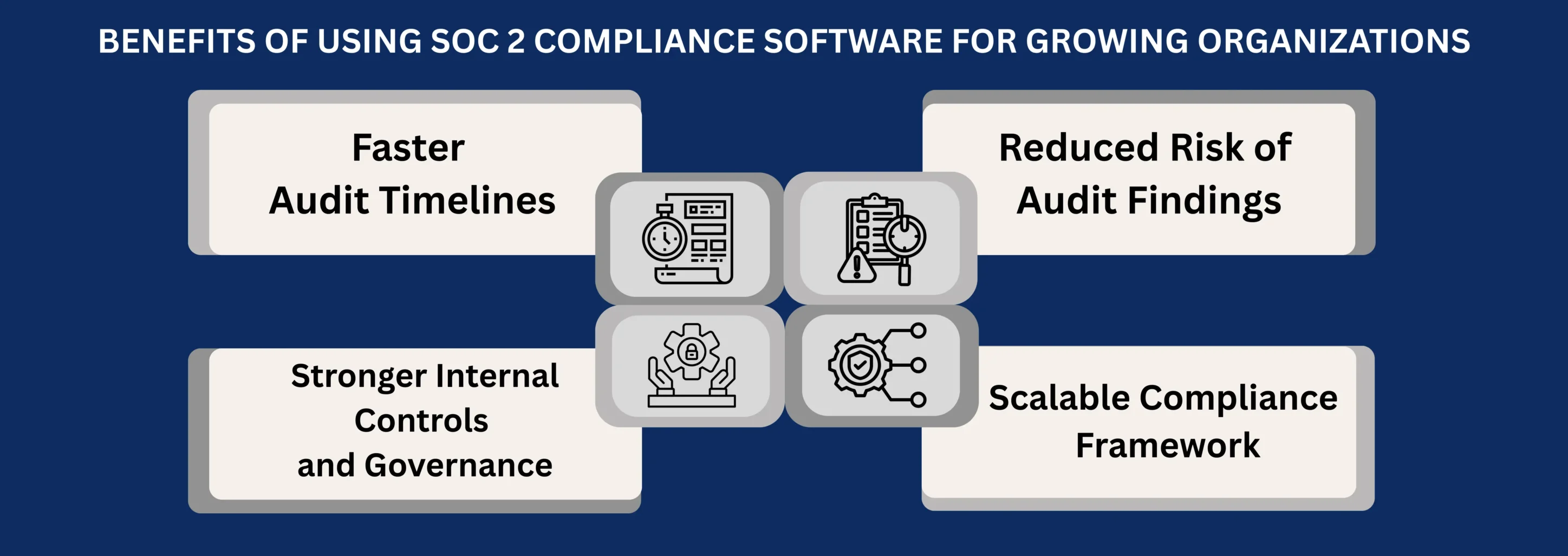
- ✓Accelerated Enterprise Sales and Contract Execution
- ✓Strengthened Internal Control Environment and Risk Reduction
- ✓Regulatory Alignment and Cross-Framework Efficiency
SOC 2 Audit Process for Vancouver Organizations
The SOC 2 audit process conducted by CertPro as a Licensed CPA Firm follows a structured sequence of evaluation stages aligned with AICPA attestation standards. Each stage is designed to produce documented, defensible conclusions about the organization’s control environment. The process applies equally to SOC 2 Certification for Vancouver technology companies, financial services providers, healthcare IT organizations, and other service organizations handling customer data. Understanding the audit sequence in advance enables organizations to allocate resources efficiently and maintain appropriate timelines for certification milestones.
Scope definition is the foundational stage of a SOC 2 audit. During this stage, the auditor works with organizational leadership to define the boundaries of the system under review — including the infrastructure, software, people, procedures, and data components that fall within scope. The scope must align with the services the organization delivers to its customers and the commitments made in service agreements and system descriptions. Overly narrow scopes may fail to satisfy customer expectations. Overly broad scopes may introduce unnecessary complexity and cost without proportionate assurance value.
Trust Services Criteria selection is performed in parallel with scope definition. The Security criterion (Common Criteria) is mandatory for all SOC 2 reports. Organizations then select additional criteria based on customer contractual requirements, regulatory obligations, and the nature of their service commitments. A Vancouver cloud hosting provider, for example, would typically include Availability criteria to address uptime commitments. A data analytics firm handling personally identifiable information would include Privacy and Confidentiality criteria. A payment processing platform would include Processing Integrity to address completeness and accuracy of transaction handling.
Following scope definition, the licensed CPA firm determines the audit program — the specific tests, evidence requests, and evaluation procedures that will be applied during the SOC 2 audit. The audit program is calibrated to the selected Trust Services Criteria, the complexity of the system under review, and the audit type (Type I or Type II). Documentation review forms the initial evidence-gathering phase. During this phase, the auditor examines policies, procedures, system descriptions, configuration records, access control documentation, and other formal artifacts that describe the organization’s control environment.
Effective SOC 2 evidence collection is one of the most operationally demanding aspects of the audit process. Organizations are required to produce evidence demonstrating that controls exist and operate as described in the system description. Common evidence categories include access control logs, security monitoring reports, vulnerability scan results, change management tickets, vendor management records, training completion records, encryption configuration screenshots, and incident response documentation. SOC 2 auditors review evidence consistency over time — not merely point-in-time snapshots. This is precisely why a Type II audit period requires sustained operational discipline across all in-scope control areas.
Control testing is the core evaluation activity in a SOC 2 Type II audit. The auditor applies inquiry, observation, inspection, and re-performance procedures to assess whether controls operated effectively throughout the audit period. For a SOC 2 Type II audit in Vancouver covering a twelve-month period, auditors typically sample control operation evidence at multiple points across the review window. This confirms consistent performance rather than isolated compliance. The testing methodology is documented in the audit workpapers and forms the evidentiary basis for the auditor’s opinion in the final attestation report.
SOC 2 auditors do not merely verify that safeguards exist on paper — they examine the operational records that demonstrate consistent control performance. For access management controls, for instance, an auditor may sample user provisioning and deprovisioning records across the audit period to confirm that access was granted and revoked in accordance with documented procedures. For change management controls, auditors review approval records, testing evidence, and deployment logs to confirm that changes followed the defined process without exceptions. This depth of operational scrutiny is what distinguishes SOC 2 attestation from self-certified compliance declarations.
During nonconformity review, the auditor documents any identified exceptions, deviations, or control failures discovered during control testing. The nature and significance of identified exceptions determines their impact on the audit opinion. Minor, isolated exceptions with compensating controls may be noted in the report without qualifying the opinion. Systemic or pervasive control failures may result in a qualified or adverse opinion. The nonconformity review process is a formal dialogue between the auditor and the organization — one in which management responses and corrective action documentation are incorporated into the final report.
Upon completion of all testing and nonconformity review, the Licensed CPA Firm issues the SOC 2 attestation report. The report includes the auditor’s opinion, a description of the system under review, the controls examined, the testing procedures applied, and the results of control testing. The attestation report is formally signed by the Licensed CPA Firm and delivered to the organization for distribution to current and prospective customers under a non-disclosure agreement. Organizations must complete annual audit cycles to maintain current certified status and meet the ongoing expectations of enterprise customers who require current-period SOC 2 reports.
- Scope Definition — Define system boundaries, in-scope components, and applicable Trust Services Criteria
- Audit Program Determination — Establish specific tests, evidence requirements, and evaluation procedures
- Documentation Review — Examine policies, procedures, system descriptions, and formal control artifacts
- Stage 1 Audit — Evaluate control design suitability against Trust Services Criteria
- Type I or Type II Assessment — Confirm audit type and establish observation period for Type II engagements
- Control Testing — Apply inquiry, observation, inspection, and re-performance to evaluate operating effectiveness
- Nonconformity Review — Document exceptions, evaluate significance, and incorporate management responses
- Certification Decision — Determine audit opinion based on control testing results and exception analysis
- Issuance of Attestation — Deliver signed SOC 2 attestation report for distribution to customers and stakeholders
- Surveillance and Recertification — Maintain current attestation status through annual audit cycles
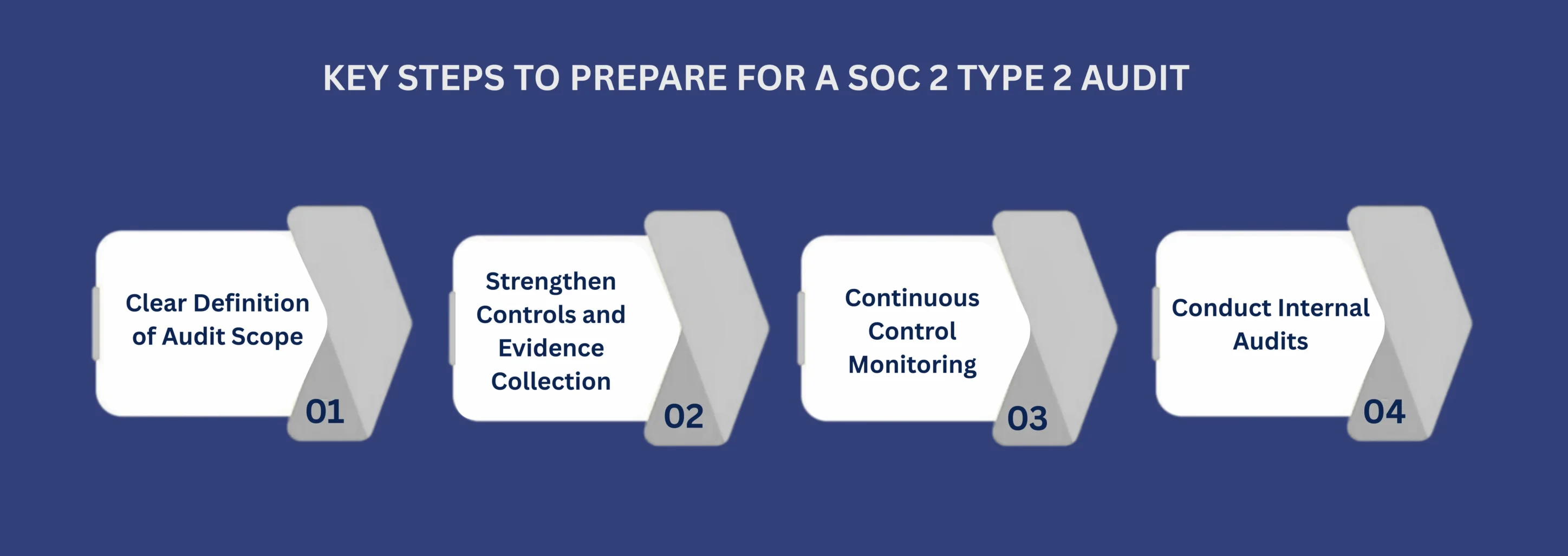
- ✓Stage 1: Scope Definition and Trust Services Criteria Selection
- ✓Stage 2: Audit Program Determination and Documentation Review
- ✓Stage 3: Control Testing and Operational Effectiveness Evaluation
- ✓Stage 4: Nonconformity Review, Certification Decision, and Attestation Issuance
SOC 2 Requirements for Vancouver Service Organizations
SOC 2 certification requirements are defined by the AICPA’s Trust Services Criteria and operationalized through the audit program applied by the Licensed CPA Firm. Requirements are not prescriptive in the sense of mandating specific technologies or vendor products. Instead, they specify control objectives that organizations must achieve using approaches appropriate to their environment, scale, and risk profile. This principles-based structure means that SOC 2 requirements for a 20-person Vancouver SaaS company differ in implementation from those for a 500-person financial data platform — even though both are evaluated against the same TSC framework.
The Security criterion — also called the Common Criteria — is mandatory in every SOC 2 audit. It encompasses nine categories of control requirements: Control Environment, Communication and Information, Risk Assessment, Monitoring of Controls, Control Activities, Logical and Physical Access Controls, System Operations, Change Management, and Risk Mitigation. Each category contains multiple specific control points that the auditor evaluates. For example, Logical and Physical Access Controls require organizations to demonstrate that access to systems, data, and physical environments is restricted to authorized individuals through documented provisioning processes, multi-factor authentication where appropriate, and regular access review procedures.
The Control Environment requirements under the Common Criteria address organizational governance structures, including board-level oversight, management accountability, and the organization’s commitment to integrity and ethical values. For Vancouver organizations, this typically requires documented information security policies approved at the executive level, defined roles and responsibilities for security governance, and evidence that security expectations are communicated throughout the organization. Auditors examine hiring practices, performance management processes, and training records as evidence of the operational control environment — not merely the existence of written policies.
Availability requirements address controls ensuring the system is available for operation and use as committed or agreed in service-level agreements. These controls include infrastructure redundancy, failover capabilities, disaster recovery planning, backup verification procedures, and capacity management. Vancouver data center operators and cloud infrastructure providers frequently include Availability criteria in their SOC 2 scope because uptime commitments are central to their service contracts. Auditors evaluate availability controls by examining infrastructure architecture documentation, disaster recovery test results, incident records, and monitoring alert configurations over the audit period.
Processing Integrity requirements evaluate whether the system processes data completely, accurately, and in a timely manner. These requirements are particularly relevant for transaction processing platforms, payroll systems, and financial calculation engines. Confidentiality requirements address controls protecting information designated as confidential under the organization’s service commitments and data classification policies. Privacy requirements — the most comprehensive additional criterion — address the organization’s handling of personal information throughout its lifecycle: collection, use, retention, disclosure, and disposal. For Vancouver organizations handling resident personal data, these controls must align with BC’s PIPA and Canada’s PIPEDA.
SOC 2 documentation requirements encompass both the formal policy and procedure artifacts that describe the control environment and the operational evidence that demonstrates control execution. Required documentation categories include an information security policy, access control procedures, change management procedures, incident response procedures, vendor management procedures, risk assessment documentation, business continuity and disaster recovery plans, and a system description that accurately represents in-scope system components and their interrelationships. Each document must be formally approved, version-controlled, and accessible to the personnel responsible for executing the described controls.
Operational evidence requirements demand that organizations maintain contemporaneous records of control execution throughout the SOC 2 audit period. Access reviews, vulnerability scans, security awareness training completions, change approvals, incident response activities, and vendor assessments must all be documented at the time of occurrence — not reconstructed retrospectively. SOC 2 auditors are trained to identify evidence that appears fabricated or assembled after the fact, and such findings typically result in significant audit exceptions. Vancouver organizations pursuing a SOC 2 Type II audit must establish systematic evidence collection processes before the observation period begins, not after the auditor requests evidence.

- ✓Security Criterion Requirements (Common Criteria)
- ✓Availability, Processing Integrity, Confidentiality, and Privacy Requirements
- ✓Documentation and Evidence Requirements
SOC 2 Certification Cost in Vancouver
SOC 2 certification cost in Vancouver varies based on several structural factors: the size and complexity of the organization, the number of Trust Services Criteria included in scope, the audit type (Type I or Type II), the audit period length for Type II engagements, and the maturity of the organization’s existing control environment. Unlike prescriptive certification schemes that operate on fixed fee schedules, SOC 2 audit fees are determined by the scope of work required to complete the attestation engagement. Organizations should evaluate cost in the context of the revenue protection and market-access value that a current SOC 2 attestation provides.
Factors That Influence SOC 2 Audit Cost
Organizational complexity is the primary driver of SOC 2 audit cost. A Vancouver startup with 15 employees, a single cloud-hosted SaaS platform, and a limited number of customer integrations will require a significantly smaller audit program than a 200-person managed services provider operating across multiple data centers with dozens of enterprise customer environments. The number of in-scope systems, sub-service organizations, and third-party integrations that must be evaluated as part of the system description directly affects the volume of audit procedures required — and therefore the overall engagement cost.
The selection of additional Trust Services Criteria beyond the mandatory Security criterion adds audit scope and corresponding cost. Each additional criterion introduces its own set of control requirements and evidence evaluation procedures. The audit period length for SOC 2 Type II engagements also affects cost — a twelve-month observation period requires the auditor to sample and evaluate controls across a longer timeframe than a six-month period, increasing the volume of evidence reviewed and the corresponding audit effort. Organizations that maintain well-documented, consistently operated control environments typically experience lower SOC 2 audit costs than those with fragmented documentation or inconsistent control execution.
| Cost Factor | Lower Cost Scenario | Higher Cost Scenario |
|---|---|---|
| Organizational Size | Small team, single platform | Large team, multiple systems and integrations |
| Trust Services Criteria | Security only | Security plus multiple additional criteria |
| Audit Type | Type I (point-in-time) | Type II (12-month observation period) |
| Control Documentation | Mature, well-documented environment | Fragmented or undocumented control environment |
| Sub-Service Organizations | Minimal third-party dependencies | Multiple sub-service organizations requiring carve-out evaluation |
Total Cost of SOC 2 Certification: Audit Fees and Organizational Investment
The total cost of achieving SOC 2 certification includes both the Licensed CPA Firm’s audit fees and the internal organizational investment required to operate and evidence the required controls. Internal costs include personnel time for control execution, evidence collection, documentation maintenance, and coordination with the audit team. Technology investments in security tooling, identity access management platforms, monitoring solutions, and ticketing systems that generate audit-ready evidence also contribute to the total cost. Organizations that invest in audit-ready technology infrastructure typically reduce the internal labor cost associated with evidence collection in subsequent annual audit cycles.
SOC 2 Compliance Requirements Under Vancouver’s Regulatory Context
SOC 2 compliance in Vancouver operates within a broader regulatory landscape that includes federal Canadian privacy legislation, provincial data protection requirements, and sector-specific regulatory frameworks. Understanding how SOC 2 controls interact with these regulatory obligations enables Vancouver organizations to design control environments that satisfy multiple compliance requirements without duplicating effort. The intersections between SOC 2 and Canadian regulatory frameworks are particularly relevant for organizations in the financial services, healthcare, insurance, and government contracting sectors — those facing mandatory compliance obligations alongside voluntary SOC 2 attestation requirements.
Canada’s Personal Information Protection and Electronic Documents Act (PIPEDA) and British Columbia’s Personal Information Protection Act (PIPA) establish the foundational privacy obligations applicable to Vancouver organizations handling personal information. Both frameworks require organizations to identify the purposes for which personal information is collected, obtain consent, limit collection to necessary data, and implement safeguards appropriate to the sensitivity of the information. The SOC 2 Privacy criterion directly addresses these obligations through control requirements for notice and communication, choice and consent, collection, use and retention, access, disclosure and notification, quality, and monitoring and enforcement.
Organizations that include the Privacy criterion in their SOC 2 scope and achieve attestation demonstrate to regulators and customers that an independent Licensed CPA Firm has examined and attested to their privacy control environment. This attestation evidence can be submitted in response to regulatory inquiries from the Office of the Privacy Commissioner of Canada or BC’s Office of the Information and Privacy Commissioner — providing documented third-party validation of privacy control effectiveness that self-assessed compliance programs cannot offer. For Vancouver organizations processing personal data on behalf of US customers, the SOC 2 Privacy criterion also supports alignment with US state privacy laws including the California Consumer Privacy Act (CCPA).
The Office of the Superintendent of Financial Institutions (OSFI) Guideline B-10 on Third-Party Risk Management establishes expectations for federally regulated financial institutions (FRFIs) regarding the assessment and ongoing monitoring of third-party service providers. Under Guideline B-10, FRFIs must obtain and review assurance evidence from critical technology providers — particularly those handling sensitive financial data or supporting core business functions. SOC 2 attestation reports, especially SOC 2 Type II reports covering the Security and Availability criteria, are widely accepted by Canadian financial institutions as satisfying the third-party assurance evidence requirements under OSFI expectations.
SOC 2 Certification in Vancouver for financial services technology providers directly addresses the supply chain risk assessment expectations articulated in OSFI’s supervisory communications. Vancouver fintech companies serving Schedule I and Schedule II banks, credit unions regulated under provincial legislation, and insurance companies under provincial oversight frequently encounter requests for SOC 2 reports as part of annual vendor review processes. Maintaining a current SOC 2 Type II attestation enables these technology providers to respond efficiently to multiple financial institution clients using a single standardized report — rather than custom-formatted evidence packages.
Many Vancouver technology companies serve US-headquartered enterprise customers subject to sector-specific regulations including the Health Insurance Portability and Accountability Act (HIPAA), the Gramm-Leach-Bliley Act (GLBA), and the Federal Risk and Authorization Management Program (FedRAMP). These frameworks do not mandate SOC 2 specifically, but US enterprise procurement teams routinely require SOC 2 attestation as a standardized third-party risk assessment mechanism that applies across vendor categories. SOC 2 audits for Vancouver BC-based organizations therefore frequently serve companies whose primary compliance driver is their US customer base rather than Canadian regulatory requirements.
- ✓PIPEDA, BC PIPA, and SOC 2 Privacy Criterion Alignment
- ✓OSFI Third-Party Risk Management and SOC 2 for Financial Services
- ✓Cross-Border Data Flows and US Customer Requirements
How to Get SOC 2 Certification in Vancouver: A Structured Pathway
Achieving SOC 2 Certification in Vancouver requires a structured approach that begins with organizational commitment and progresses through defined audit stages. The process culminates in the issuance of a formal attestation report by a Licensed CPA Firm. The pathway to SOC 2 certification is not a single event but an ongoing attestation cycle that organizations maintain through annual audit renewals. Understanding this structured pathway in advance enables Vancouver organizations to allocate internal resources, establish evidence collection processes, and manage audit timelines effectively.
Establishing Organizational Commitment and Audit Scope
The first step in obtaining SOC 2 certification is securing executive-level organizational commitment to the audit process and its outcomes. SOC 2 attestation requires sustained operational discipline across multiple functional areas including information technology, human resources, legal, and operations. Without executive accountability and cross-functional engagement, control environments frequently fail to maintain the consistency required for a clean Type II audit opinion. Board and C-suite alignment on the strategic importance of SOC 2 Certification in Vancouver is a prerequisite for the organizational behavior change required to support sustained control operation.
Audit scope decisions made at this stage have lasting implications for cost, effort, and the value of the resulting attestation. Organizations should evaluate their customer contractual requirements, anticipated growth markets, and the Trust Services Criteria most relevant to their service commitments before finalizing scope. Engaging a Licensed CPA Firm early in the scoping process ensures that scope decisions are made with an accurate understanding of the audit procedures that will be applied and the evidence that will be required — reducing the risk of scope adjustments after the observation period has commenced.
Building and Operating the Required Control Environment
Before the formal observation period for a SOC 2 Type II audit begins, organizations must have the required controls in place and actively operating. Information security policies must be approved and communicated, access control procedures must be implemented and followed, change management processes must be active, vulnerability management programs must be operational, and vendor management procedures must be documented and executed. The observation period clock starts when controls begin operating — not when the auditor arrives — so the timing of control implementation directly determines when a Type II attestation report can be issued.
Evidence collection infrastructure must be established before the SOC 2 observation period commences. Organizations should configure their identity access management systems to generate automated provisioning and deprovisioning logs, enable security monitoring and alerting tools that produce timestamped records, implement ticketing systems for change management and incident response that capture approval workflows, and schedule recurring control activities — such as access reviews, vulnerability scans, and vendor assessments — on defined frequencies. Automated evidence generation significantly reduces the operational burden of evidence collection and improves the quality and consistency of audit evidence throughout the cycle.
Engaging a Licensed CPA Firm and Managing the Audit Timeline
Selecting a qualified Licensed CPA Firm to conduct the SOC 2 audit is a critical decision that affects both the quality of the attestation and its acceptance by customers. SOC 2 attestation reports must be issued by a Licensed CPA Firm — not by technology companies, security consultancies, or certification bodies operating outside the CPA framework. Customers and their legal teams are trained to verify that SOC 2 reports are issued by qualified CPA firms. Reports issued by non-qualified entities are not accepted as valid attestations. CertPro operates as a Licensed CPA Firm conducting SOC 2 audits in Vancouver under AICPA attestation standards, ensuring that resulting reports meet the professional requirements for enterprise acceptance.
SOC 2 Certification for Vancouver Technology Sectors
SOC 2 certification that Vancouver tech companies pursue spans multiple technology sub-sectors, each with distinct control environment characteristics and customer-driven audit requirements. Vancouver’s technology economy includes enterprise SaaS platforms, cloud infrastructure providers, cybersecurity firms, managed service providers, AI and machine learning platforms, gaming companies with user data management obligations, and data analytics providers. Each of these categories has unique Trust Services Criteria relevance profiles and customer-base SOC 2 report expectations that shape the audit scope and report structure.
SaaS and Cloud Service Providers
Vancouver’s SaaS ecosystem includes a significant concentration of B2B software platforms serving enterprise clients in North American and global markets. For SaaS providers, SOC 2 audit scope typically encompasses the cloud infrastructure hosting the application, the application codebase and its deployment pipeline, the access management systems governing customer and employee access, and the operational procedures supporting incident response, change management, and vendor oversight. SaaS companies frequently include Security and Availability criteria as the minimum scope, with Confidentiality added when customer data is explicitly designated as confidential in service agreements.
Cloud service providers and infrastructure-as-a-service (IaaS) platforms in Vancouver face additional complexity in SOC 2 scoping because their systems often serve as sub-service organizations within their customers’ SOC 2 audit scopes. When a Vancouver SaaS company relies on AWS, Azure, or Google Cloud for its infrastructure, the SaaS company’s SOC 2 report must address how the shared responsibility model allocates security controls between the SaaS company and its cloud provider. Auditors evaluate whether the SaaS company has appropriately documented this allocation and whether the sub-service organization’s own SOC 2 or SOC 3 report provides sufficient coverage of the controls for which the cloud provider is responsible.
Fintech and Financial Data Platforms
SOC 2 compliance for Vancouver fintech organizations requires particularly rigorous control environments given the sensitivity of financial data processed and the regulatory scrutiny applied to financial services supply chains. Fintech platforms handling payment data, investment account information, credit decisioning algorithms, or banking APIs must address Security and Processing Integrity criteria at minimum — with Availability criteria essential for any platform supporting real-time financial transactions. The Processing Integrity criterion evaluates whether system processing is complete, valid, accurate, timely, and authorized: all critical attributes for financial calculation and transaction processing systems.
Vancouver fintech companies serving regulated financial institutions must also consider how their SOC 2 attestation interacts with their customers’ own regulatory compliance obligations. A Vancouver payment technology provider serving a federally regulated bank must maintain SOC 2 controls that satisfy OSFI’s expectations for outsourced technology risk management. A robo-advisory platform serving registered investment advisors must address control requirements relevant to the Investment Industry Regulatory Organization of Canada (IIROC) guidance on outsourced technology and data management. SOC 2 Certification in Vancouver for financial services technology providers therefore requires audit scopes designed to satisfy both the AICPA Trust Services Criteria and the downstream regulatory expectations of financial institution customers.
Managed Service Providers and Cybersecurity Firms
Vancouver’s managed service provider (MSP) and managed security service provider (MSSP) community serves small and medium-sized enterprises across British Columbia and beyond, frequently accessing client systems with elevated privileges that represent significant security risk from the clients’ perspective. Enterprise clients contracting with MSPs and MSSPs routinely require SOC 2 attestation as evidence that the service provider’s privileged access to client environments is governed by appropriate access controls, monitoring, and incident response capabilities. SOC 2 certification for these providers validates the control environment surrounding their service delivery operations — not merely their internal IT environment.
SOC 2 vs. Other Certification Frameworks: Selecting the Right Standard
Vancouver organizations frequently face the decision of whether to pursue SOC 2 certification, ISO 27001 certification, or both — particularly when entering new markets or responding to enterprise procurement requirements. The two frameworks address overlapping but distinct control domains and carry different market recognition profiles across geographic regions. Understanding the substantive differences enables organizations to make informed decisions based on their specific customer requirements, target markets, and strategic compliance priorities — rather than defaulting to whichever standard was most recently requested.
SOC 2 vs. ISO 27001: Framework Comparison
SOC 2 and ISO 27001 differ fundamentally in their structure, output, and market recognition. SOC 2 is a US-originated attestation framework governed by the AICPA, resulting in an attestation report issued by a Licensed CPA Firm. It tests specific controls based on the Trust Services Criteria, the organization’s service commitments, and its contractual requirements. ISO 27001 is an internationally recognized information security management system (ISMS) standard governed by the International Organization for Standardization, resulting in a certificate issued by an accredited certification body. ISO 27001 requires organizations to implement a comprehensive ISMS addressing all applicable Annex A controls, documented through a Statement of Applicability.
Market recognition patterns differ significantly between the two frameworks. SOC 2 is the dominant data security attestation standard in North American enterprise markets — particularly in the United States, where it is required by the vast majority of enterprise procurement teams. ISO 27001 carries stronger recognition in European, Middle Eastern, and Asia-Pacific markets, as well as in government contracting contexts globally. For Vancouver companies whose primary markets are US-headquartered enterprises, completing a SOC 2 audit should be the priority. Organizations serving European or global enterprise clients may benefit from pursuing both certifications, recognizing that overlapping control requirements create cross-framework efficiency opportunities.
| Attribute | SOC 2 | ISO 27001 |
|---|---|---|
| Governing Body | AICPA (American Institute of CPAs) | ISO/IEC (International Organization for Standardization) |
| Output Document | Attestation Report (issued by Licensed CPA Firm) | Certificate (issued by accredited certification body) |
| Geographic Recognition | Dominant in North America, especially USA | Strong globally, particularly Europe and Asia-Pacific |
| Framework Type | Attestation against Trust Services Criteria | Management system certification with Annex A controls |
SOC 1 vs. SOC 2: Understanding When Each Report Applies
SOC 1 and SOC 2 are frequently confused because both are issued by Licensed CPA Firms and both involve assessment of service organization controls. SOC 1 reports are specifically designed to address controls at a service organization that are relevant to its customers’ internal controls over financial reporting. SOC 1 is appropriate for payroll processors, fund administrators, claims processing organizations, and other service providers whose operational activities directly affect their customers’ financial statements. SOC 2 addresses a broader set of data security and operational controls relevant to customers, regulators, and business partners beyond the financial reporting context.
When enterprise customers request a SOC report without specifying the type, the appropriate response is to clarify whether they require evidence relevant to financial reporting controls (SOC 1) or to data security and operational controls (SOC 2). Most SaaS companies, cloud providers, and managed services firms are asked for SOC 2 reports. Organizations that process financial transactions on behalf of customers — payroll service bureaus, benefits administrators, custody agents — are more commonly asked for SOC 1 reports. Some organizations in transaction-intensive sectors maintain both SOC 1 and SOC 2 attestations to satisfy the full range of customer assurance requirements.
Why CertPro for SOC 2 Certification in Vancouver
CertPro conducts SOC 2 certification audits in Vancouver as a Licensed CPA Firm operating under AICPA attestation standards. The firm’s audit practice focuses exclusively on SOC 2 attestation and related certification frameworks, ensuring that the audit team’s expertise is applied with depth and consistency across engagement types. CertPro’s auditors hold formal qualifications in information security, risk management, and attestation methodology — with direct experience evaluating control environments across Vancouver’s technology, financial services, and data management sectors. The resulting attestation reports meet the professional standards required for acceptance by enterprise procurement teams, legal departments, and regulatory stakeholders.
Licensed CPA Firm Credentials and AICPA Standards Compliance
SOC 2 attestation reports carry legal and professional weight only when issued by a Licensed CPA Firm conducting the audit in accordance with AICPA AT-C Section 105 and AT-C Section 205 attestation standards. CertPro’s status as a Licensed CPA Firm is the foundational credential that distinguishes its SOC 2 attestation reports from self-assessed compliance declarations or technology-company security assessments. Customers receiving a CertPro SOC 2 attestation report can rely on the fact that it was issued by a qualified professional firm subject to CPA professional standards, ethics requirements, and quality control obligations.
CertPro’s audit methodology applies consistent, structured evaluation procedures calibrated to the AICPA Trust Services Criteria and the specific characteristics of each client’s system under review. The firm’s Vancouver practice maintains direct familiarity with the regulatory context facing British Columbia-based service organizations — including BC PIPA privacy requirements, OSFI third-party risk management expectations, and the customer compliance drivers prevalent in Vancouver’s technology, fintech, and healthcare IT sectors. This local context informs audit scoping decisions and system description development in ways that generalist auditors without Vancouver market presence may not replicate.
Audit Efficiency and Organizational Experience
CertPro’s structured audit methodology applies systematic evidence request procedures organized by Trust Services Criteria category and control area. This enables organizations to understand precisely what evidence is required and in what format before the audit begins. The transparency reduces operational disruption associated with evidence collection cycles and allows internal teams to allocate resources effectively. The audit team’s experience with control environments across multiple Vancouver technology and financial services organizations provides benchmarking context — informing the identification of control gaps and the evaluation of exception significance during the nonconformity review process.
FAQ
▶
What is SOC 2 certification and who needs it?
▶
What is the difference between SOC 2 Type I and SOC 2 Type II?
▶
How long does the SOC 2 audit process take for a Vancouver organization?
▶
Is SOC 2 certification mandatory for Vancouver technology companies?
▶
What are the five Trust Services Criteria covered in SOC 2?
▶
How does SOC 2 compliance differ from SOC 2 certification?
▶
How often must SOC 2 certification be renewed?
▶
Should Vancouver companies pursue SOC 2 or ISO 27001 first?
SOC 1 VS SOC 2: WHICH REPORT YOUR CUSTOMERS ACTUALLY ASK FOR
If you sell SaaS or provide outsourced services, you have likely been asked for a SOC report. However, the follow-up question is rarely easy to answer…

Secure Email Platform Exclaimer Renews ISO, SOC 2
Excerpt from The Manila Times Article, Published on February 26, 2026 Secure email solutions provider Exclaimer has renewed its ISO and SOC 2 certific…
SOC 2 FRAMEWORK REQUIREMENTS IN 2026. WHAT HAS CHANGED?
Security reviews used to happen at the tail end of a deal. Today, they happen in the first conversation. Enterprise buyers come prepared. They ask abo…
Get In Touch
have a question? let us get back to you.