
ISO 42001 Certification in Munich
CertPro is a Licensed CPA Firm delivering independent ISO 42001 certification audits in Munich. Our ISO 42001 audit engagements evaluate AI Management System (AIMS) controls against ISO/IEC 42001:2023 requirements, covering governance structures, lifecycle oversight, risk controls, and accountability mechanisms. ISO 42001 certification scope encompasses Munich-based organizations deploying AI systems across manufacturing, automotive, finance, SaaS, and enterprise technology environments.
OUR CLIENTS









Introduction to ISO 42001 Certification in Munich
ISO 42001 is the first international standard published by the International Organization for Standardization that specifies requirements for establishing, implementing, maintaining, and continually improving an Artificial Intelligence Management System (AIMS). ISO/IEC 42001:2023 provides a structured governance framework for organizations that develop, deploy, or operate AI systems, ensuring that artificial intelligence is managed in a way that is transparent, accountable, and ethically sound. ISO 42001 Certification in Munich represents formal, independent validation that an organization’s AIMS meets these internationally recognized requirements.
Munich occupies a unique position in Germany’s technology and innovation landscape. As one of Europe’s most significant hubs for automotive engineering, advanced manufacturing, enterprise software, and financial services, Munich’s organizations are deploying artificial intelligence at an accelerating pace. From autonomous vehicle development to predictive maintenance in Industry 4.0 environments — and from algorithmic trading in fintech to AI-powered enterprise resource planning — the scope of AI adoption across Munich’s industrial base is extensive. This rapid adoption creates corresponding governance obligations that ISO 42001 Certification in Munich is specifically designed to address.
The EU AI Act, which entered into force in August 2024 and is being phased in through 2026, establishes binding obligations for organizations that place AI systems on the European market. Munich-based organizations operating high-risk AI systems in sectors such as critical infrastructure, employment, education, and financial services face specific conformity assessment obligations under this regulation. ISO 42001 compliance provides a structured framework that aligns with these emerging regulatory expectations, allowing organizations to demonstrate systematic AI governance to regulators, clients, and stakeholders. CertPro’s independent ISO 42001 audit engagements evaluate AIMS controls against the full requirements of the standard, delivering a third-party certification attestation that carries institutional credibility.
What Is an Artificial Intelligence Management System (AIMS)?
An Artificial Intelligence Management System (AIMS) is the totality of an organization’s policies, procedures, roles, responsibilities, and controls that govern how AI is developed, deployed, monitored, and retired. Under ISO 42001, an AIMS is not simply a technical framework for AI systems. It is a comprehensive organizational management system that integrates AI governance into the broader corporate governance structure. The AIMS addresses the full AI lifecycle — from initial concept and data sourcing through model development, validation, deployment, monitoring, and decommissioning.
ISO 42001 requires that the AIMS be proportionate to the nature, scale, and complexity of the organization’s AI activities and associated risks. For a Munich-based automotive manufacturer deploying AI for defect detection on assembly lines, the AIMS must address safety implications, data inputs used for model training, and human oversight mechanisms. For a Munich fintech company using AI for credit scoring, the AIMS must address algorithmic fairness, explainability, and data protection in alignment with GDPR requirements. The AIMS framework is therefore context-specific and risk-proportionate — both of which are carefully evaluated during the ISO 42001 audit process.
The Role of ISO 42001 in Munich’s AI Regulatory Environment
Munich’s organizations operate within one of the world’s most robust regulatory environments for data protection and AI governance. The General Data Protection Regulation (GDPR) already imposes obligations on automated decision-making, requiring that individuals subject to consequential automated decisions have access to meaningful information and the right to human review. ISO 42001 compliance directly supports GDPR compliance by requiring organizations to establish documented procedures for automated decision transparency and human oversight — creating an integrated governance posture that addresses both frameworks simultaneously.
ISO 42001 shares structural DNA with other management system standards, including ISO 27001 for information security and ISO 31000 for risk management. This harmonized structure — known as the High-Level Structure (HLS) — allows Munich organizations that already hold ISO 27001 certification to integrate ISO 42001 requirements into their existing management system infrastructure without duplicating policies, roles, and review processes. The integration reduces the total cost and complexity of maintaining multiple certifications while creating a coherent, enterprise-wide governance architecture. ISO AIMS certification, in this context, becomes a natural extension of existing compliance investments.
Who Requires ISO 42001 Certification in Munich?
ISO 42001 Certification in Munich is applicable to any organization that develops, provides, or uses AI systems, regardless of size or sector. The standard explicitly states that it is intended for organizations of all types — including commercial enterprises, government agencies, non-profit organizations, and academic institutions. However, the urgency and business value of certification varies by industry and AI risk profile. Munich’s technology-intensive industries face the strongest pressure to achieve ISO 42001 certification, as both regulatory expectations and enterprise client procurement requirements increasingly reference formal AI governance certification as a prerequisite for contract awards.
- ✓Automotive manufacturers and suppliers deploying AI for autonomous systems, quality control, and supply chain optimization
- ✓Financial services firms using AI for credit assessment, fraud detection, and algorithmic trading
- ✓Healthcare organizations employing AI-assisted diagnostics, patient management, and clinical decision support
- ✓Manufacturing enterprises integrating AI into Industry 4.0 production environments
- ✓SaaS and enterprise software companies embedding AI capabilities into their product offerings
- ✓Public sector organizations deploying AI for service delivery, traffic management, and citizen engagement
- ✓HR technology platforms using AI for recruitment screening and performance assessment
- ✓Logistics and supply chain companies using AI for demand forecasting and route optimization

Requirements for ISO 42001 Certification
ISO 42001 certification requirements are organized according to the standard’s clause structure, which follows the High-Level Structure common to all major ISO management system standards. Understanding these requirements is essential for organizations preparing for an ISO 42001 audit. The requirements span organizational context, leadership commitment, planning, support, operational controls, performance evaluation, and continual improvement. Each clause imposes specific documented obligations that auditors evaluate during the ISO 42001 certification process.
ISO 42001 requires organizations to determine internal and external factors relevant to their AI activities and how those factors affect the AIMS. This includes identifying the organization’s AI objectives, the needs and expectations of interested parties (including regulators, clients, employees, and the public), and the boundaries and applicability of the AIMS. The scope statement must clearly define which AI systems and organizational functions fall within the AIMS boundary. For Munich-based enterprises with multiple business units and AI deployments, scope definition is a critical exercise that determines the extent and depth of the ISO 42001 assessment.
Organizational context requirements also include conducting an AI impact assessment — a document that identifies the potential impacts of the organization’s AI systems on individuals, groups, and society. This assessment must be documented and reviewed periodically. Munich organizations deploying AI in high-impact domains such as hiring, lending, healthcare, or public safety must demonstrate that impact assessments are systematic, documented, and linked to risk treatment decisions. The impact assessment outputs form a key input to the risk management process required under ISO 42001 Clause 6.
ISO 42001 places explicit requirements on top management to demonstrate leadership and commitment to the AIMS. This includes establishing an AI policy that articulates the organization’s commitment to responsible AI, assigning clear roles and responsibilities for AI governance, and ensuring that the AIMS is integrated into the organization’s strategic planning processes. Top management must ensure adequate resources are allocated to AI governance activities and that AI objectives are established, communicated, and evaluated on a regular basis.
The leadership requirements reflect the growing recognition that AI governance is a board-level responsibility, not solely a technical function. Munich enterprises listed on major European stock exchanges face investor expectations around ESG disclosures that increasingly encompass AI governance practices. ISO 42001 Certification in Munich provides a formally audited governance structure that can be reported to investors and boards as evidence of systematic AI risk oversight. Auditors evaluate whether leadership accountability mechanisms are genuine and operational — not merely documented on paper.
The operational requirements of ISO 42001 address the full AI system lifecycle — from design and data management through development, validation, deployment, and monitoring. Organizations must establish controls for AI system design that incorporate responsible AI principles, including fairness, transparency, explainability, robustness, and privacy. Data governance controls must address data quality, bias assessment, and data lineage documentation. Model development controls must include validation and testing procedures that evaluate model performance across relevant population segments and use cases.
Post-deployment monitoring is a critical operational requirement under ISO 42001. Organizations must establish mechanisms to detect model drift, performance degradation, and emergent biases in production AI systems. For Munich manufacturing companies using AI for predictive maintenance, this means systematically monitoring model accuracy against actual equipment failure rates. For financial services firms, it means ongoing monitoring of credit model performance across demographic segments. These monitoring controls are evaluated during the ISO 42001 audit to determine whether they are operationally effective — not merely documented in policy.
ISO 42001 requires organizations to maintain documented information that provides evidence of AIMS implementation and effectiveness. This includes the AI policy, scope statement, risk assessment and treatment records, AI impact assessments, training records, internal audit reports, management review records, and records of nonconformities and corrective actions. Documentation must be controlled, version-managed, and accessible to authorized personnel. The depth and quality of documentation is a key indicator of AIMS maturity and is carefully evaluated during the ISO 42001 certification audit.
| ISO 42001 Clause | Requirement Area | Key Documentation Required |
|---|---|---|
| Clause 4 | Organizational Context | Scope statement, stakeholder register, AI impact assessment |
| Clause 5 | Leadership | AI policy, roles and responsibilities, governance structure |
| Clause 6 | Planning | Risk assessment, risk treatment plan, AI objectives |
| Clause 8 | Operation | AI lifecycle controls, data governance records, model validation reports |
| Clause 9 | Performance Evaluation | Internal audit reports, management review records, KPIs |
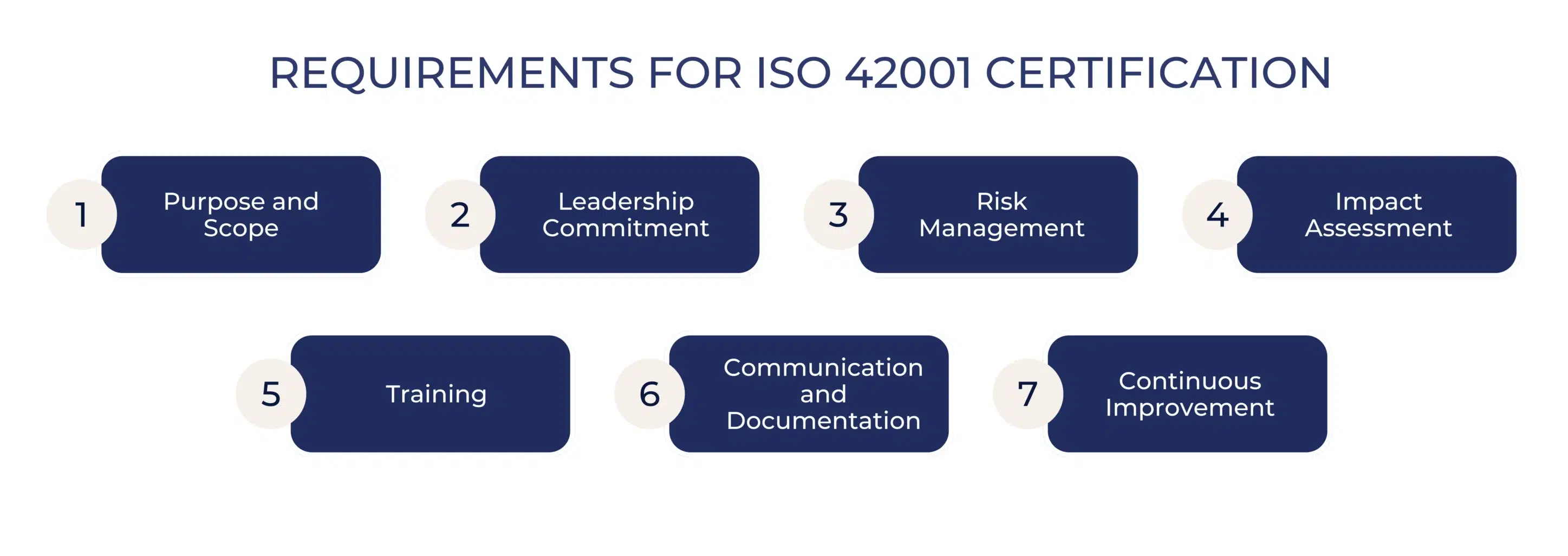
- ✓Organizational Context and Scope Requirements
- ✓Leadership and Governance Requirements
- ✓Operational Control and AI Lifecycle Requirements
- ✓Documentation and Performance Evaluation Requirements
The ISO 42001 Audit Process
The ISO 42001 audit process conducted by CertPro follows a structured, phased methodology that evaluates AIMS controls against the requirements of ISO/IEC 42001:2023. As a Licensed CPA Firm, CertPro conducts independent third-party certification audits that result in a formal attestation of conformance. The ISO 42001 audit process is designed to provide rigorous, objective assurance to stakeholders that the organization’s AI management practices meet the international standard’s requirements. Each phase of the audit generates documented findings that feed into the final certification decision.
The ISO 42001 audit engagement begins with a formal scope definition process in which the auditor and the organization establish the boundaries of the AIMS subject to certification. This includes identifying the AI systems in scope, the organizational units covered, and the geographic locations included. For Munich-based organizations with international operations, scope boundaries must be clearly documented to reflect which activities and systems are included in the ISO 42001 Certification in Munich. The scope definition forms the basis for the audit program and determines the depth and duration of the engagement.
The Stage 1 audit involves a comprehensive review of the organization’s documented AIMS against ISO 42001 requirements. Auditors evaluate whether the organization has established the necessary documentation, policies, procedures, and governance structures required by the standard. Stage 1 identifies significant gaps or areas of concern that must be addressed before proceeding to the Stage 2 audit. The Stage 1 report provides a clear map of documentation conformance and nonconformities, giving the organization a precise view of its current AIMS documentation status relative to the standard’s requirements.
The Stage 2 audit is the principal conformance assessment phase in which auditors evaluate the operational effectiveness of AIMS controls through evidence examination, interviews, process walkthroughs, and technical observation. During this phase of the ISO 42001 audit, auditors verify whether documented controls are actually implemented and operating as described. This includes reviewing model validation records, examining data governance procedures in practice, interviewing AI system operators and governance personnel, and assessing monitoring mechanisms for deployed AI systems.
Control testing during the Stage 2 audit addresses all applicable ISO 42001 requirements within the defined scope. Auditors evaluate both the design adequacy of controls — whether the control, if operating as designed, would meet the standard’s requirements — and the operating effectiveness of controls — whether the control is actually functioning as designed over the audit period. Nonconformities identified during Stage 2 are classified as major (fundamental failures that prevent AIMS objectives from being achieved) or minor (isolated deviations that do not undermine the overall AIMS). Major nonconformities must be resolved before ISO 42001 certification can be issued.
Following the completion of audit fieldwork, the lead auditor compiles a comprehensive audit report documenting all findings, nonconformities, and observations. Organizations with major nonconformities must submit documented corrective action plans and, in some cases, provide objective evidence of corrective action implementation before the certification decision is made. The certification decision is made by a qualified reviewer who is independent from the audit team, ensuring objectivity in the final determination. This separation of audit and certification decision functions reflects established certification body best practice.
Upon a successful certification decision, CertPro issues an ISO 42001 certification attestation specifying the organization’s name, AIMS scope, certification date, and validity period. ISO 42001 certifications are typically valid for three years, subject to successful annual surveillance audits in years one and two, and a recertification audit in year three. Surveillance audits verify that the AIMS continues to conform to ISO 42001 requirements and that the organization is fulfilling its continual improvement obligations. The three-year certification cycle ensures ongoing accountability and drives continuous improvement in AI governance practices.
- Scope Definition: Establish AIMS boundaries, identify AI systems in scope, and determine audit program parameters
- Audit Program Determination: Develop the audit plan specifying objectives, criteria, methods, and team composition
- Stage 1 Audit: Documentation and system review evaluating AIMS documentation against ISO 42001 requirements
- Stage 2 Audit: On-site control testing, evidence examination, interviews, and operational effectiveness evaluation
- Control Testing: Systematic evaluation of AIMS control design adequacy and operational effectiveness
- Nonconformity Review: Classification and documentation of major and minor nonconformities with corrective action tracking
- Certification Decision: Independent review of audit findings and determination of ISO 42001 certification eligibility
- Issuance of Attestation: Formal certification document specifying scope, validity period, and certification basis
- Surveillance Audits: Annual evaluations in years one and two to verify continued AIMS conformance
- Recertification Audit: Full scope re-evaluation in year three to renew ISO 42001 certification
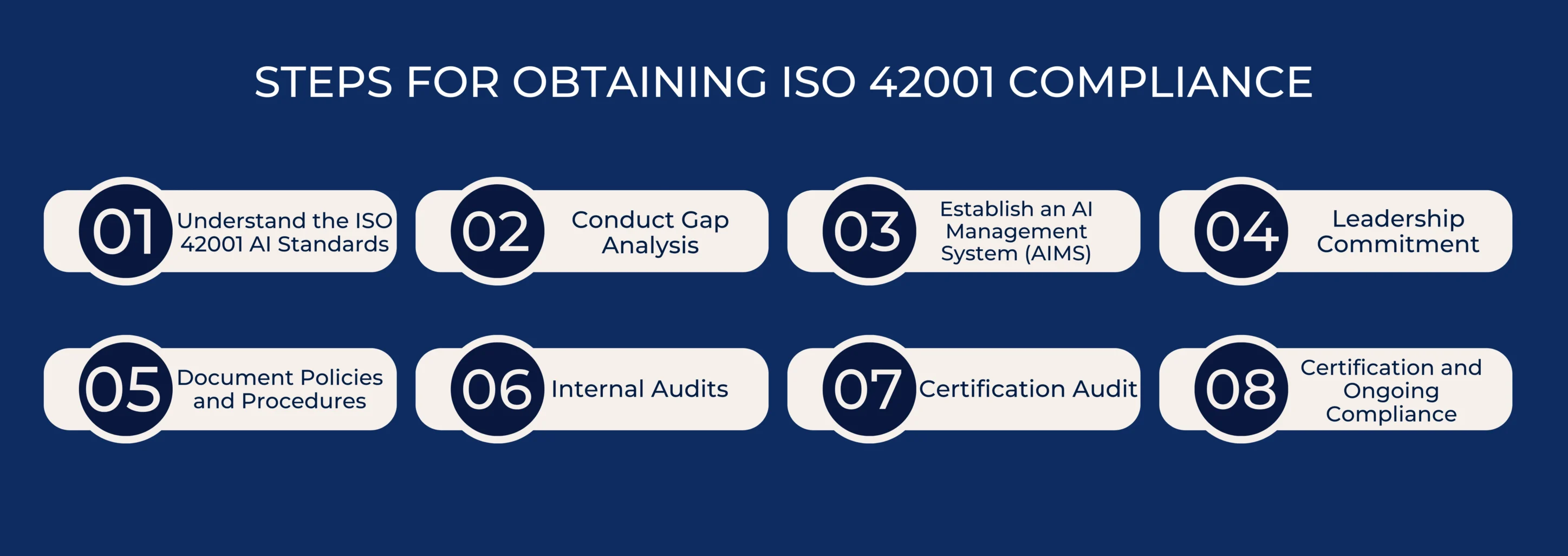
- ✓Stage 1: Scope Definition and Documentation Review
- ✓Stage 2: On-Site Control Testing and Evidence Evaluation
- ✓Nonconformity Review and Certification Decision
- ✓Structured ISO 42001 Audit Stages
Steps to Achieve ISO 42001 Certification in Munich
Achieving ISO 42001 Certification in Munich requires systematic organizational preparation that establishes an AIMS meeting all applicable standard requirements before the certification audit is conducted. The pathway to certification involves a series of structured activities that build AIMS capability progressively. Organizations that approach this process methodically and allocate adequate resources achieve more efficient audit outcomes and more durable AIMS implementations. The following steps outline the typical pathway for Munich organizations pursuing ISO 42001 certification for the first time.
The foundational step in the ISO 42001 certification pathway is conducting a comprehensive inventory of all AI systems deployed or under development within the organization. This inventory must document the purpose of each AI system, the data inputs and outputs, the decision-making processes supported or automated by AI, the populations affected by AI outputs, and the current governance controls in place. For Munich technology companies with extensive AI product portfolios, this inventory exercise may reveal AI deployments not currently subject to any formal governance oversight — which itself represents a significant risk finding ahead of the ISO 42001 audit.
The AI inventory provides the factual basis for defining the AIMS scope and conducting the AI impact assessment required by ISO 42001. Organizations must document not only the technical characteristics of each AI system but also its potential impacts on individuals and groups, the nature and likelihood of harm, and existing mitigating controls. This documentation exercise is often the most time-intensive part of AIMS establishment for organizations without prior formal AI governance activities. Thorough inventory and impact documentation directly contributes to a more efficient Stage 1 ISO 42001 audit outcome.
Following the AI inventory, organizations must develop the formal AIMS policy and governance structure required by ISO 42001 Clause 5. The AI policy must articulate the organization’s commitment to responsible AI, define the objectives of the AIMS, and establish the principles that govern AI development and deployment. The governance structure must assign clear accountability for AI governance at the executive level, establish an AI governance committee or equivalent oversight body, and define the roles and responsibilities of all personnel involved in AI development, deployment, and oversight.
For Munich organizations in highly regulated sectors such as automotive and financial services, the AI governance structure must interface effectively with existing risk management, legal, compliance, and data protection functions. The ISO 42001 assessment evaluates whether these interfaces are clearly defined and operationally effective. Organizations that establish AI governance committees with representation from legal, data protection, technology, business operations, and executive leadership demonstrate the cross-functional accountability that ISO 42001 requires — and that auditors actively look for as evidence of genuine governance commitment.
ISO 42001 requires a formal risk assessment process that identifies AI-related risks to individuals, groups, organizations, and society; evaluates the likelihood and impact of those risks; and determines appropriate risk treatment measures. The risk assessment must be systematic, documented, and reviewed at defined intervals and whenever significant changes occur to AI systems or their operational context. Risk treatment plans must specify the controls selected to mitigate identified risks, the rationale for control selection, and the criteria for determining when risk levels are acceptable.
Munich organizations operating AI systems in high-risk EU AI Act categories must align their ISO 42001 risk assessment with the specific risk categories identified in the regulation. High-risk AI applications in areas such as employment screening, credit assessment, biometric identification, and critical infrastructure management require the most rigorous risk assessment and treatment documentation. The ISO 42001 assessment evaluates both the completeness of the risk assessment and the adequacy of selected risk treatment controls, making the quality of risk documentation a central determinant of audit outcomes.
- ✓AI Inventory and Use Case Documentation
- ✓AIMS Policy Development and Governance Structure Establishment
- ✓Risk Assessment and Treatment Planning
Benefits of ISO 42001 Certification for Munich Organizations
ISO 42001 Certification in Munich delivers a range of concrete organizational benefits that extend well beyond regulatory compliance. Certification provides independent, third-party validation of an organization’s AI governance practices — carrying evidential weight with regulators, enterprise clients, investors, and the public. The benefits of ISO AIMS certification are both immediate and strategic, spanning risk reduction, competitive positioning, operational efficiency, and stakeholder trust. Munich organizations that achieve ISO 42001 certification position themselves as leaders in responsible AI governance within one of Europe’s most competitive technology markets.
One of the most significant benefits of ISO 42001 Certification in Munich is the structured alignment it provides with the EU AI Act and GDPR. Organizations that achieve ISO 42001 compliance demonstrate to regulators that their AI systems are subject to systematic governance oversight, risk assessment, and lifecycle controls. While ISO 42001 certification does not automatically confer EU AI Act compliance, the governance framework it establishes directly supports the conformity assessment obligations that high-risk AI system providers must satisfy. This alignment reduces both the regulatory burden and legal exposure associated with operating AI systems in the European market.
The Bayerische Datenschutzbehörde (Bavarian State Office for Data Protection Supervision) and the Bundesbeauftragte für den Datenschutz und die Informationsfreiheit (Federal Commissioner for Data Protection and Freedom of Information) actively monitor AI-related data processing activities in Germany. ISO 42001 compliance provides documented evidence of responsible AI data governance that regulators can review in the context of supervisory inquiries or investigations. Organizations holding ISO 42001 Certification in Munich are better positioned to demonstrate proportionate AI risk management to German data protection authorities.
ISO 42001 certification provides a demonstrable competitive differentiator for Munich technology companies competing for enterprise and public sector contracts. Procurement processes at major Munich-based corporations increasingly include AI governance requirements in vendor due diligence questionnaires. ISO 42001 Certification in Munich allows technology vendors to provide objective, third-party evidence of AI governance maturity in response to these requirements — replacing lengthy self-assessment questionnaires with a recognized certification attestation. This is particularly valuable for Munich SaaS companies and cloud providers competing for contracts with large automotive, industrial, and financial services clients.
ISO 42001 certification also supports export market development for Munich’s technology hub. German technology companies exporting AI-embedded products and services to markets with their own AI governance requirements — including the United Kingdom, United States, Canada, Singapore, and other jurisdictions developing AI regulatory frameworks — can use ISO 42001 certification as a globally recognized demonstration of AI governance maturity. This international recognition reduces the friction of market entry in jurisdictions where AI governance expectations are crystallizing into formal requirements.
The disciplined governance framework established through ISO 42001 certification directly reduces the operational risks associated with AI system failures, model drift, and algorithmic errors. Organizations that implement structured AI lifecycle controls identify problems earlier in the development and deployment process, reducing the cost and reputational damage of AI system failures in production. For Munich automotive suppliers deploying AI in safety-critical applications, the risk reduction benefits of systematic AI governance are especially significant — as failures in AI-assisted quality control or autonomous system components can carry serious safety and liability consequences.
- ✓Independent third-party validation of AI governance practices for regulators, clients, and investors
- ✓Structured alignment with EU AI Act conformity assessment obligations for high-risk AI systems
- ✓Documented ISO 42001 compliance framework supporting GDPR automated decision-making obligations
- ✓Competitive differentiation in enterprise procurement processes requiring AI governance evidence
- ✓Reduced regulatory risk and improved positioning with German data protection authorities
- ✓Systematic AI risk identification and treatment reducing operational AI system failures
- ✓Enhanced stakeholder trust through transparent, accountable AI management practices
- ✓Integration with existing ISO 27001 and ISO 31000 management systems for governance efficiency
- ✓Global market access support as AI governance requirements expand internationally
- ✓Board-level governance credibility through formally audited AI management practices
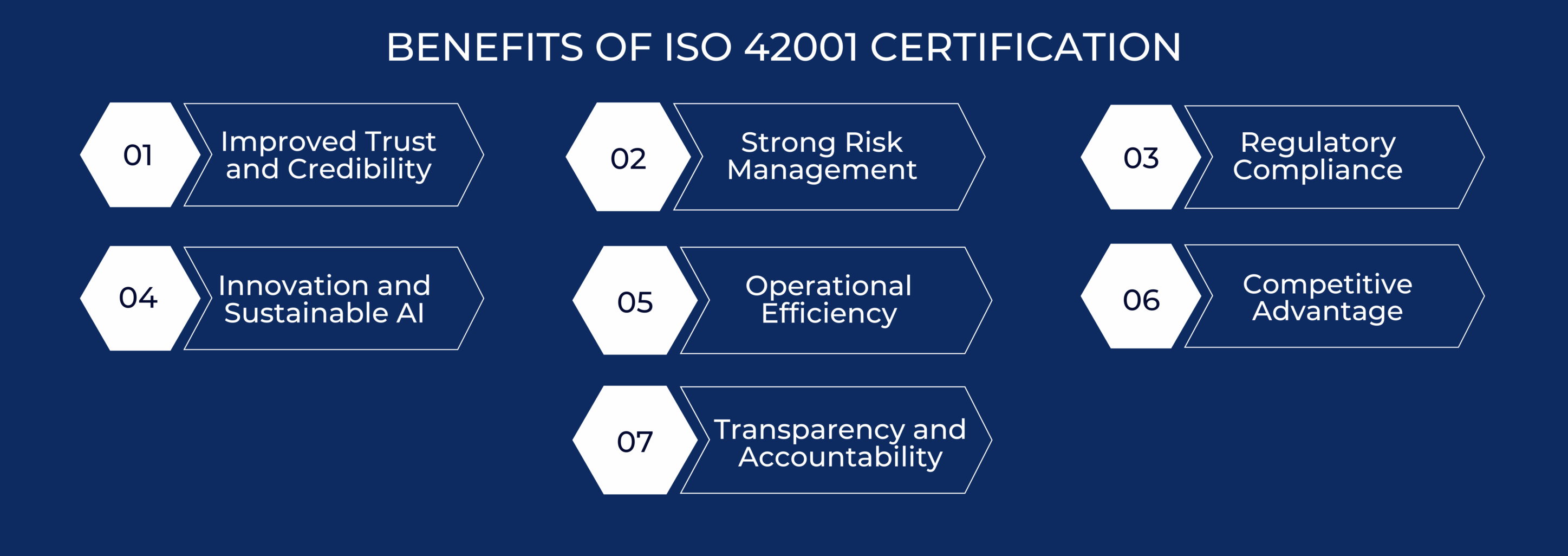
- ✓Regulatory Risk Mitigation and EU AI Act Alignment
- ✓Competitive Advantage in Munich’s Technology Market
- ✓Operational Risk Reduction and AI System Reliability
ISO 42001 Compliance and Munich’s Industry Sectors
ISO 42001 compliance requirements and their practical implementation vary significantly across Munich’s diverse industrial sectors. The standard’s risk-proportionate approach means that the depth and complexity of the AIMS required for a Munich automotive manufacturer deploying AI in safety-critical production processes differs substantially from that required for a small SaaS startup using AI for content recommendations. Understanding sector-specific ISO 42001 compliance considerations is essential for Munich organizations to scope their AIMS appropriately and prepare effectively for certification audits.
Automotive and Manufacturing Sector ISO 42001 Considerations
Munich’s automotive industry — anchored by major global manufacturers and their extensive supplier ecosystems — represents one of the most complex environments for AI governance. AI is deployed across the automotive value chain in applications including computer vision for quality inspection, predictive maintenance for production equipment, supply chain optimization, and advanced driver assistance systems (ADAS). Each of these applications presents distinct risk profiles and governance requirements under ISO 42001.
For automotive AI applications with safety implications, ISO 42001 compliance must be integrated with functional safety standards such as ISO 26262 and ISO 21448 (SOTIF). The ISO 42001 assessment in automotive contexts evaluates how the AIMS interfaces with existing functional safety management systems, and whether AI governance controls adequately address the specific risk dimensions of automotive AI applications. Munich automotive suppliers that already maintain IATF 16949 quality management certification find that ISO 42001’s High-Level Structure facilitates integration with their existing management system architecture.
Financial Services and Fintech ISO 42001 Applications
Munich’s financial services sector — including banking, insurance, asset management, and fintech companies — faces some of the most acute AI governance pressures of any industry. AI is used extensively in credit scoring, fraud detection, algorithmic trading, insurance underwriting, customer service automation, and anti-money laundering detection. Many of these applications qualify as high-risk under the EU AI Act, creating direct regulatory obligations that ISO 42001 compliance helps to address. Munich fintech companies are increasingly treating ISO 42001 certification as a regulatory risk management priority rather than a voluntary governance enhancement.
The European Central Bank and the European Banking Authority have both issued guidance on the use of AI in financial services that emphasizes explainability, human oversight, and model risk management — all of which are addressed by ISO 42001 compliance requirements. Munich banks and insurance companies that achieve ISO AIMS certification demonstrate to their prudential regulators that AI governance is subject to systematic, independently audited controls. This aligns directly with supervisory expectations for operational risk management in AI-intensive financial institutions.
SaaS, Cloud, and Enterprise Technology ISO 42001 Positioning
Munich’s growing SaaS and enterprise technology sector includes a significant number of companies that embed AI capabilities into software products sold to enterprise clients across Europe and globally. For these organizations, ISO 42001 Certification in Munich serves dual purposes: it governs the organization’s internal AI development practices, and it provides enterprise clients with evidence that the AI capabilities embedded in purchased software meet recognized governance standards. Enterprise procurement teams increasingly include AI governance certification requirements in software vendor evaluation criteria, making ISO 42001 certification a commercial necessity for Munich SaaS companies targeting the enterprise market.
| Industry Sector | Primary AI Applications | Key ISO 42001 Focus Areas |
|---|---|---|
| Automotive & Manufacturing | Quality inspection, predictive maintenance, ADAS | Safety integration, lifecycle controls, human oversight |
| Financial Services & Fintech | Credit scoring, fraud detection, algorithmic trading | Fairness, explainability, model risk management |
| Healthcare & Life Sciences | Diagnostic AI, clinical decision support | Data privacy, safety validation, human oversight |
| SaaS & Enterprise Technology | AI-embedded products, process automation | Responsible development, client transparency |
| Public Sector & Smart City | Traffic management, citizen services, planning | Accountability, transparency, non-discrimination |
ISO 42001 Assessment Methodology and Evaluation Criteria
The ISO 42001 assessment conducted by CertPro evaluates organizational AIMS controls against the specific requirements of ISO/IEC 42001:2023, using established audit methodologies consistent with ISO 19011 (Guidelines for Auditing Management Systems). The assessment methodology is structured to provide objective, evidence-based findings that can be defended to regulators, clients, and other stakeholders. Understanding the ISO 42001 assessment methodology helps Munich organizations prepare appropriately and allocate internal resources efficiently for the certification process.
During the ISO 42001 audit, auditors collect evidence through multiple channels: document and record review, interviews with personnel responsible for AI governance and operations, observation of AI system development and monitoring processes, and technical inspection of AI governance tools and platforms. Audit sampling is conducted based on a risk-informed approach that allocates greater audit attention to higher-risk AI systems and higher-impact governance controls. For Munich organizations with large AI portfolios, audit sampling strategies must be clearly documented and defensible as providing reasonable coverage of the defined AIMS scope.
Interview-based evidence collection during the ISO 42001 assessment focuses on verifying that documented governance structures are operationally understood and applied by personnel at all levels of the organization. Auditors interview not only AI governance officers and data protection personnel but also AI engineers, data scientists, product managers, and business operators who interact with AI systems. This broad interview approach detects gaps between documented governance policies and actual operational practices — a common finding in organizations that have established AIMS documentation without adequate implementation and training programs.
ISO 42001 includes Annex A, which provides a reference set of AI-specific controls that organizations may select and implement based on their risk assessment findings and applicable obligations. Annex A controls address areas including AI system objectives and constraints, data governance, AI risk assessment, third-party AI relationships, AI transparency and communication, human oversight mechanisms, and AI system incident management. The ISO 42001 assessment includes evaluation of the organization’s Statement of Applicability — the document that records which Annex A controls have been selected, which have been excluded, and the rationale for those decisions.
Annex B of ISO 42001 provides guidance on AI-related organizational objectives and risk sources, while Annex C provides guidance on the use of the standard in AI systems with societal implications. These annexes inform the ISO 42001 assessment by providing evaluative context for the auditor’s review of whether the organization’s risk assessment and control selection decisions are reasonable and defensible given the nature of its AI activities. Munich organizations whose AI systems have significant societal implications — such as smart city applications or public health AI tools — should pay particular attention to Annex C guidance in their AIMS design.
A critical dimension of the ISO 42001 assessment is the evaluation of how organizations govern their relationships with third-party AI providers, including AI platform vendors, model providers, data suppliers, and AI development service providers. ISO 42001 requires organizations to extend their AIMS controls to cover material third-party AI relationships, ensuring that AI systems and components sourced from external parties meet the governance requirements of the AIMS. This is particularly relevant for Munich organizations that use large language models (LLMs), AI-as-a-service platforms, or AI components developed by third-party providers.
Third-party AI governance controls evaluated during the ISO 42001 audit include vendor due diligence processes, contractual AI governance requirements, monitoring of third-party AI performance and compliance, and procedures for managing third-party AI incidents. Munich organizations that rely on AI foundation models from major technology providers must demonstrate that they have implemented appropriate governance controls at the application layer — including prompt engineering controls, output monitoring, and user protection measures — even when they do not control the underlying model architecture.
- ✓Evidence Collection and Audit Sampling Approach
- ✓Annex A Controls Evaluation
- ✓Third-Party AI Relationship Evaluation
ISO 42001 Certification Cost in Munich
The cost of ISO 42001 Certification in Munich is determined by several key variables, including the number of AI systems in scope, the complexity of the organization’s AIMS, the number of locations covered by the certification scope, and the size and structure of the audit team required. CertPro provides transparent, fixed-fee pricing for ISO 42001 audit engagements, with fees determined during the scope definition phase based on a formal assessment of audit complexity and required audit days. Fixed-fee pricing eliminates cost uncertainty and allows Munich organizations to budget accurately for their certification investment.
Factors Influencing ISO 42001 Audit Fees
Several organizational factors directly influence the ISO 42001 audit fee for Munich organizations. The number and complexity of AI systems in scope is the primary cost driver. Organizations with a single, well-defined AI use case require fewer audit days than those with extensive, diverse AI portfolios spanning multiple business functions. The maturity of the organization’s existing governance documentation also affects audit efficiency — organizations with well-documented AIMS from prior management system experience complete the documentary review phase more quickly, reducing overall audit time. Multi-site scope extensions and remote audit capabilities can also affect fee structures.
Organizations that already hold ISO 27001 certification can often achieve efficiency in their ISO 42001 audit engagement by leveraging existing documented controls, policies, and audit evidence for overlapping requirement areas. This integration efficiency reduces the audit scope for areas already covered by the ISO 27001 ISMS, focusing the ISO 42001 audit effort on AI-specific requirements not addressed by the existing certification. Munich organizations that already maintain ISO 27001 should discuss integrated audit approaches with CertPro during the scope definition phase to optimize audit efficiency and overall certification cost.
| Organization Profile | Estimated Audit Duration | Key Cost Drivers |
|---|---|---|
| Small SaaS company, 1-2 AI systems | 3-5 audit days | AI system complexity, documentation maturity |
| Mid-size technology firm, 3-8 AI systems | 6-10 audit days | Portfolio breadth, governance structure complexity |
| Large enterprise, 10+ AI systems | 12-20+ audit days | Multi-system scope, multi-location, integration requirements |
| Financial services institution | 8-15 audit days | Regulatory complexity, model risk controls, fairness evaluation |
| Automotive manufacturer or supplier | 10-18 audit days | Safety system integration, supply chain AI governance |
Return on Investment for ISO 42001 Certification
The return on investment for ISO 42001 Certification in Munich can be assessed across multiple dimensions. The direct commercial value of certification includes new contract opportunities from enterprise clients that require AI governance certification, avoided costs from regulatory penalties associated with uncontrolled AI system failures, and reduced insurance premiums for technology liability coverage. Munich organizations that have quantified the commercial benefit of winning a single large enterprise contract requiring AI governance certification have consistently found that the contract value substantially exceeds the total certification cost.
The indirect value of ISO 42001 certification includes reduced time and cost spent on ad hoc responses to client due diligence questionnaires, reduced internal resources devoted to regulatory inquiry responses, and operational efficiency gains from having structured, documented AI governance processes rather than informal, undocumented practices. Munich organizations that have completed the ISO 42001 certification process consistently report that the documentation and governance infrastructure established for certification provides ongoing operational value beyond the certification attestation itself — creating lasting organizational capability improvements.
ISO 42001 and the EU AI Act: Strategic Alignment for Munich Organizations
The EU AI Act represents the world’s first comprehensive legislative framework specifically governing artificial intelligence. For Munich organizations — which operate within the EU market and are therefore directly subject to the regulation — understanding how ISO 42001 compliance aligns with EU AI Act obligations is strategically important. While the EU AI Act and ISO 42001 are distinct instruments (one a binding regulation, the other a voluntary international standard), their objectives and requirements are substantially aligned. This allows organizations to use ISO 42001 compliance as a strong foundation for EU AI Act conformity.
EU AI Act Risk Classification and ISO 42001 AIMS Scope
The EU AI Act classifies AI systems into risk categories — unacceptable risk (prohibited), high risk (subject to mandatory conformity assessment), limited risk (transparency obligations), and minimal risk (unregulated). Munich organizations must first determine which risk categories apply to their AI systems, then establish governance controls appropriate to those risk levels. ISO 42001’s risk-proportionate AIMS framework maps naturally to this classification approach, with the depth of AIMS controls scaled to reflect the EU AI Act risk category of each AI system in scope.
High-risk AI systems under the EU AI Act require conformity assessments that evaluate technical documentation, data governance, accuracy and robustness, human oversight mechanisms, and transparency to users. These conformity assessment requirements overlap substantially with ISO 42001 AIMS requirements, allowing organizations that have achieved ISO 42001 Certification in Munich to use their certified AIMS documentation as evidence in EU AI Act conformity assessments. The ISO 42001 audit generates a structured body of evidence that directly supports EU AI Act conformity documentation obligations for high-risk AI system providers.
Transparency and Human Oversight Obligations
Both the EU AI Act and ISO 42001 emphasize transparency and human oversight as fundamental requirements for responsible AI governance. The EU AI Act requires that high-risk AI systems be designed and developed with appropriate human oversight measures — allowing operators to understand and monitor the AI system’s functioning, and to intervene, override, or shut down the system when necessary. ISO 42001 compliance requires organizations to establish documented human oversight mechanisms for their AI systems, including decision escalation procedures, override capabilities, and operator training requirements.
The transparency obligations under both frameworks extend to communication with affected individuals. The EU AI Act requires that users of AI systems be informed when they are interacting with an AI, and that AI-generated content be appropriately labeled. ISO 42001 requires organizations to establish procedures for communicating relevant information about their AI systems to affected stakeholders. Munich organizations that embed these transparency obligations into their AIMS as part of ISO 42001 compliance establish a governance infrastructure that simultaneously addresses both regulatory and standard requirements — creating an integrated compliance posture that is both efficient and robust.
Why Choose CertPro for ISO 42001 Certification in Munich
CertPro is a Licensed CPA Firm specializing in independent third-party certification audits for management system standards, including ISO 42001. Operating under established audit standards, CertPro delivers ISO 42001 audit engagements conducted by qualified, experienced auditors with sector-specific expertise in Munich’s key industries. CertPro’s audit methodology is structured, evidence-based, and designed to provide reliable, defensible certification attestations that carry institutional credibility with regulators, enterprise clients, and investors.
Independent Audit Authority and Licensed CPA Firm Positioning
CertPro’s status as a Licensed CPA Firm distinguishes its ISO 42001 audit engagements from those conducted by non-licensed certification bodies. This positioning reflects the professional standards, independence requirements, and accountability frameworks that govern CertPro’s certification activities. ISO 42001 audit engagements are conducted under professional audit standards that require auditor independence, objectivity, and professional skepticism — the same standards that govern financial audit engagements. This professional framework provides Munich organizations with a higher level of assurance about the rigor and independence of their ISO 42001 certification than is available from unregulated certification providers.
The independence of CertPro’s ISO 42001 audit function means that auditors have no financial interest in the outcome of the certification decision and no prior relationship with the organization being certified that could compromise their objectivity. This independence is critical for the certification to serve its intended purpose of providing stakeholders with reliable, objective assurance about the organization’s AIMS. Munich organizations that engage CertPro for ISO 42001 certification can represent to their clients, regulators, and investors that the certification was issued by an independent, licensed professional firm operating under established audit standards.
Sector-Specific Audit Expertise for Munich Industries
CertPro’s audit teams include personnel with sector-specific expertise in Munich’s primary industries, including automotive engineering, financial services, healthcare technology, and enterprise software. Sector-specific auditor expertise is essential for effective ISO 42001 assessment because evaluating AI governance controls requires a thorough understanding of the industry context in which AI systems operate, the specific regulatory requirements applicable to AI in that sector, and industry-standard practices for AI risk management. An auditor without automotive sector knowledge cannot effectively evaluate whether a manufacturer’s AI governance controls adequately address the safety implications of AI in vehicle production and ADAS applications.
CertPro’s ISO 42001 audit methodology is continuously updated to reflect the evolving requirements of the EU AI Act, GDPR, and other applicable regulations, as well as emerging best practices in AI governance. Munich organizations benefit from ISO 42001 audit engagements that reflect current regulatory expectations and governance standards — not outdated interpretations of the standard’s requirements. CertPro’s auditors maintain ongoing professional development in AI governance, ethics, and regulatory developments, ensuring that audit findings and certification attestations reflect the current state of responsible AI management practice.
Transparent, Fixed-Fee Certification Pricing
CertPro provides ISO 42001 audit fees on a fixed-fee basis, with pricing determined transparently during the scope definition phase. Fixed-fee pricing eliminates the cost uncertainty associated with time-and-materials billing arrangements, allowing Munich organizations to budget accurately for their ISO 42001 certification investment. The fixed fee covers all audit phases — from initial documentation review through Stage 2 fieldwork, nonconformity review, and issuance of the certification attestation. Surveillance and recertification audit fees are also quoted transparently at the outset of the engagement, providing full visibility into the total cost of ISO 42001 certification across the three-year certification cycle.
Secure Your ISO 42001 Certification in Munich with CertPro
Responsible AI governance is no longer optional for Munich organizations deploying artificial intelligence across their operations, products, and services. The convergence of the EU AI Act, GDPR obligations for automated decision-making, and growing enterprise and regulatory demand for AI governance evidence has made ISO 42001 Certification in Munich a strategic imperative for technology-intensive organizations. CertPro, as a Licensed CPA Firm, delivers independent ISO 42001 audit engagements that provide Munich organizations with credible, defensible certification attestations recognized by regulators, enterprise clients, and global business partners.
CertPro’s structured ISO 42001 audit methodology evaluates AIMS controls against the full requirements of ISO/IEC 42001:2023, covering governance structures, lifecycle oversight, risk management controls, transparency mechanisms, and accountability frameworks. The certification engagement encompasses Munich-based organizations across the full range of industries where AI adoption is most advanced — including automotive manufacturing, financial services, healthcare technology, enterprise SaaS, and public sector technology. ISO 42001 compliance for Munich companies seeking to demonstrate responsible AI management is supported through CertPro’s fixed-fee, transparent audit engagement model.
Engaging CertPro for ISO 42001 Certification in Munich initiates a rigorous, independent evaluation process that delivers a formal certification attestation upon successful demonstration of AIMS conformance. The certification provides Munich organizations with the institutional credibility, regulatory alignment, and competitive positioning that responsible AI governance demands in today’s market environment. Organizations ready to initiate their ISO 42001 certification engagement can contact CertPro to schedule a scope definition consultation and receive a fixed-fee audit proposal tailored to their specific AI portfolio and governance context.
- ✓Independent, third-party ISO 42001 audit conducted by a Licensed CPA Firm
- ✓Sector-specific auditor expertise covering Munich’s automotive, financial services, healthcare, and technology industries
- ✓Fixed-fee, transparent pricing with full cost visibility across the three-year ISO 42001 certification cycle
- ✓Structured ISO 42001 audit methodology aligned with ISO 19011 guidelines and ISO/IEC 42001:2023 requirements
- ✓Integrated audit approach available for organizations holding existing ISO 27001 or ISO 9001 certifications
- ✓EU AI Act and GDPR alignment embedded in the ISO 42001 assessment evaluation criteria
- ✓Formal ISO 42001 certification attestation recognized by regulators, enterprise clients, and international partners
- ✓Surveillance and recertification audit services ensuring continued ISO 42001 compliance across the certification lifecycle
FAQ
▶
What is ISO 42001 certification and why does it matter for Munich organizations?
▶
How long does the ISO 42001 audit process take for a Munich organization?
▶
What is the difference between ISO 42001 and the EU AI Act?
▶
Can ISO 42001 be integrated with existing ISO 27001 certification?
▶
What does an ISO 42001 audit evaluate specifically?
▶
How often must ISO 42001 certification be renewed?
▶
What is ISO AIMS certification and how does it relate to ISO 42001?
▶
What are the most common nonconformities found during ISO 42001 audits in Munich?
ISO 42001 CERTIFIED: WHY AI GOVERNANCE CERTIFICATION IS BECOMING A BOARD-LEVEL REQUIREMENT
AI is now an inevitable component of major business activities in the current corporate world. To elaborate, it is now part of product design, custome…

MindSec Launches AI Compliance for Law 25 & ISO 42001
Excerpt from Barchart Article, Published on December 3, 2025 Today, Canadian organizations face increasing pressure to comply with stringent privacy a…

UNDERSTANDING ISO 42001: A GUIDE FOR RESPONSIBLE AI MANAGEMENT SYSTEMS
The invention of artificial intelligence (AI) has changed the operational processes of many industries. However, the rapid growth of technology increa…
Get In Touch
have a question? let us get back to you.