
INDIA
iso certification in INDIA
In today’s world, businesses are not restricted within the boundaries of countries or continents. Companies aim to grab the global marketplace through their services or products. Therefore, ISO certification is becoming more relevant and necessary for organizations. International Organization for Standardization (ISO) certification creates trust among stakeholders and customers. It validates that the organization complies with global quality assurance, manufacturing, and business standards. Thus, ISO certification in India validates the requirements of businesses related to quality process standards. In addition, ISO is a non-governmental organization that maintains the quality of the systems’ products, services, and efficacy. In the mid-20th century, ISO was formed for international cooperation and organization. It has 23,000 published standards applicable in 164 countries. Hence, organizations are obtaining ISO certification to prove their quality and standards to the world.
In addition, ISO certification improves international trade by ensuring product and service quality. The certification aims to enhance industrial welfare throughout the world. Additionally, ISO certification in India increases the level of security for customers and employees. Thus, it is essential to understand the importance of ISO certification in India. It can help you optimize your business practices and seize opportunities.






Why ISO Certification in India?
ISO certification in India signifies that the organization follows an international standard. Therefore, it helps instill confidence in customers and partners that the organization maintains high-quality services. Again, it shows the organization’s commitment to customer satisfaction and production. In some cases, ISO certification is mandatory for developing business partnerships. In the Indian market, ISO certification ensures the quality of services and adheres to regulations. Therefore, ISO certification provides a competitive edge and opportunities in the global market.
Moreover, ISO certification in India enables international trade and business growth. Aligning with ISO standards streamlines the operation process, helping reduce the cost of services and increasing efficiency. Therefore, customers benefit from the assurance of consistent, high-quality products and services.
Furthermore, it is essential to understand and navigate the certification process. The certification improves your organization’s operational excellence, elevates access to the global market, and provides competitive advantages. Thus, read the page carefully for more details on how to get ISO certification in India.
UNDERSTANDING ISO CERTIFICATION IN INDIA
ISO certification serves as a seal of approval. It means that an independent company has checked the organization’s systems. This process also makes sure that the organization’s production and services meet global standards. ISO standards cover things like quality management, cybersecurity, and protecting the environment.
The main goal of ISO standards is to make things work better. It helps reduce risks and ensures the organization provides good services and products. As a result, ISO certification shows that the organization runs smoothly and follows the best practices. It helps businesses create a strong system that fits the standards. Also, it proves that the organization meets the necessary requirements. Because of this, organizations follow global guidelines that improve the trustworthyness of their products. ISO certification is recognized worldwide, allowing businesses to enter international markets. It also gives a competitive advantage and helps keep customers happy and loyal. For example, ISO 9001 certification shows that the organization is committed to providing high-quality services. ISO 27001 focuses on protecting information. ISO 14001 makes sure the organization cares for the environment and promotes sustainable growth.


Related Links
SOC 2 in India
ISO 27701 in India
GDPR in India
ISO 27018 in India
HIPAA in India
CCPA in India
PIPEDA in India
ISO 17025 in India
ISO 13485 in India
CE Mark in India
GDP in India
GLP in India
ISO 9001 in India
ISO 14001 in India
ISO 45001 in India
ISO 22000 in India
HACCP in India
ISO 22301 in India
ISO 21001 in India
ISO 41001 in India
ISO 20000-1 in India
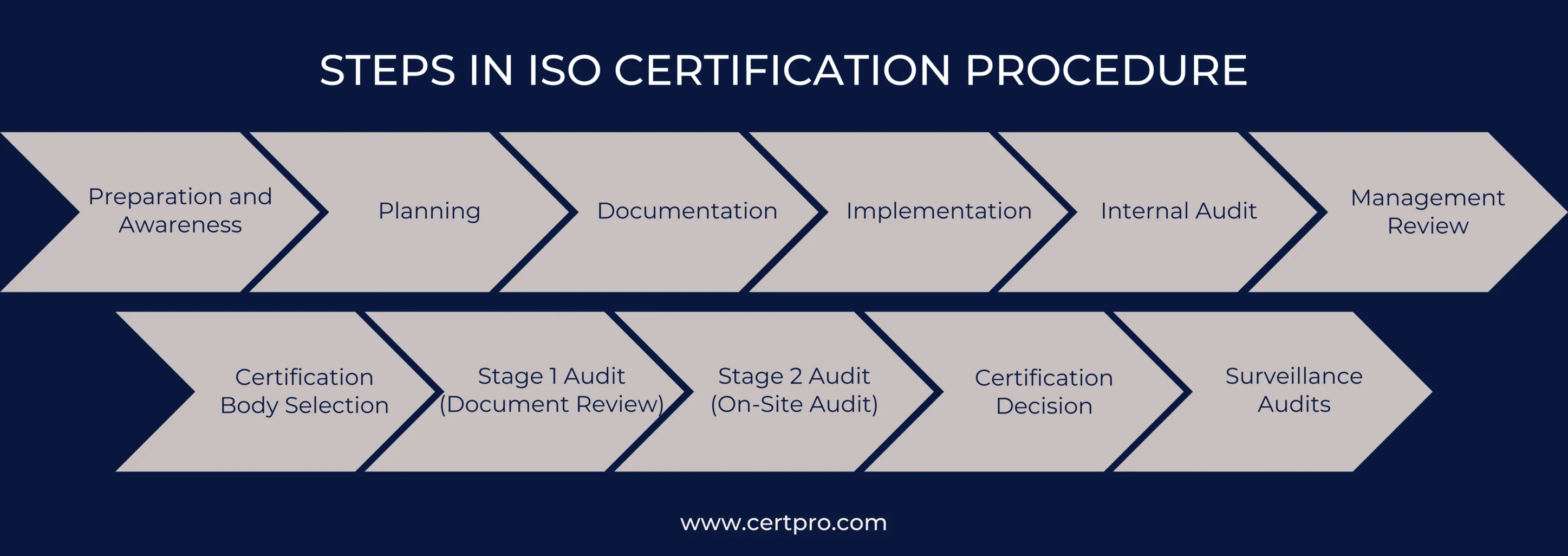
STEPS IN ISO CERTIFICATION PROCEDURE IN INDIA
Preparation and Awareness: The first step is to understand which ISO standard fits your industry. This helps you know what is required, the benefits, and how to put the standard into action. In addition, it ensures that you are aware of all the steps needed for a successful implementation.
Planning: A thorough plan should outline the procedures in the best way. This plan should show how you will follow the ISO standard, set a timeline, and assign who will do what. Moreover, it helps to keep the process organized and ensures everyone knows their responsibilities.
Documentation: Create the necessary documentation. These include policies, instructions, and records that follow the ISO rules. By doing this, you make sure everything is ready for the next steps.
Implementation: Implement the procedures and processes documented throughout your organization. This means following the documented procedures and making any changes needed for the plan to work. As a result, the organization will begin to follow the new ISO processes.
Internal Audit: An internal audit to assess the effectiveness of the implemented processes. This helps find any problems, fix them, and make improvements. In turn, it ensures that the process is effective and running smoothly.
Management Review: The next step is for the managers to review the progress. They will check how well the system is working and find any weak points in the company. Additionally, this helps in deciding what changes may be necessary.
Certification Body Selection: Select a recognized certification body for the external audit. They will do an external audit to see if you are ready for certification. Afterward, the audit results will help guide the next steps.
Stage 1 Audit (Document Review): This is the first audit where the certifying body reviews your documents to make sure they follow the ISO standard. At this point, they will check if your documentation meets the required guidelines.
Stage 2 Audit (On-Site Audit): The second audit happens at your location. Here, they check how well your processes follow the ISO rules. If everything is in place, you will be one step closer to certification.
Certification Decision: Based on the audit results, the certification body will decide if you meet the standards. If you do, you will get an ISO certificate. This certification shows that your organization follows global quality standards.
Surveillance Audits: After you get certified, the certifying body will check in regularly, usually once a year, to make sure you are still following the rules. In this way, you maintain your ISO certification and keep improving over time.
Note: Working closely with the certification body is important. They will guide you through the process and help you follow the right steps. Ultimately, their support is crucial for ensuring your success in achieving ISO certification.
ISO CERTIFICATION PROCESSING TIME
Achieving ISO certification in India is a lengthy process that lasts at least three to six months. During this time, organizations need to follow specific steps to meet the required standards. These steps must be set up and maintained for a while before the first check (audit) happens. Therefore, working with an ISO consultant, such as CertPro, can help guide the organization through the process. ISO consultants provide valuable support in following the necessary steps. The certification is valid for three years, but organizations must undergo a check-up (audit) every year.
In conclusion, collaborating with skilled ISO consultants in India is essential. By doing so, the process becomes easier, time is saved, and compliance with the required standards is ensured.
CHECKLIST FOR ISO CERTIFICATION IN INDIA
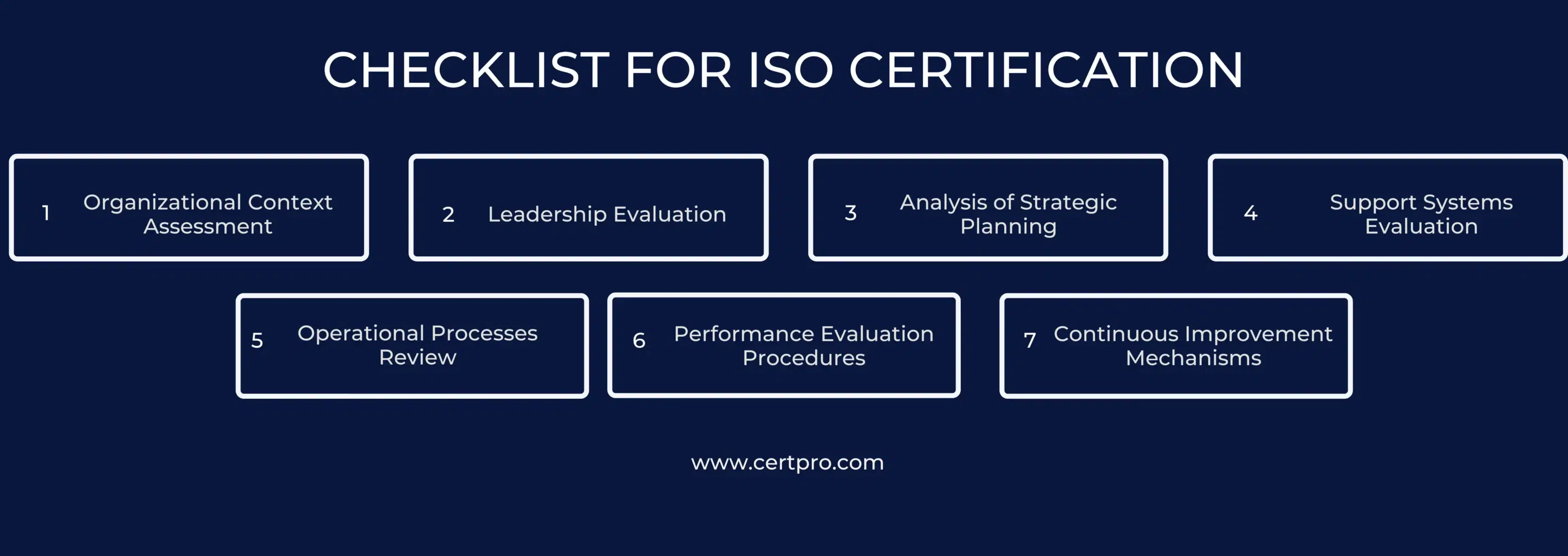
Use this audit checklist to make sure your business follows ISO standards:
Organizational Context Assessment: This step helps understand why the organization wants ISO certification. For example, it looks at what affects the business, both inside and outside, and what people expect from the company. Additionally, it checks for any risks or opportunities to follow the rules.
Leadership Evaluation: This step checks how well the leaders guide the certification process. It also looks at how leaders set up an environment where ISO standards are followed. In addition, it checks if leaders make decisions that follow ISO rules.
Analysis of Strategic Planning: This step ensures that the company’s plans are in line with ISO standards. It examines how the plans use ISO rules and make sure the company uses its resources well and manages risks.
Support Systems Evaluation: This step checks if the company has the right tools and training to follow ISO rules. It ensures that everything is in place to support the ISO standards.
Operational Processes Review: This step looks at how the company works day-to-day. It checks if everything is done according to ISO rules and helps make sure the business keeps following the standards.
Performance Evaluation Procedures: This step helps the company keep checking how well it’s doing. In other words, it makes sure the business measures its performance and improves over time, according to ISO standards.
Continuous Improvement Mechanisms: This step encourages the company to always get better. It helps businesses improve their processes, products, and systems to follow ISO rules and show that they care about doing things right for the long term.
HERE ARE THE MOST POPULAR ISO STANDARDS IN INDIA
There are many different ISO standards available, and choosing the right one can be tricky. That’s why organizations need to follow the certification process that fits their industry. Here are some popular ISO standards to help you understand their purpose and impact:
ISO 27001: This standard helps keep information and business assets safe. It requires companies to follow rules and keep documents in order to protect sensitive data. In short, it shows how well a company protects its data.
ISO 9001: This is the most used ISO standard. Since it was first introduced in 1987, it has been updated many times. Basically, ISO 9001 focuses on creating a system that ensures a company offers high-quality products and services. It also focuses on keeping customers happy and improving the company over time. This standard can be used by any company, no matter what type of business it is.
ISO 14001: This standard focuses on protecting the environment. It helps businesses meet specific environmental guidelines and improve over time. For example, it ensures that industrial activities don’t harm the environment.
ISO 22000: This standard is for businesses in the food industry. It helps companies create systems to keep food safe from harm. It applies to restaurants, food makers, and food delivery services. In addition, it can be used alongside ISO 9001. This standard also helps companies improve food safety and follow food safety laws.
ISO 42001: This standard is for companies that use AI (artificial intelligence) systems. With this certification, companies can manage AI systems more effectively, especially in fields like healthcare and finance. Moreover, it shows that your company is trustworthy when using AI and ensures that the AI systems don’t have biases or make unfair decisions.
BENEFITS OF ISO CERTIFICATION IN INDIA
ISO certification in India makes sure that products and services meet high-quality standards from around the world. As a result, it helps businesses stand out and makes customers happier. ISO also ensures that companies follow the right rules, which in turn reduces the chances of making big mistakes. Overall, the ISO certification process helps businesses grow, gain trust, and work better.
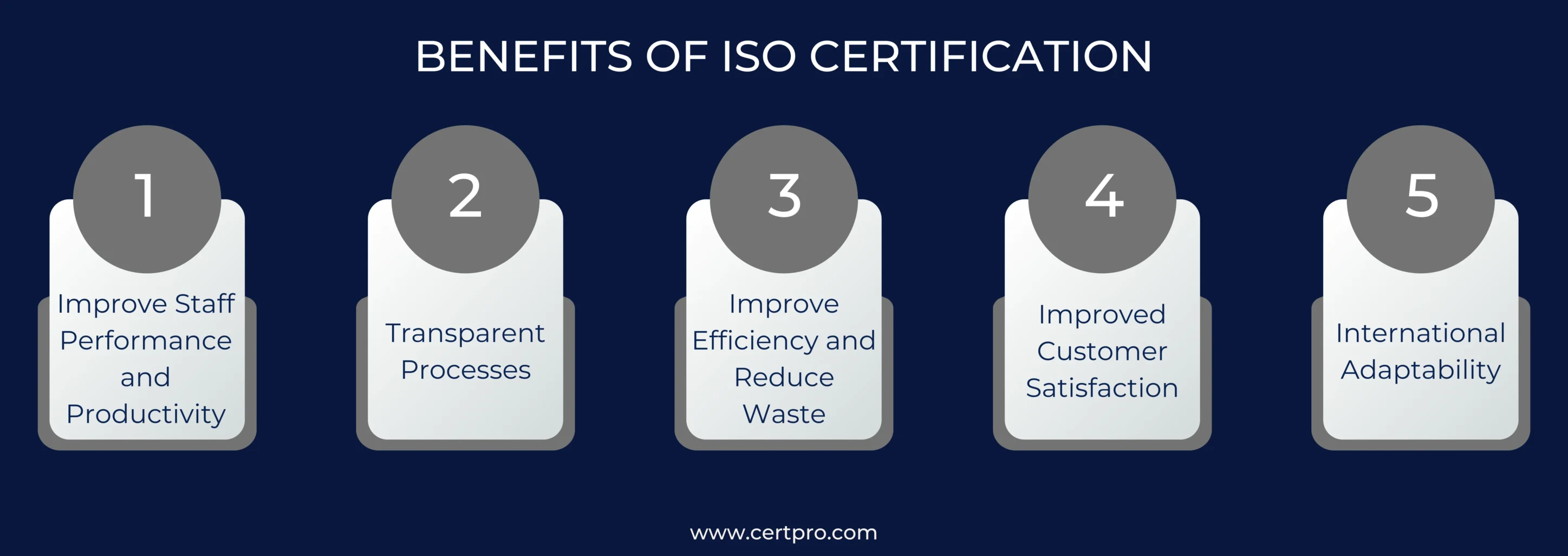
Here are some benefits of getting ISO certification:
Improve Staff Performance and Productivity: The certification process organizes how things are done in the company. For example, it helps create clear plans for handling emergencies so employees know what to do and their responsibilities.
Transparent Processes: ISO helps businesses keep good records and documents. This way, the company can spot any risks or problems early on.
Improve Efficiency and Reduce Waste: With better guidelines, tasks are done faster, and there are fewer mistakes. Therefore, the company saves time and money and stays ahead of competitors.
Improved Customer Satisfaction: ISO certification helps improve the customer experience by focusing on what customers need and making sure they are satisfied.
International adaptability: ISO certification helps businesses grow internationally. In addition, it gives them a competitive advantage in markets around the world.
In the end, getting ISO certification in India helps businesses earn trust in other countries, follow good business practices, and improve how they operate.
Industries that Benefit from ISO Certification in India
The ISO certification process is a big task and needs outside experts. That’s why industries like manufacturing need ISO certification for both their workers and customers. It helps keep workers safe and makes sure products are high quality. For example, car makers, electronics companies, tech companies, and construction businesses all need ISO certification. The main goal of this certification is to make sure products are good and workers are safe. ISO 9001 focuses on product quality and how well a company works.
Another important certification is ISO 27001. This certification helps businesses keep their information safe. It’s important for IT and software companies to follow these rules to protect data. Banks and financial companies also use ISO 27001 to keep customer information private and stop data leaks. In the telecom industry, ISO certification helps keep data safe and improve services. Some government agencies also use ISO 27001 to handle sensitive information and make sure it’s secure and ready when needed.
CERTPRO: EMPOWERING YOUR BUSINESS TO ATTAIN ISO CERTIFICATION EFFORTLESSLY
Getting ISO certification in India shows that your company is trustworthy in the global market. In addition, CertPro can help your business get ISO certification by guiding you through the process. We offer excellent services to make sure your business follows ISO standards. Our team will work with you to create a strong plan for certification. We also tailor the standards to fit your company’s needs. Plus, CertPro will support you during the certification and yearly checks.
If you need an affordable and reliable auditing firm, reach out to CertPro. We are a trusted ISO consultant in India. Overall, choosing CertPro makes getting your ISO certification easy and straightforward.

HIPAA UPDATES 2026: KEY REGULATORY CHANGES, NEW RULES, AND COMPLIANCE IMPACT EXPLAINED
Healthcare data breaches continue to rise, and the pattern is clear. Attackers target patient records because they carry long-term value. At the same time, many organizations still rely on outdated controls, scattered data systems, and weak vendor oversight. That gap...

GRC IN CYBERSECURITY: WHAT IT MEANS AND WHY IT MATTERS IN 2026
In 2026, the pressure on companies to manage cyber risk responsibly has never been greater. Regulators demand structured controls, boards want clear risk reporting, and threat actors are becoming more sophisticated. Against this backdrop, GRC in cybersecurity has...

HOW COMPLIANCE AUDIT SOFTWARE IMPROVES AUDIT READINESS
Today, most companies deal with a growing number of compliance regulations. From data privacy standards to security frameworks like SOC 2 and ISO 27001, the list of compliance obligations keeps expanding. At the same time, regulators and external auditors now expect...